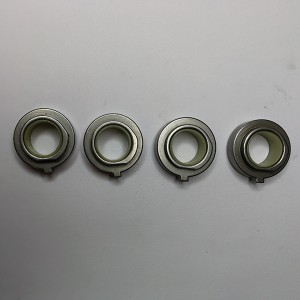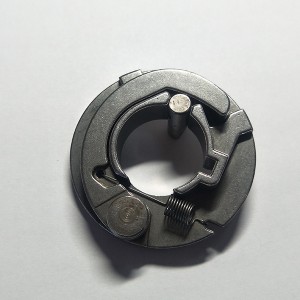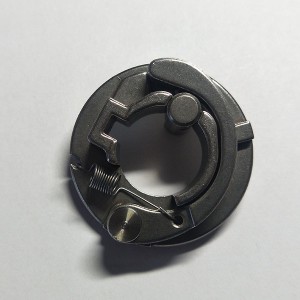





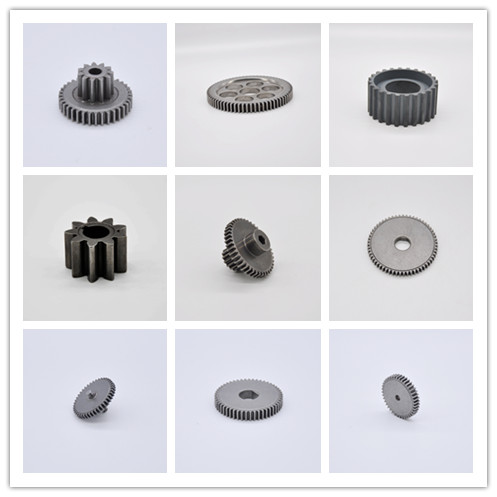
Popis produktu
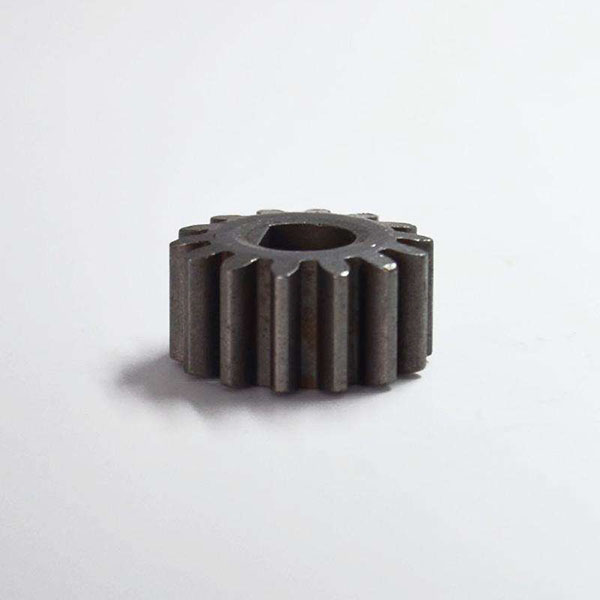
Tvar: Ostruha
Místo původu: Hebei, Čína
Číslo modelu: kovové ozubené kolo
Název značky: Jingshi
Materiál: kovová převodovka
Tolerance: ±0.005mm
Servis: OEM díly práškové metalurgie na míru, CNC soustružnické obrábění
Dodací lhůta: Domluva na přání zákazníka
Balení: standardní exportní karton s paletou nebo podle zvyku
Možnost dodávky: 250 000 kusů/kusů za měsíc kovové zařízení
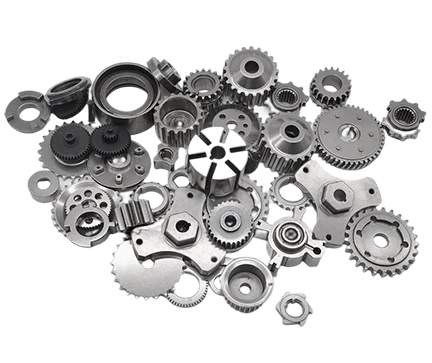
Prášková metalurgie Slinování je vyrobeno z bronzového / železa / nerezového prášku, lisovaného do formy pod vysokým tlakem a poté slinovaného za vysoké teploty. Je široce používán pro elektrická zařízení, elektrické nářadí, tkané stroje, chemické stroje, zemědělské stroje, stavební a strojírenské stroje, automobilový průmysl atd.
Powder metallurgy gear manufacturing process is an efficient and energy-saving metal forming technology, especially suitable for the production of gears with complex shapes, high precision and large quantities. This process produces gear products with excellent performance by pressing metal powder into the desired shape and then undergoing post-treatment procedures such as sintering.
Firstly, select appropriate metal powders (such as iron-based powders) for mixing. Alloying elements like copper, graphite, and nickel can be added according to the performance requirements of the gears to enhance their strength, hardness, and wear resistance. Subsequently, the mixed powder is pressed into shape in a high-precision mold to obtain the initial gear blank. This step features high repeatability and dimensional consistency, making it highly suitable for mass production.
The pressed gear blanks will be sent into a high-temperature sintering furnace and heated to the sintering temperature of the powder in a protective atmosphere, forming metallic bonds between the particles and enhancing the overall strength and density. For gear products with higher requirements, subsequent processing techniques such as impregnation, shaping, heat treatment or fine machining can also be adopted to further enhance their mechanical properties and dimensional accuracy.
Powder metallurgy gears have the advantages of high density, good dimensional stability, high production efficiency and high material utilization rate, and are widely used in the fields of automobiles, home appliances and industrial equipment. Especially in automotive engine systems and transmissions, powder metallurgy gears, with their low noise, high wear resistance and light weight, are gradually replacing traditional machined gears and becoming an ideal green manufacturing solution.
What Is The Difference Between Sintered And Machined Gears?
Sintered gears and machined gears are both essential components in power transmission systems, but they differ significantly in their manufacturing processes, material usage, and application advantages.
Sintered gears are produced through powder metallurgy. This involves compacting metal powders into a gear-shaped mold and then sintering the compact at high temperatures to bond the particles. This process allows for excellent material utilization, lower production costs, and high dimensional consistency, especially in large-volume production. Sintered gears are often used in automotive, appliance, and light industrial applications where moderate strength, low noise, and cost-efficiency are critical. They are ideal for creating complex shapes and internal features without additional machining.
Machined gears, on the other hand, are cut or shaped from solid metal stock, typically using CNC machining, hobbing, or gear shaping. This traditional method allows for very high strength and precision, making it suitable for heavy-duty and high-torque applications such as in aerospace, heavy machinery, and performance vehicles. While machining offers superior material density and durability, it also results in more material waste and higher manufacturing costs, particularly for complex designs.
In short, sintered gears offer cost-effective, high-volume solutions with good performance, while machined gears provide unmatched strength and precision for demanding environments. The choice between them depends on application requirements, load conditions, and production volume.
Looking to choose the right gear type for your application? Contact us for expert guidance and tailor-made solutions. Would you like to compare gear performance specs in your industry?