






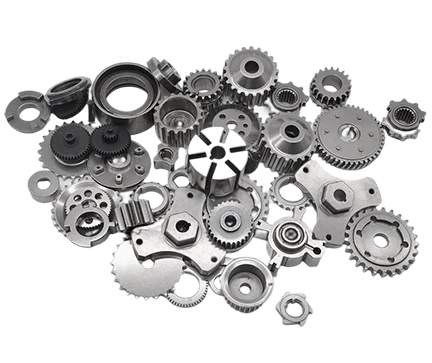
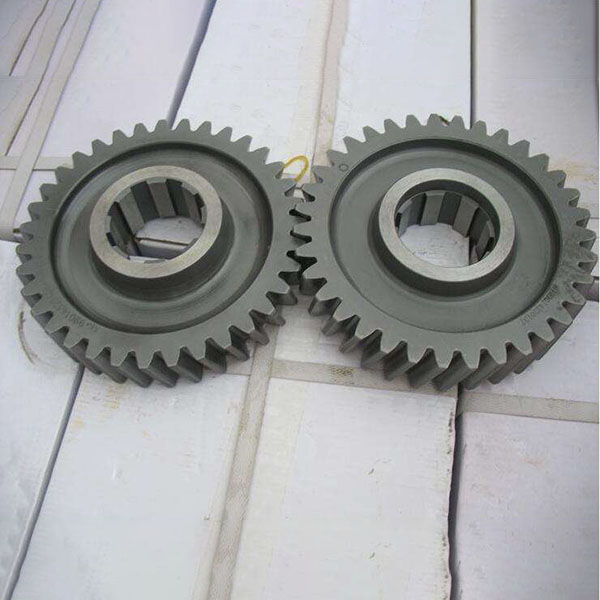
제품 설명
기술: 분말 야금
재료 표준: MPF 시리즈, MPIF 35, DIN 30910, JIS Z2550
밀도: 6.2 - 7.1 g/cm3
매크로 경도: 45-80 HRA
인장 강도: 1650 Mpa 궁극
항복 강도(0.2%): 1270 Mpa 최대
크기: 사용자 정의 크기
맞춤형 복합 구조 분말 야금 기어, 밀도, 기술 요구 사항은 모두 맞춤화되어 있습니다.
OEM 분말 야금 기어
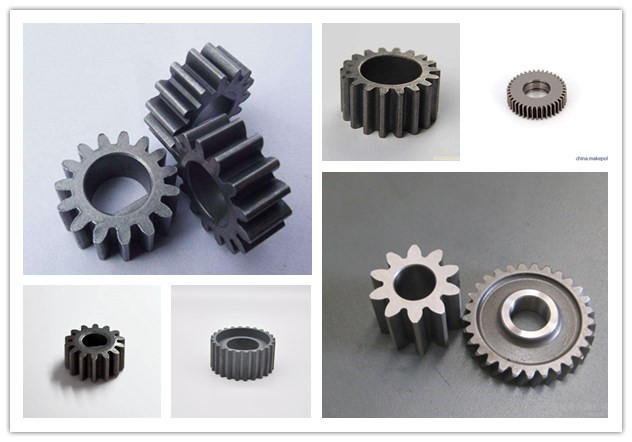
Optimizing Powder Metallurgy Hub Gear for Automotive and Industrial Applications
The powder metallurgy hub gear has become a critical component in both automotive and industrial transmission systems due to its strength, precision, and cost-effectiveness. Optimizing these gears for specific applications requires a careful balance of material selection, geometry design, and manufacturing parameters to ensure reliable performance under varied operating conditions.
In automotive applications, hub gears are often used in gearboxes, differential assemblies, and auxiliary mechanisms. The gears must withstand fluctuating torque, high rotational speeds, and repeated load cycles. Powder metallurgy allows manufacturers to produce near-net-shape gears with precise tooth profiles, minimizing backlash and vibration. This precision is essential for smooth power transmission and noise reduction, particularly in modern vehicles where efficiency and comfort are critical.
Industrial applications, such as conveyor drives, heavy machinery, and automation systems, demand gears that can endure continuous operation and heavy loads. Optimizing hub gears in these environments involves selecting alloys with enhanced wear resistance and fatigue strength. Common materials include iron-based powders alloyed with copper, nickel, or molybdenum, providing a balance between toughness and cost-efficiency.
Design optimization also plays a vital role. Tooth geometry must be carefully calculated to distribute stress evenly across the gear surface. Dual or multi-tooth hub configurations can improve load distribution and reduce the likelihood of premature failure. Additionally, powder metallurgy allows for the integration of features such as hubs, flanges, or internal splines during the sintering process, reducing assembly complexity and improving alignment accuracy.
Surface treatments further enhance performance. Techniques like carburizing, nitriding, or steam treatment can improve hardness and wear resistance while maintaining a tougher core to absorb shock loads. Oil impregnation within the porous gear structure provides self-lubrication, extending service life and reducing maintenance needs.
Ultimately, optimizing powder metallurgy hub gears for automotive and industrial applications requires a holistic approach that combines material science, precision design, and advanced manufacturing techniques. By carefully considering operating conditions, load requirements, and environmental factors, engineers can produce hub gears that deliver reliable, efficient, and long-lasting performance across multiple sectors.
Maintenance and Longevity Tips for Powder Metallurgy Hub Gear
Ensuring the longevity of a powder metallurgy hub gear requires a comprehensive understanding of its material properties, operational limits, and maintenance best practices. While these gears are designed for durability, proper care can significantly extend their service life and reduce the risk of premature failure.
One of the most important factors affecting hub gear longevity is lubrication. Powder metallurgy gears often feature a porous structure that can be impregnated with lubricants during manufacturing. This self-lubricating property reduces friction between gear teeth, minimizing wear and heat generation. Over time, it may be necessary to supplement lubrication with external oils, especially in high-load or high-speed applications, to maintain optimal performance.
Regular inspection is another key practice. Visual checks for signs of wear, such as pitting, cracks, or uneven tooth profiles, can identify potential issues before they escalate. In industrial and automotive settings, vibration analysis can also help detect misalignment or abnormal load conditions, allowing maintenance teams to intervene early.
Environmental factors should also be considered. Powder metallurgy hub gears used in humid, dusty, or corrosive environments may require protective coatings or additional lubrication to prevent surface degradation. Proper sealing in gear assemblies ensures that contaminants do not enter critical areas, preserving the integrity of the gear teeth and internal hubs.
Load management is equally important for longevity. Avoiding excessive torque or shock loads helps prevent fatigue failures, especially in gears operating in continuous or heavy-duty cycles. Engineers should ensure that gear ratios, motor capacities, and system loads are matched appropriately to the hub gear specifications.
Finally, periodic reconditioning or replacement of worn components can maintain system efficiency. Powder metallurgy hub gears are cost-effective, allowing replacement parts to be integrated without major system redesigns. Combined with proactive maintenance, these practices ensure that hub gears perform reliably for years, whether in automotive gearboxes, industrial machinery, or automated systems.
By following these maintenance and longevity guidelines, organizations can maximize the performance, reliability, and service life of powder metallurgy hub gears, reducing downtime and operational costs.
Innovations in Powder Metallurgy Hub Gear Manufacturing Technology
The manufacturing technology for powder metallurgy hub gears has evolved significantly in recent years, driven by the demand for higher precision, enhanced performance, and cost-effective production in automotive and industrial sectors. Innovations in materials, processing techniques, and design integration have expanded the capabilities of these components.
One of the key advancements is the development of high-performance alloy powders. Modern powder metallurgy gears often utilize iron-based powders combined with copper, nickel, or molybdenum to improve strength, hardness, and wear resistance. Tailored alloy compositions allow engineers to optimize gears for specific operating conditions, such as high torque, heavy load, or elevated temperatures.
Near-net-shape production has also been enhanced through precision compaction and sintering technologies. Advanced die designs and high-pressure presses allow for complex gear geometries, including hubs, flanges, and internal splines, to be formed in a single step. This reduces secondary machining, improves dimensional accuracy, and lowers production costs, making powder metallurgy hub gears highly competitive with traditionally machined components.
Sintering innovations, such as controlled-atmosphere furnaces and rapid thermal processing, ensure uniform densification and consistent mechanical properties. These techniques reduce porosity variations, improve fatigue resistance, and enhance dimensional stability, which are critical for high-performance automotive and industrial applications.
Surface engineering has seen significant progress as well. Steam treatment, carburizing, and induction hardening are increasingly applied to powder metallurgy hub gears to enhance wear resistance while preserving a tougher core. Additionally, oil impregnation techniques have been refined, enabling gears to provide long-lasting self-lubrication and lower friction during operation.
The integration of simulation and digital design tools is another important innovation. Computer-aided engineering (CAE) allows engineers to model stress distribution, optimize tooth geometry, and predict gear performance before production. This reduces prototyping costs and shortens development cycles for new gear designs.
Finally, additive manufacturing technologies are beginning to complement traditional powder metallurgy processes, enabling customized gear solutions with complex internal structures. These hybrid approaches expand the range of applications for hub gears in robotics, automation, and high-performance automotive systems.
Through these innovations, powder metallurgy hub gears now combine precision, durability, and cost-effectiveness, making them a reliable choice for modern mechanical systems. Manufacturers can produce gears that meet demanding specifications, operate efficiently under heavy loads, and maintain long service life across diverse industrial applications.











