

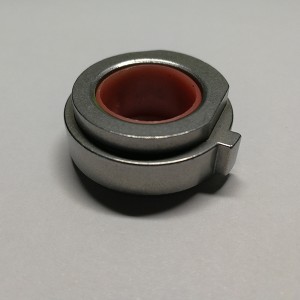
WeChat.png
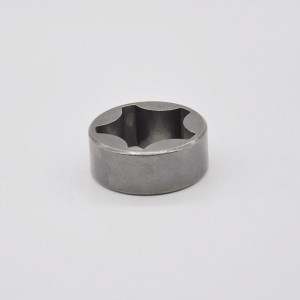
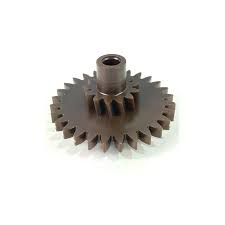
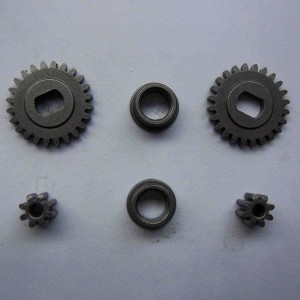
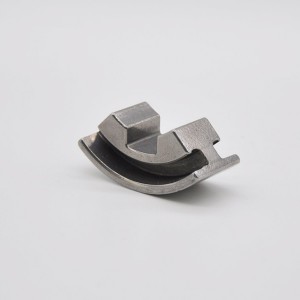
sintered metal parts
top.png

Advanced Engine Components with Sintered parts for Uruguay's Automotive Market

Providing high-precision, durable powder metallurgy solutions to optimize engine performance and manufacturing efficiency across the Uruguayan automotive supply chain.

Advanced Engine Components with Sintered parts for Uruguay's Automotive Market

Our specialized range of powder metal solutions is designed to meet the rigorous demands of automotive engine manufacturing, offering superior wear resistance and dimensional stability.

Current State of powder metallurgy parts in Uruguay

Analyzing the integration of PM technology within the South American automotive hub.

Uruguay's automotive sector serves as a critical logistical and assembly node within South America. Due to the region's humid subtropical climate and diverse road conditions, there is a growing demand for engine components that exhibit exceptional corrosion resistance and longevity. The adoption of powder metal products has become essential for local workshops and manufacturers seeking to reduce material waste.

Currently, the market is transitioning from traditional casting to more precise PM parts. This shift is driven by the need for tighter tolerances in modern fuel-efficient engines, which are becoming more prevalent in Uruguay's urban centers like Montevideo. Local enterprises are increasingly looking for global partners who can provide components that balance cost-efficiency with high-performance metallurgy.

Despite the stability of the local economy, the reliance on imported high-tech components remains high. The integration of advanced sintering techniques allows Uruguayan automotive players to maintain competitive assembly lines, ensuring that engine parts can withstand the specific thermal stresses associated with the regional operating environment.
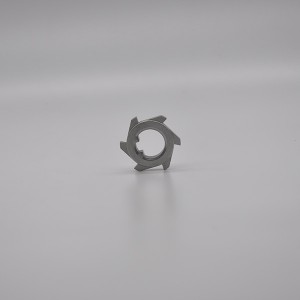
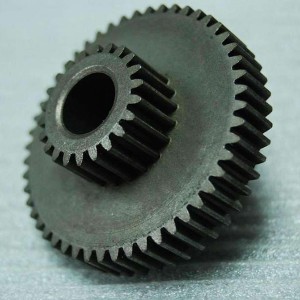
Evolution of powder metal parts Technology

From traditional press-and-sinter to intelligent metallurgy.

Market Development History

In the early 2000s, the Uruguayan automotive aftermarket relied heavily on oversized cast components. The introduction of basic Sintered parts around 2010 marked the first wave of modernization, allowing for the production of simpler gears and bushings with reduced machining requirements.

Between 2015 and 2020, the focus shifted toward alloy optimization. The industry moved toward high-density sintering, enabling engine components to handle higher pressures and temperatures. This period saw the widespread adoption of precision powder metallurgy to replace expensive CNC-machined parts in valve trains and oil pumps.

Since 2021, the trend has evolved into "Smart Metallurgy," where the integration of additive manufacturing and powder metallurgy allows for complex internal geometries that were previously impossible, significantly reducing the weight of engine assemblies without sacrificing structural integrity.

Future Development Trends

Sustainable Material Sourcing

Future trends indicate a shift toward recycled metal powders to meet the green energy goals of South American trade agreements, reducing the carbon footprint of engine part production.

Hybrid Manufacturing Integration

Combining 3D printing with traditional sintering to create customized, low-volume engine components for the high-end automotive restoration market in Uruguay.

Nanostructured Powder Alloys

The implementation of nano-scale powders to enhance the hardness and heat dissipation of components, specifically for high-load diesel engines used in agricultural transport.

Strategic Outlook for Automotive Metallurgy

Forecasting the next 3-5 years of technological growth in the region.

Weight Reduction Logic
Using optimized PM densities to reduce overall engine weight, improving fuel efficiency in line with global emissions standards.
Precision Tolerances
Adopting near-net-shape manufacturing to eliminate costly post-processing and secondary machining for engine valves.
Advanced Tribology
Integrating self-lubricating properties into PM matrices to extend the service life of engine bearings in dusty environments.
EV Transition Support
Adapting PM techniques for electric drivetrain components as Uruguay pushes toward urban electromobility.

Industry Outlook

Google search trends for "sustainable automotive manufacturing" in South America suggest a massive shift toward resource-efficient production. Powder metallurgy is perfectly positioned to lead this because it minimizes scrap compared to traditional machining.

We anticipate that the Uruguayan market will see a 15% increase in the adoption of high-performance alloy sintering by 2027, driven by the need for engine parts that can withstand higher compression ratios and biofuels.

Local Application Scenarios for powder metal products

Practical implementations of PM technology in Uruguay's automotive and transport sectors.

01. High-Stress Engine Valve Components

Using precision sintering to create valve seats and guides that resist extreme thermal cycling in heavy-duty engines used in Uruguayan agricultural logistics.

02. Oil Pump Gears for Tropical Climates

Implementing self-lubricating powder metal gears that maintain viscosity and reduce friction under the variable humidity of the Rio de la Plata region.

03. Transmission Synchronizers for Urban Transit

Deploying high-density PM parts in city buses in Montevideo to reduce wear and tear during frequent stop-and-go traffic patterns.

04. Custom Brackets for Biofuel Engine Retrofits

Leveraging the flexibility of powder metallurgy to produce lightweight, corrosion-resistant brackets for vehicles converting to ethanol blends.

05. Precision Pistons for Industrial Generators

Providing sintered piston rings with enhanced wear resistance for backup power systems in Uruguay's growing data center sector.

Brand Story

Global Development Journey of Shijiazhuang Jingshi New Material Technology Co., Ltd.

Foundational Excellence

Established with a mission to solve the core pain point of material waste in automotive engine manufacturing through advanced sintering.

Technological Breakthrough

Developed proprietary alloy blending techniques that increased the fatigue strength of sintered engine parts by 20%.

Global Expansion

Expanded our footprint into the South American market, bringing world-class PM standards to the Uruguayan automotive industry.

Quality Certification

Achieved international IATF 16949 certification, ensuring every component meets the strictest automotive safety and performance criteria.

Future Vision

Leading the transition toward carbon-neutral metallurgy, providing the building blocks for the next generation of green engines.

Common Questions about Automotive Metallurgy in Uruguay

Expert answers to technical and logistical queries regarding PM components.

How do PM parts compare to cast iron in engine durability?

Powder metallurgy components offer superior dimensional consistency and can be engineered with specific porosity for self-lubrication, often outlasting traditional cast iron in high-friction engine environments.

What is the lead time for custom powder metal parts shipped to Uruguay?

Depending on the complexity and volume, typical lead times range from 4 to 8 weeks, including precision tooling fabrication and international logistics to the Port of Montevideo.

Can Sintered parts handle the biofuels used in South American engines?

Yes, by utilizing specialized stainless steel or chrome-plated powder alloys, we ensure that parts are resistant to the corrosive nature of high-ethanol fuel blends.

What certifications are required for automotive powder metal products?

We adhere to IATF 16949 and ISO 9001 standards, ensuring that every batch undergoes rigorous hardness, density, and metallurgical analysis before shipment.

Is it cost-effective to switch to PM parts for small batches?

While tooling has an initial cost, the elimination of secondary machining and the reduction in material waste make it highly cost-effective for mid-to-high volume production runs.

How is the quality of sintered engine components verified?

Verification includes X-ray inspection for internal porosity, coordinate measuring machines (CMM) for dimensional accuracy, and Rockwell hardness testing.

Consult Our Metallurgy Experts

Ready to optimize your automotive supply chain in Uruguay? Contact us for a technical consultation on your powder metallurgy needs.

Contact Us Now

If you are interested in our products, you can choose to leave your information here, and we will be in touch with you shortly.


If you are interested in our products, you can choose to leave your information here, and we will be in touch with you shortly.