






Бренд: OEM-производитель
Сертификация: ISO9001/TS16949
Страна происхождения: Китай
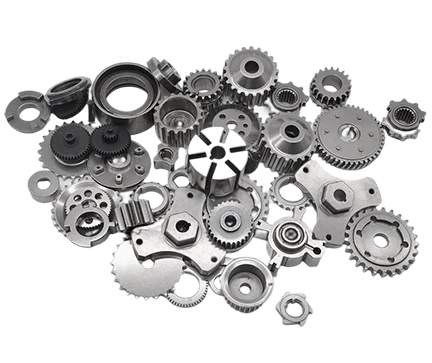
Спеченное снаряжение
Технология: Порошковая металлургия
Обработка поверхности: закалка, полировка
Стандарт материала: MPIF 35, DIN 30910, JIS Z2550
Плотность: 6,2 - 7,1 г/см3
Макротвердость: 20 - 43 HRC
Прочность на разрыв: 1650 МПа Предел
Предел текучести (0,2%): 1270 МПа Предел
Размер:Индивидуальный размер
Торговая информация
Минимальное количество заказа: 5000 шт. (пожалуйста, укажите стоимость и единицу измерения одновременно)
Цена: 0,1–5 долларов (пожалуйста, заполните значения и единицы одновременно. Предлагаемые указания: тип валюты + диапазон цен + единица измерения)
Способ оплаты: банковский перевод или аккредитив TT/LC
Мощность поставок: 500 000 штук в месяц, 500 000 ШТ./МЕСЯЦ (пожалуйста, заполните значения и единицы одновременно. Предлагаемый способ заполнения: количество + единица измерения + за единицу времени)
Срок доставки: 15-30 дней
Обычная упаковка: индивидуальная/полиэтиленовый пакет + картон + деревянный поддон
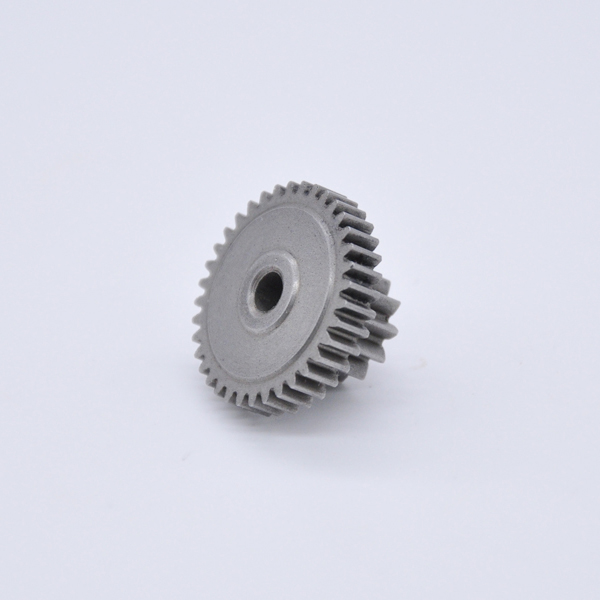
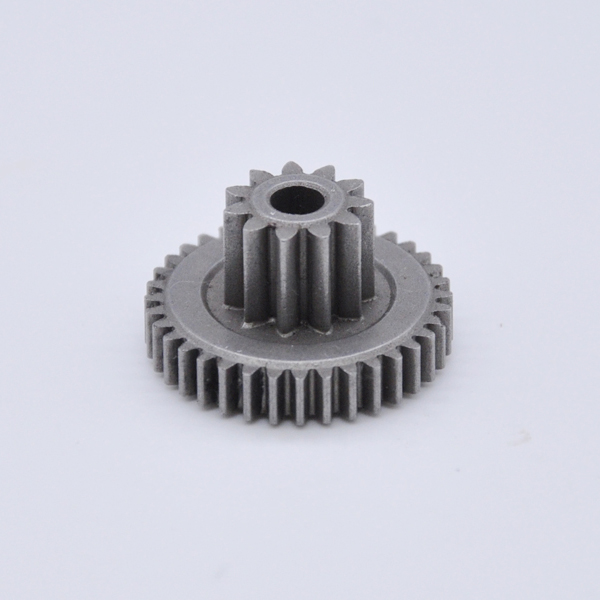
Электроинструмент / двигатель, порошковая металлургия, спеченная двойная шестерня, может быть изготовлена по индивидуальному заказу
Working Principle of OEM Powder Metallurgy Sintered Double Gears for Power Tools, Gearboxes, and Motors
OEM powder metallurgy sintered double gears are widely used in power tools, gearboxes, and motor-driven systems due to their compact structure, efficient torque transmission, and stable operating characteristics. A double gear typically integrates two different gear profiles—often with varying tooth counts or modules—into a single component, enabling multi-stage speed reduction or torque transfer within a limited space.
The working principle of sintered double gears is based on simultaneous power transmission across two gear stages. When rotational input from a motor shaft engages the first gear section, torque is transferred to the second gear section, which then drives the next stage of the transmission system. This integrated design reduces the need for multiple individual gears, minimizes alignment errors, and improves transmission efficiency.
Powder metallurgy manufacturing ensures high dimensional consistency between the two gear sections. During compaction, both gear profiles are formed in one die, guaranteeing concentricity and accurate tooth alignment. This precision is critical in power tools and motors, where high rotational speeds demand smooth meshing and minimal vibration. Reduced backlash and consistent tooth contact result in quieter operation and lower mechanical losses.
In power tools such as drills, grinders, and saws, sintered double gears play a key role in speed reduction and torque amplification. The motor typically operates at high speed but low torque, while the tool requires controlled speed and higher torque. The double gear efficiently converts motor output into usable mechanical power while maintaining compact gearbox dimensions.
In gearboxes and electric motors, these gears help optimize load distribution. The integrated structure ensures even stress transfer across gear teeth, reducing localized wear and extending service life. Additionally, the porous structure inherent to powder metallurgy allows for oil impregnation, enabling self-lubrication during operation. This feature significantly reduces friction and heat buildup, especially in sealed or maintenance-free systems.
Overall, the working principle of OEM powder metallurgy sintered double gears combines precision geometry, integrated transmission stages, and self-lubricating properties. These characteristics ensure efficient power transfer, stable operation, and long-term reliability in power tools, gearboxes, and motor-driven assemblies.
Material Selection and Manufacturing Process of OEM Powder Metallurgy Sintered Double Gears
Material selection and manufacturing processes are fundamental to the performance and reliability of OEM powder metallurgy sintered double gears used in power tools, gearboxes, and motor systems. Powder metallurgy allows manufacturers to precisely tailor material composition and internal structure to meet specific application requirements.
Most sintered double gears are produced using iron-based powder alloys, often combined with elements such as copper, nickel, or molybdenum. Copper improves strength and wear resistance, nickel enhances toughness and fatigue performance, and molybdenum increases hardenability. The exact alloy formulation is selected based on torque requirements, operating speed, and environmental conditions.
The manufacturing process begins with powder mixing, where metal powders and lubricants are blended to achieve uniform composition. This mixture is then compacted in a high-precision die, forming the double gear geometry in a single pressing operation. This step is critical, as it ensures accurate tooth profiles, concentricity, and consistent density across both gear sections.
After compaction, the green part undergoes sintering in a controlled-atmosphere furnace. During sintering, metal particles bond at high temperatures below the melting point, resulting in a strong, dimensionally stable structure. Controlled sintering parameters ensure uniform density and minimize distortion, which is essential for double gears that require precise alignment between stages.
Post-sintering processes may include heat treatment, such as carburizing, induction hardening, or sinter hardening, to enhance surface hardness and wear resistance. These treatments create a hard outer layer while maintaining a tough core capable of absorbing shock loads—an important requirement for power tools and gearboxes.
Oil impregnation is another key step. The controlled porosity of sintered gears allows lubricating oil to be absorbed into the structure, providing continuous lubrication during operation. This reduces friction, noise, and wear without the need for external lubrication systems.
Overall, the combination of optimized material selection and precise powder metallurgy manufacturing ensures that OEM sintered double gears deliver consistent quality, mechanical strength, and long service life in demanding power transmission applications.
Advantages of OEM Powder Metallurgy Sintered Double Gears Compared to Machined Gears
OEM powder metallurgy sintered double gears offer several significant advantages over traditionally machined gears, particularly in applications involving power tools, gearboxes, and electric motors. These advantages stem from both the manufacturing process and the resulting material structure.
One of the most important advantages is cost efficiency in high-volume production. Powder metallurgy allows near-net-shape forming, meaning the double gear is produced close to its final dimensions with minimal or no secondary machining. This significantly reduces material waste, machining time, and overall production cost compared to fully machined gears.
Another key advantage is design integration. Sintered double gears can combine two gear stages into a single component, which is difficult and expensive to achieve through machining. This integration reduces part count, simplifies assembly, and improves concentricity and alignment—critical factors for smooth transmission and reduced vibration.
Dimensional consistency and repeatability are also superior in powder metallurgy production. Once tooling is validated, each sintered gear produced maintains tight tolerances and uniform quality. This consistency is especially valuable for OEM customers requiring stable performance across large production batches.
From a performance perspective, sintered gears offer self-lubricating properties through oil impregnation. Machined gears typically require external lubrication systems, while sintered gears can operate reliably in sealed or low-maintenance environments. This reduces friction, noise, and wear, extending service life.
Powder metallurgy also enables tailored material properties. By adjusting powder composition, density, and heat treatment, manufacturers can optimize strength, wear resistance, and fatigue life to suit specific applications. Machined gears, by contrast, are limited by the properties of the original solid material.
Finally, sintered double gears support lighter weight and compact design, which is particularly beneficial in portable power tools and motor-driven systems. Reduced weight improves energy efficiency and overall system performance.
In summary, compared to machined gears, OEM powder metallurgy sintered double gears provide clear advantages in cost, design flexibility, consistency, lubrication, and performance. These benefits make them an ideal choice for modern power tools, gearboxes, and motor applications requiring reliable and efficient power transmission.











