






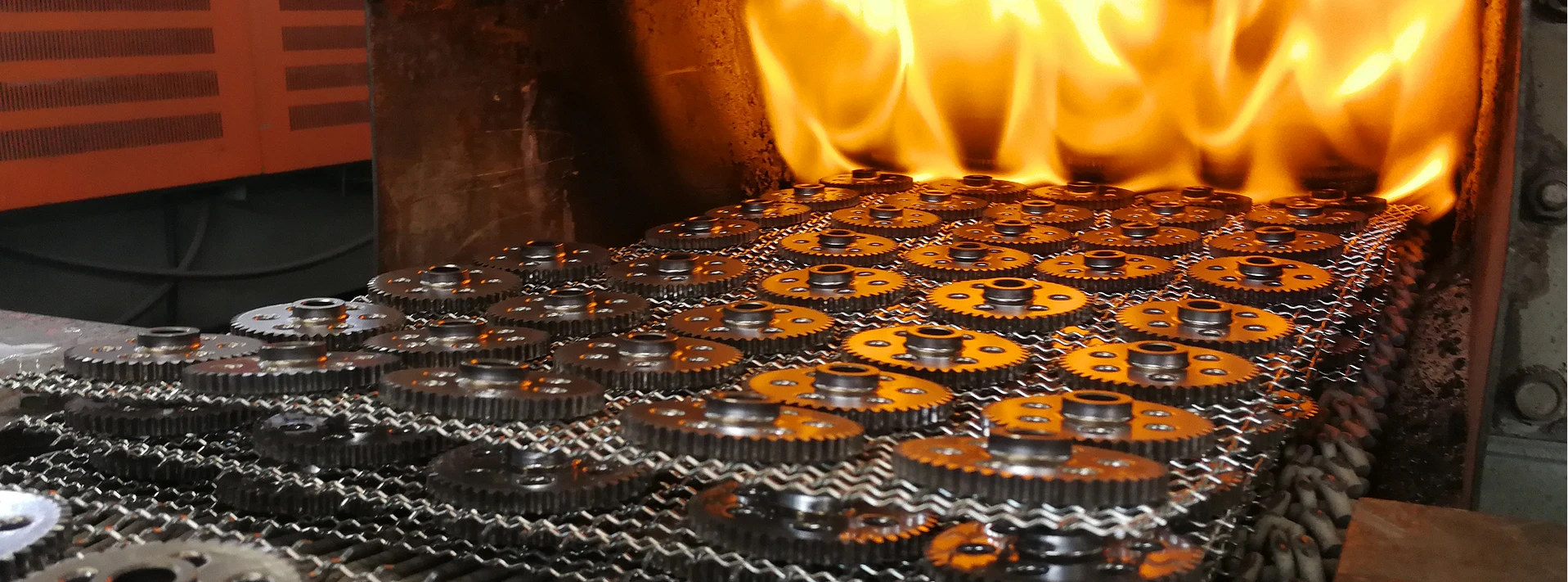
As global manufacturing demands precision, cost-efficiency, and environmental responsibility, one technology has steadily emerged as a cornerstone of industrial innovation: ชิ้นส่วนโลหะผง. Unlike traditional machining or casting, powder metallurgy enables the creation of intricate, highly durable components by compressing and sintering fine metal powders.
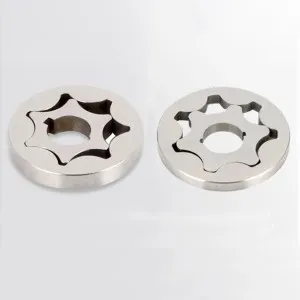
ชิ้นส่วนโลหะผง have revolutionized how industries approach product design and function. This process allows manufacturers to produce net or near-net shape components, drastically reducing the need for secondary machining. The result is lower material waste, faster production cycles, and tighter dimensional control. This makes powder metallurgy ideal for high-volume production of small, complex parts such as gears, bushings, bearings, and structural components.
What’s more, these parts offer exceptional material properties — including wear resistance, corrosion resistance, and high strength-to-weight ratios. This makes them suitable for applications in sectors as diverse as automotive, aerospace, electronics, and medical technology. And with growing interest in energy-efficient and sustainable solutions, powder metallurgy stands as a key contributor to green manufacturing.
As technology evolves, so does the scope of ชิ้นส่วนโลหะผง. New alloy combinations, refined powder processing techniques, and advanced sintering systems have pushed the boundaries of what’s possible. Today, powder metallurgy isn’t just a cost-effective solution — it’s a gateway to performance optimization and sustainability.
The Role of Company PM in Driving Powder Metallurgy Excellence
No innovation succeeds without experts at the helm — and that’s where a trusted นายกสมาคมบริษัท comes into play. These specialized companies don’t just produce parts; they drive the future of ชิ้นส่วนโลหะผง through investment in R&D, vertical integration, and advanced engineering support.
A leading นายกสมาคมบริษัท offers more than manufacturing. It provides end-to-end solutions, from material selection and part design to compacting, sintering, finishing, and quality control. With in-house metallurgy labs and simulation software, these companies optimize the structure and function of each part before production even begins. The result? Lower development costs, faster lead times, and fewer design revisions.
What sets a นายกสมาคมบริษัท apart is its ability to adapt. Whether it’s developing unique alloys for extreme environments or producing hybrid components that blend magnetic and structural functions, the best firms are constantly innovating. They also invest in automation, robotics, and AI-driven inspection systems to maintain exceptional quality standards.
For clients, partnering with a reliable นายกสมาคมบริษัท means gaining a long-term collaborator. These companies understand your industry’s regulatory standards, performance expectations, and timelines — delivering consistent value and technical insight. From EV drivetrains to medical implants, นายกสมาคมบริษัท organizations are the enablers behind many of today’s most advanced and reliable components.
Mastering Strength and Shape: Compacting in Powder Metallurgy
At the heart of the powder metallurgy process is one of its most critical steps: compacting in powder metallurgy. This is where fine metal powders are pressed into a specific shape under extreme pressure, forming a “green part” — a solid, yet unsintered version of the final product.
Compacting in powder metallurgy is fundamental to the integrity and performance of the finished component. When done correctly, it ensures uniform density throughout the part, minimizing internal stresses and porosity. This consistency directly influences strength, dimensional accuracy, and long-term durability.
Modern นายกสมาคมบริษัท operations use high-precision compaction equipment that can generate pressures exceeding hundreds of MPa. These presses are capable of shaping complex geometries, including internal features, undercuts, and variable-density zones. New techniques such as warm compaction and isostatic pressing allow for even higher part densities, approaching those of wrought materials.
Moreover, the evolution of compacting in powder metallurgy has enabled new possibilities. Gradient materials, multi-material layering, and even embedded electronics can now be achieved through advanced pressing methods. This creates parts that aren’t just functional — they’re multi-functional.
By investing in superior tooling, lubricant technology, and press control systems, นายกสมาคมบริษัท manufacturers elevate the quality of each part. As the demand for lightweight, high-performance, and cost-effective components grows, the role of compaction becomes even more central to the powder metallurgy value chain.
From Prototyping to Production: How Powder Metallurgy Parts Scale Efficiently
One of the most appealing aspects of ชิ้นส่วนโลหะผง is their scalability. A well-designed component can move from prototype to full-scale production with minimal change to the core process. This seamless transition is especially valuable for industries with rapidly evolving product designs and fluctuating demand.
Early in the development cycle, a นายกสมาคมบริษัท can assist in prototyping through rapid tooling or additive manufacturing using metal powders. These prototypes undergo rigorous testing, including stress analysis, porosity mapping, and thermal cycling, to validate performance under real-world conditions.
Once the design is finalized, the same compacting in powder metallurgy process used during prototyping is scaled for mass production. This ensures that functional performance remains consistent, even across millions of units. Because the tooling used in powder metallurgy is highly durable and production-friendly, lead times are short and unit costs remain low.
What truly sets this method apart is its flexibility. Manufacturers can quickly switch between product variants with minor tooling adjustments. This is ideal for automotive platforms with shared component architectures or consumer electronics that undergo frequent updates.
For companies navigating supply chain uncertainties or aiming for just-in-time production, ชิ้นส่วนโลหะผง offer both responsiveness and reliability. And with support from a seasoned นายกสมาคมบริษัท, businesses gain not just a supplier — but a strategic partner in scalable, efficient growth.
Next-Generation Applications of Compacting in Powder Metallurgy
With technology and engineering pushing forward at full throttle, the future of compacting in powder metallurgy is as exciting as it is promising. The combination of advanced materials, smart manufacturing, and sustainability is reshaping how industries view this process — not as an alternative, but as a preferred choice for next-generation applications.
In aerospace, ชิ้นส่วนโลหะผง are being used in jet engine components, fuel nozzles, and high-stress brackets that demand both precision and resilience. Here, compacting technology allows engineers to meet stringent performance and weight requirements. In medical devices, porous implants created via controlled compacting in powder metallurgy enable better bone integration and lower infection risks.
The electrification of vehicles and renewable energy technologies is also driving demand. Magnetic cores for electric motors, heat-resistant battery connectors, and lightweight structural supports are all made possible by modern powder compaction techniques. By leveraging advanced tool design, temperature control, and multi-axis pressing, manufacturers are achieving previously unattainable geometries and material behaviors.
Meanwhile, digital twins, AI-based process optimization, and sustainable sintering atmospheres are pushing the efficiency of นายกสมาคมบริษัท operations even further. As these technologies mature, the barrier to entry for new adopters of powder metallurgy continues to lower.
Whether it's for structural reliability, miniaturization, or sustainability, compacting in powder metallurgy stands ready to meet the evolving demands of 21st-century engineering.
ผงโลหะวิทยา คำถามที่พบบ่อย
What are the advantages of powder metallurgy parts over traditional components?
ชิ้นส่วนโลหะผง offer multiple advantages, including near-net shape manufacturing, minimal material waste, and superior dimensional accuracy. They require less secondary machining, resulting in lower production costs. These parts can also be engineered with specific material properties, such as high strength, magnetic responsiveness, or heat resistance. Additionally, powder metallurgy supports high-volume, automated production, making it ideal for cost-sensitive industries like automotive and electronics.
How does a company pm ensure quality in powder metallurgy parts?
A reputable นายกสมาคมบริษัท uses rigorous quality assurance protocols throughout the manufacturing process. This includes raw powder inspection, real-time process monitoring during compacting in powder metallurgy, advanced sintering temperature control, and post-sintering analysis. Many firms also utilize X-ray CT scanning, microhardness testing, and metallographic analysis to ensure that every part meets or exceeds customer specifications. Certifications like ISO 9001 and IATF 16949 are also standard in leading powder metallurgy companies.
What is the significance of compacting in powder metallurgy for part performance?
Compacting in powder metallurgy directly affects the density, mechanical properties, and dimensional accuracy of the final part. High-quality compaction ensures even distribution of particles and minimizes internal voids. This is essential for applications requiring high strength, thermal conductivity, or resistance to dynamic stress. Proper compaction also improves surface finish and reduces the likelihood of part failure under load or fatigue, making it a cornerstone of reliable component production.
Can powder metallurgy parts replace machined or forged components?
In many applications, yes. ชิ้นส่วนโลหะผง can match or even exceed the performance of machined or forged parts, especially in small-to-medium size components with complex geometries. Their ability to incorporate internal features, reduce weight, and integrate multi-material layers gives them a competitive edge. However, for very large or ultra-high load components, forged parts may still be preferred. That said, innovations in powder metallurgy are rapidly closing this gap.
Is powder metallurgy suitable for sustainable manufacturing goals?
Absolutely. Powder metallurgy is one of the most sustainable methods of metal part production. It minimizes scrap and energy usage by avoiding full melting, unlike casting or forging. Many นายกสมาคมบริษัท firms use recycled materials, energy-efficient furnaces, and eco-friendly lubricants. Additionally, the long tool life and low rejection rates in compacting in powder metallurgy contribute to reduced resource consumption and carbon footprint — aligning with global environmental standards.









