




High Precision Powder Metallurgy Gears Suppliers Guide
Procuring high-precision transmission components requires a strategic balance between material durability and geometric precision. For engineers in the automotive and robotic sectors, the shift toward powder metallurgy has redefined how power is transmitted in compact systems. By utilizing sintered metal powders, manufacturers can now produce complex gear geometries that traditional machining would find prohibitively expensive or technically impossible to achieve at scale.
Whether designing for automated industrial equipment or high-load automotive transmissions, the objective remains the same: minimizing energy loss while maximizing fatigue resistance. This guide examines the technical advantages of customized powder metallurgy gears, focusing on how specific surface treatments and sintering processes address the rigorous demands of modern power tool and robotic systems.

The Technical Foundation of Powder Metallurgy Gear Production
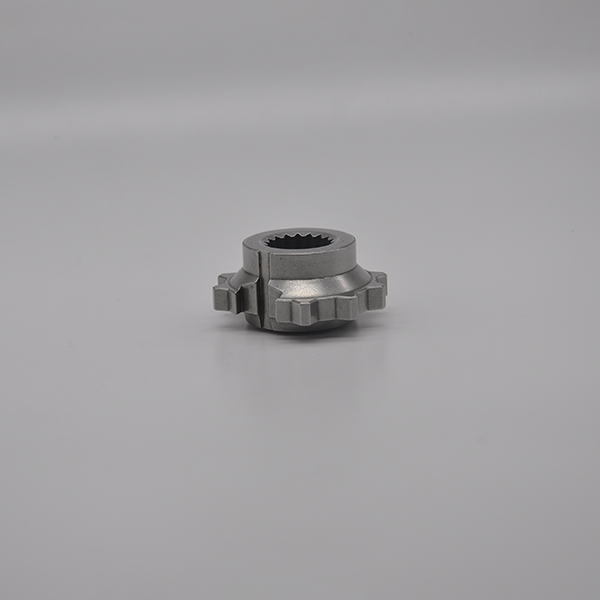
Powder metallurgy (PM) represents a sophisticated approach to gear manufacturing, where metal powders are compacted under high pressure and then sintered in a controlled atmosphere. This process allows for the creation of Customized Powder Metallurgy Gears that feature exceptional dimensional consistency. Unlike subtractive manufacturing, PM minimizes material waste, making it an environmentally sustainable choice for medium to large-scale production runs.
The structural integrity of these gears is derived from the sintering process, which bonds the metal particles at a molecular level. By controlling the density and the cooling rate, engineers can achieve a specific balance of hardness and toughness. This is particularly critical for planetary gear systems used in automotive transmissions, where the tooth profile must withstand repetitive high-load cycles without premature wear or deformation.
- Material Efficiency: Significant reduction in raw material scrap compared to traditional milling.
- Complex Geometries: Ability to produce intricate tooth profiles and integrated structural features.
- Consistency: Automated powder molding ensures every part in a batch meets identical specifications.

Enhancing Performance through Specialized Surface Treatments
Raw sintered iron powder provides a strong base, but the operational environment—ranging from high-friction automotive engines to humid industrial settings—demands enhanced surface properties. To achieve this, a variety of post-sintering processes are applied to optimize the gear's lifecycle. Quenching is frequently utilized to increase the surface hardness, ensuring that the gear teeth resist bending and fatigue under extreme stress.
For components requiring superior lubrication and corrosion resistance, options such as oil impregnation and e-coating are implemented. Oil impregnation fills the inherent microporosity of the sintered material, creating a self-lubricating effect that reduces friction and energy loss during high-frequency operation. Meanwhile, steam oxidation and vibration grinding are used to refine the surface finish, reducing noise and vibration (NVH) in precision transmission systems.
These treatments ensure that the gears are not only precise in their dimensions but also resilient against the chemical and mechanical stresses of their specific application, whether they are serving as motor rotors or structural OEM parts.
Critical Application Scenarios in Modern Machinery
The versatility of sintered gears makes them indispensable across several high-tech industries. In automotive transmission systems, planetary gears produced via powder metallurgy provide the necessary torque density in a compact footprint. Their ability to maintain precise tooth profiles ensures high transmission efficiency, which directly contributes to improved fuel economy and smoother gear shifts.
Beyond the automotive sector, these components are vital for robotic systems and automation equipment. In these environments, the requirement for "zero-play" or high-precision motion is paramount. Sintered gears allow for the exact tooth profile design needed to reduce backlash, ensuring that robotic arms and automated assembly lines operate with micron-level accuracy.
Additionally, in the power tool industry, the high wear resistance of quenched sintered steel allows gears to operate under high-load, high-RPM conditions without failing. This reliability is a key driver for OEMs looking to reduce warranty claims and extend the service life of their end-products.
Technical Specification and Selection Matrix
| Feature Parameter | Material: Sintered Iron | Surface Treatment | Primary Benefit |
|---|---|---|---|
| Wear Resistance | High Density Powder | Quenching | Extended Tooth Life |
| Friction Control | Porous Matrix | Oil Impregnation | Self-Lubrication |
| Corrosion Shield | Iron-based Alloy | E-coating / Oxidation | Environmental Stability |
| Precision Level | Molding (60T-300T) | Vibration Grinding | Reduced Noise & Vibration |
| Production Scale | Automatic Batching | Standardized Process | Cost-Effective High Volume |
Evaluating Quality Standards for OEM Components
When selecting gears suppliers, the focus must extend beyond the unit price to include the rigorousness of the quality management system. Certification such as TS16949 is not merely a formality; it indicates a manufacturing environment capable of meeting the strict safety and reliability standards of the automotive industry. This involves a closed-loop quality control process from powder batching to final inspection.
Advanced testing equipment is the cornerstone of quality assurance in powder metallurgy. The use of density testers ensures that the sintering process has achieved the required structural compactness, while video measuring machines verify that the tooth profile adheres to the design specifications. Hardness testers are employed post-quenching to confirm that the surface treatment has reached the target Rockwell or Vickers hardness levels.
For an OEM buyer, the ability of a supplier to provide customized solutions—including tailored tooth profiles and materials—while maintaining these certifications reduces the risk of assembly failures and ensures a seamless integration into the final product assembly.
Future Trends in Sintered Transmission Technology
The trajectory of transmission components is moving toward higher efficiency and lower environmental impact. The industry is seeing a shift toward "Green Manufacturing," where the low energy consumption and high material utilization of powder metallurgy are becoming major competitive advantages. We expect to see more advanced alloy powders that offer even higher strength-to-weight ratios, further reducing the inertia in high-speed robotic applications.
Moreover, the integration of fiber marking and ultrasonic cleaning into the production line is enhancing traceability and purity. As automotive systems move toward electrification, the demand for gears that can handle the instantaneous torque of electric motors—while remaining whisper-quiet—will drive further innovation in precision grinding and surface hardening technologies.
For procurement managers, the key will be partnering with manufacturers who can pivot their R&D capabilities to match these evolving requirements, providing short production cycles and agile responses to design changes.
Technical Questions on Powder Metallurgy Gears
What are the primary advantages of powder metallurgy gears over CNC machined gears?
Powder metallurgy offers significantly higher material utilization, reducing waste and cost for large volumes. It also allows for the creation of complex shapes and self-lubricating properties through oil impregnation, which are difficult to achieve with traditional machining.
How is the durability of sintered gears ensured for high-load applications?
Durability is ensured through high-pressure molding (up to 300T) and specialized heat treatments like quenching, which increase surface hardness and fatigue resistance, making them suitable for high-frequency usage environments.
Which surface treatments are best for preventing corrosion in industrial gears?
Depending on the environment, e-coating and steam oxidation are highly effective. E-coating provides a robust protective layer, while steam oxidation creates a hard, corrosion-resistant oxide film on the gear surface.
Can powder metallurgy gears be fully customized for specific tooth profiles?
Yes, customized solutions are a core part of the PM process. Dimensions, tooth profiles, and material compositions can be tailored to fit specific transmission system requirements, from planetary gears to structural OEM parts.
What certifications should I look for when sourcing automotive gear components?
The TS16949 certificate is the gold standard for automotive industry quality management. Additionally, ISO9001 certification ensures that the manufacturer follows consistent quality and operational standards.
What is the typical lead time for custom sintered gear production?
Typically, delivery takes between 20 to 45 days, depending on the complexity of the design, the volume of the order, and the specific surface treatment requirements requested by the customer.
Technical Resources and Industry Standards
- ISO Standards for Quality Management Systems
- IATF 16949 Automotive Quality Standards
- Powder Metallurgy Association Technical Guidelines
- NIST Materials Science and Engineering Research
Selecting the right sintered gear requires a deep understanding of both the application environment and the manufacturing capabilities of the supplier. By focusing on material density, surface treatment, and certified quality controls, engineers can ensure the long-term reliability of their transmission systems.
Related Technical Insights