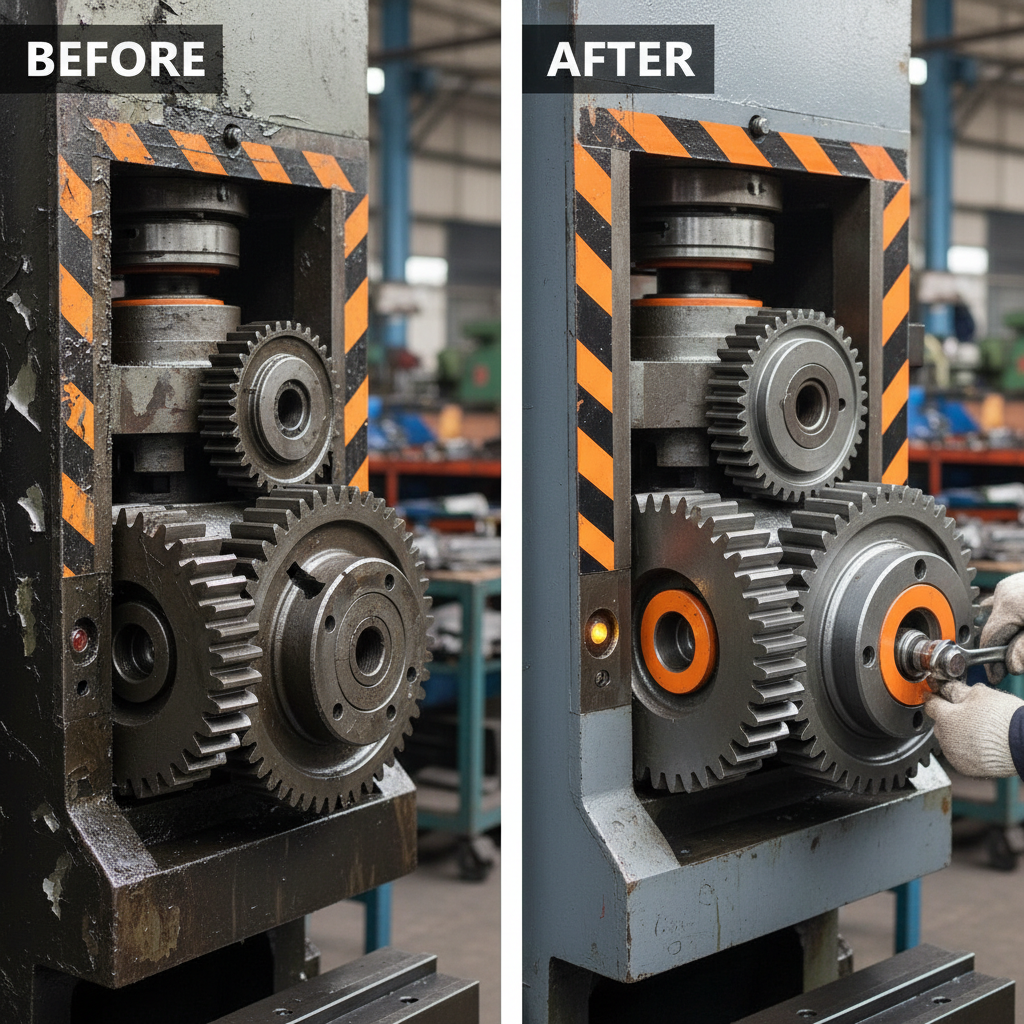





The automotive and industrial power transmission sectors are currently witnessing a significant shift toward miniaturization and higher power density. As machinery becomes more compact, the demand for high-precision components has pushed the role of small gear manufacturers into the spotlight, particularly those capable of balancing tight tolerances with mass-production scalability.
The core challenge lies in maintaining structural integrity and wear resistance when gear dimensions shrink. Traditional machining often struggles with the cost-to-precision ratio for micro-scale gears, leading engineers to explore powder metallurgy (PM) as a viable alternative. This shift is driven by the need for components that can withstand high stress in automotive engines and electrical machinery without adding unnecessary bulk.
This technical analysis examines the manufacturing paradigms currently dominating the production of small gears, focusing on how material standards and sintering processes affect long-term performance. By understanding these engineering trade-offs, procurement officers and design engineers can better navigate the selection of small gear manufacturers to optimize their system reliability.


Powder metallurgy (PM) has revolutionized how small gear manufacturers approach high-volume production. Unlike subtractive machining, PM utilizes a "press-and-sinter" workflow: metal powder is compacted in a precision die to create a "green" part, which is then heated in a controlled atmosphere furnace to bond the particles.
This architecture allows for the creation of complex geometries, such as internal splines or customized sun gears, with minimal material waste. The ability to maintain consistency across millions of units makes it the gold standard for automotive engine components and power tool transmissions.
For small gears, material selection is not just about the element but the standard of the powder. Industry benchmarks such as MPIF 35, DIN 30910, and JIS Z2550 ensure that the chemistry and particle size distribution are optimized for specific hardness and strength requirements. Materials typically include iron, copper, and brass, depending on whether the priority is torque transmission or corrosion resistance.
Density is the primary driver of mechanical performance in sintered parts. A density range of 6.2 to 7.1 g/cm³ is critical; higher density generally correlates with increased tensile strength and better fatigue resistance. When density drops, the porosity increases, which can be beneficial for oil impregnation but detrimental to the gear's ultimate yield strength.
In high-load applications, macro hardness levels between 45-80 HRA are targeted through precise sintering and subsequent heat treatments. This ensures that the gear teeth can withstand repetitive contact stress without premature pitting or deformation, a critical factor for automotive gear transmission parts.
The primary engineering hurdle in small gear production is the management of shrinkage during the sintering process. As the powder bonds, the part dimensions change slightly. Achieving high-precision tolerances requires a sophisticated understanding of the material's thermal expansion and contraction rates.
Furthermore, the integration of these gears into larger planetary or sun gear assemblies requires strict adherence to CAD and 3D specifications. Any deviation in the tooth profile can lead to increased noise, vibration, and harshness (NVH), which is unacceptable in modern automotive and electrical engineering standards.
Evaluating the efficiency of powder metallurgy versus traditional CNC machining reveals a clear advantage in mass production. While CNC provides superior absolute precision for prototypes, PM delivers a more consistent "batch quality" that is essential for large-scale industrial deployments.
The following assessment provides a normalized engineering rating across several key performance indicators, highlighting where PM-manufactured small gears excel in an industrial context.
Small sintered gears find extensive use in environments where reliability and precision are non-negotiable. In the automotive sector, they are integral to gearboxes, reducers, and planetary systems. Beyond vehicles, they are critical in textile machinery, industrial sewing machines, and high-end power tools, where they must transmit torque efficiently within a very small footprint.
Representative engineering scenarios include the use of powder metal rotors and sintered magnets in electrical engineering, where the gear must operate with minimal friction and high thermal stability. In these cases, oil impregnation is often used as a surface treatment to provide self-lubricating properties, reducing maintenance intervals in hard-to-reach machinery.
The evolution of finishing processes has allowed sintered gears to compete with ground gears in terms of precision. Modern small gear manufacturers now implement fiber marking for traceability and ultrasonic cleaning to ensure that no residual powder affects the gear mesh.
Advanced quenching and polishing techniques are used to refine the surface finish. By reducing surface roughness, the friction coefficient is lowered, which directly impacts the energy efficiency of the overall transmission system. This is particularly vital for the emerging market of electric vehicle (EV) reducers.
Looking forward, the industry is moving toward "near-net-shape" production, where the sintering process is so precise that secondary machining is almost entirely eliminated. This not only reduces cost but also eliminates the risk of inducing internal stresses through excessive grinding.
When selecting a partner among various small gear manufacturers, buyers must look beyond price. The capability to provide full OEM/ODM support—from converting a 3D PDF into a production-ready mold to ensuring TS16949 compliance—is a key differentiator.
A robust evaluation should focus on the manufacturer's equipment list. The presence of automated batching systems, high-frequency quenching furnaces, and video measuring machines indicates a commitment to quality control and dimensional repeatability.
The following matrix provides a framework for comparing different gear configurations based on typical industrial requirements, helping engineers match the right specification to their application.
| Configuration Type | Typical Material | Performance Focus | Recommended Use Case |
|---|---|---|---|
| Basic Profile | Sintered Iron | Cost-to-Value | Hardware Tools |
| Precision Profile | Alloy Steel PM | Dimensional Accuracy | Automotive Sensors |
| High-Duty Profile | Full Hardened Iron | Wear Resistance | Industrial Reducers |
| Corrosion-Resistant | Sintered Brass | Chemical Stability | Marine Electronics |
| Low-Friction Profile | Oil-Impregnated PM | Self-Lubrication | Textile Machinery |
| High-Strength Profile | Quenched Alloy PM | Ultimate Tensile Strength | Engine Transmission |
Most professional small gear manufacturers target a density between 6.2 and 7.1 g/cm³. This range is critical because density directly affects the tensile and yield strength of the gear. Higher density reduces internal porosity, which enhances the gear's ability to handle higher torque loads and improves fatigue life, making it essential for automotive and heavy-duty industrial applications.
Powder metallurgy is significantly more cost-effective for mass production (10k+ units) due to reduced material waste and faster cycle times. While CNC machining offers unmatched precision for low-volume prototypes, PM provides exceptional batch-to-batch consistency and the ability to create complex near-net shapes without expensive secondary operations, provided the design is compatible with pressing.
Depending on the application, quenching and full hardening are used to increase macro hardness (up to 80 HRA). For components requiring low maintenance, oil impregnation fills the pores of the sintered metal, providing a self-lubricating effect. Other options include black oxide for corrosion resistance and polishing to reduce friction and noise in high-speed transmissions.
To ensure precision, manufacturers typically require technical drawings in CAD, 3D, or PDF formats. These documents should specify material standards (e.g., MPIF or DIN), required density, hardness levels, and critical tolerances. If drawings are unavailable, providing a physical sample allows the manufacturer to perform reverse engineering and generate the necessary production blueprints.
Yes, provided the material selection is appropriate. Sintered alloys are often more thermally stable than some plastics or low-grade cast metals. However, the specific operating temperature limit depends on the material's melting point and the type of surface treatment used. Buyers should verify the thermal expansion coefficients with the manufacturer to prevent gear binding at high temperatures.
For standard OEM orders, mass production typically ranges from 10 to 30 days after the deposit is received and the design is finalized. This timeframe includes tool preparation, trial pressing, and the sintering cycle. Lead times can vary based on the complexity of the gear geometry and the volume of the order, but the efficiency of automated production lines generally keeps these cycles short.
The transition toward powder metallurgy in the production of small gears is a response to the industrial need for high-performance, low-cost components that can be scaled rapidly. By focusing on density control and advanced sintering standards, manufacturers can produce gears that rival traditionally machined parts in both strength and precision.
For engineers and procurement teams, the key to success lies in a rigorous evaluation of material standards and the manufacturer's ability to maintain strict tolerances. Partnering with experienced small gear manufacturers ensures that the final transmission system is optimized for durability, efficiency, and long-term reliability.


Shijiazhuang JingShi New Material Science and Technology Co., Ltd was founded since 2014, located in Shijiazhuang, Hebei province, China. The company covers an area of over 10,000 square meters and has


PRODUCTS

CONTACT US
Address:TIANSHAN INTERNATIONAL MANUFACTURING INDUSTRY PARK NO.57, YUANSHI, SHIJIAZHUANG CITY, HEBEI PROVINCE, CHINA
Address:TIANSHAN INTERNATIONAL MANUFACTURING INDUSTRY PARK NO.57, YUANSHI, SHIJIAZHUANG CITY, HEBEI PROVINCE, CHINA