






Precise engine timing and rotational stability are the silent architects of motorcycle longevity. In the high-stress environment of a 4-stroke engine, the ability to regulate valve timing and engine speed is not merely a feature but a critical requirement for maintaining combustion efficiency and reducing mechanical fatigue.
For mid-range commuter motorcycles, particularly those operating in the demanding climates of Southeast Asia, South America, and Africa, the demand for durable, OEM-specification components has surged. The challenge for distributors and repair shops lies in sourcing parts that balance high-precision machining with material endurance to withstand prolonged high-RPM operation.
Understanding the technical intersection of powder metallurgy and precision engineering allows buyers to identify a reliable gears factory capable of meeting these rigorous standards. This analysis explores the critical role of the camshaft governor and the manufacturing benchmarks that define its performance.


The camshaft governor acts as the primary regulator for valve timing and engine speed. In models such as the KPH and BRIZAL125, the governor ensures that the opening and closing of valves are synchronized with the piston's position, which is fundamental for consistent combustion and optimal torque output.
When this component fails or loses precision, the engine may experience erratic throttle response and increased vibrations. By stabilizing the engine speed, the governor prevents over-revving and reduces the mechanical stress placed on the valve train, directly extending the operational life of the cylinder head and camshaft.
The durability of engine components is a product of material selection and post-processing heat treatments. For governors, the use of high-quality alloy materials is non-negotiable, as these parts must withstand constant friction and thermal expansion. Advanced heat treatment processes are employed to ensure that the surface hardness is sufficient to resist wear while the core remains tough enough to absorb shock loads.
Precision machining plays a secondary but equally vital role. A governor that does not fit perfectly within the engine assembly creates parasitic drag and increases the likelihood of premature failure due to misalignment. OEM specifications demand tight tolerances to ensure that the part integrates seamlessly into existing 4-stroke engine assemblies without requiring modification.
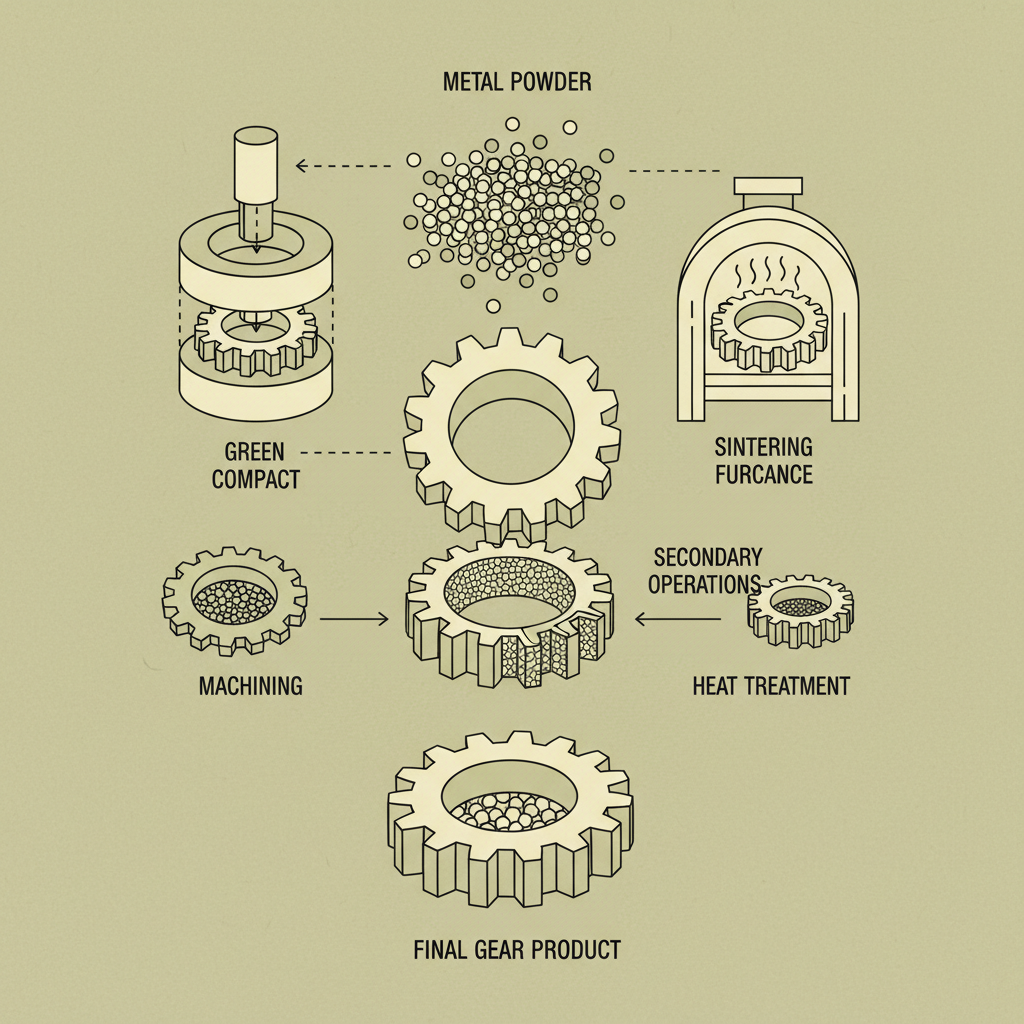
From a manufacturing perspective, the integration of automated powder molding and sintering—capabilities found in a professional gears factory—allows for a level of consistency that manual machining cannot match. This consistency ensures that every batch of governors maintains the same weight, balance, and structural integrity.
Hardness is often measured on the Rockwell scale (HRA), and for critical engine parts like the camshaft governor, a range of HRA65-75 is typically targeted. This level of hardness ensures that the contact surfaces do not deform under the high pressure of engine operation.
Surface hardness in engine governors is the primary defense against abrasive wear; however, the balance between hardness and ductility is what prevents catastrophic fracturing under high-RPM stress.
When hardness is insufficient, the governor wears down, leading to "slop" in the timing mechanism. This inaccuracy manifests as reduced fuel efficiency and a noticeable drop in acceleration. Conversely, excessive hardness without proper tempering can make the part brittle, leading to cracks during sudden engine load changes.
Evaluating the quality of a camshaft governor requires looking beyond simple dimensions. Performance is measured by its ability to maintain stable operation under extended riding conditions and high temperatures. Factors such as the material's resistance to thermal fatigue and the precision of the governor's weight distribution are key indices of quality.
In the following analysis, we examine how different manufacturing standards impact key performance indicators. While standard aftermarket parts may offer immediate fit, OEM-grade components produced by a specialized gears factory typically score higher in long-term stability and wear resistance.
Motorcycles in regions like Brazil or Southeast Asia often operate as primary transport in dense urban traffic, characterized by frequent stop-and-go cycles and extreme idling times. This operational profile places an immense burden on the governor, as it must constantly regulate speed transitions under varying thermal loads.
For these markets, "affordability" cannot come at the expense of "endurance." A component that fails prematurely doesn't just cost the user the price of the part, but results in engine downtime and potential damage to the camshaft. This is why distributors prioritize ISO9001 and TS16949 certified suppliers who can provide verified hardness and delivery consistency.
The global shift toward energy-efficient transportation is influencing the design of even the smallest engine components. Reducing internal friction within the valve train is a primary goal for modern engine engineers. Governors that are precisely balanced and manufactured with low-friction sintered materials contribute to a reduction in energy loss.
Moreover, the trend toward cleaner emissions requires more precise combustion cycles. A governor that maintains strict valve timing allows the engine to operate closer to its stoichiometric ideal, reducing unburnt hydrocarbons and improving the overall environmental footprint of commuter motorcycles.
As manufacturers move toward more automated production lines, the use of fiber marking and ultrasonic cleaning has become standard. These processes ensure that parts are free of contaminants that could cause premature wear, aligning with the broader industry movement toward zero-defect manufacturing.
When selecting a supplier for critical engine parts, the decision should be based on a multi-dimensional framework rather than price alone. A high-quality gears factory should demonstrate capabilities in both raw material processing and rigorous quality testing, including density testers and video measuring machines.
The trade-off between cost and reliability is most evident in the choice between generic aftermarket parts and OEM-specification components. While generic parts may fit, they often lack the specific heat treatment required for long-term stability under high RPMs, leading to higher total cost of ownership due to frequent replacements.
The following table provides a relative suitability framework for different types of governor components based on typical application requirements.
| Requirement | Generic Aftermarket | OEM-Specification | High-Performance |
|---|---|---|---|
| Dimensional Precision | Moderate | High | Ultra-High |
| Surface Hardness | Variable | Consistent (HRA65-75) | Specialized Coating |
| Thermal Stability | Low | High | Very High |
| Installation Ease | May require fitment | Direct Fit | Precision Fit |
| Expected Lifespan | Short to Medium | Long | Extended |
| Cost-Efficiency Ratio | Low (High replacement) | High (Balanced) | Medium (Premium cost) |
The camshaft governor is designed to regulate engine speed and control valve timing precisely. By stabilizing the speed at which valves open and close, it ensures optimal combustion, smooth acceleration, and prevents engine over-revving, which protects core internal components from mechanical stress and wear.
This specific hardness range provides the necessary balance between wear resistance and structural toughness. A hardness of HRA65-75 ensures that the governor can withstand constant friction against other engine parts without prematurely wearing down, while remaining ductile enough to avoid cracking under sudden load changes.
Fuel efficiency is directly tied to the precision of the combustion cycle. A governor that maintains strict timing prevents fuel waste caused by inefficient valve overlap or improper timing. By optimizing the air-fuel mixture combustion through precise timing, the engine consumes less fuel for the same power output.
Non-OEM parts often suffer from inconsistent material quality and looser tolerances. This can lead to poor fitment, increased engine vibration, and erratic throttle response. Over time, inferior materials may wear down faster, potentially causing timing failures that could lead to expensive engine rebuilds.
Yes, specialized manufacturers can provide OEM parts development services. By utilizing automated powder molding and sintering, they can adapt the design, material composition, and hardness to meet the specific structural and functional requirements of different engine models, such as those used in KPH or BRIZAL125.
Buyers should request certification documentation (such as ISO9001 or TS16949) and material test reports. Verification of hardness (HRA) and dimensional accuracy via video measuring machines is essential. Additionally, checking the supplier's production capacity and quality control process ensures long-term consistency.
The integrity of a motorcycle engine depends on the synergy between its smallest components. As the global commuter market demands higher reliability and lower emissions, the role of precision-engineered governors becomes more significant. Selecting components based on verifiable material hardness and OEM specifications is the only way to ensure long-term performance.
Partnering with a technically capable gears factory ensures that the balance between affordability and endurance is maintained. By focusing on powder metallurgy and strict quality control, manufacturers can provide the dependability required for the world's most demanding riding environments.




Shijiazhuang JingShi New Material Science and Technology Co., Ltd was founded since 2014, located in Shijiazhuang, Hebei province, China. The company covers an area of over 10,000 square meters and has


PRODUCTS

CONTACT US
Address:TIANSHAN INTERNATIONAL MANUFACTURING INDUSTRY PARK NO.57, YUANSHI, SHIJIAZHUANG CITY, HEBEI PROVINCE, CHINA
Address:TIANSHAN INTERNATIONAL MANUFACTURING INDUSTRY PARK NO.57, YUANSHI, SHIJIAZHUANG CITY, HEBEI PROVINCE, CHINA
