






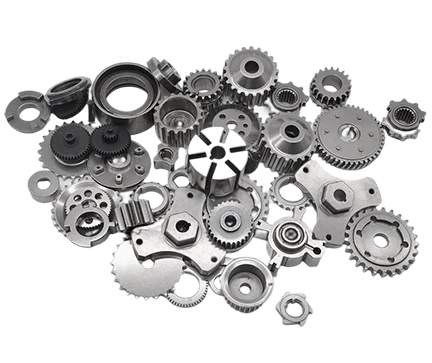
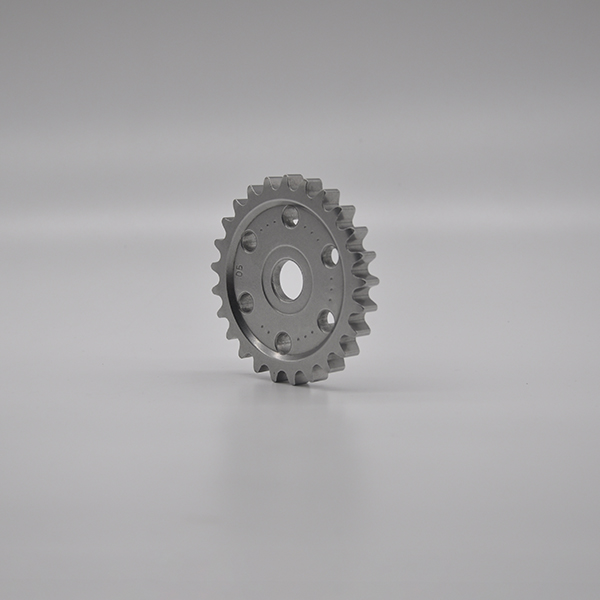
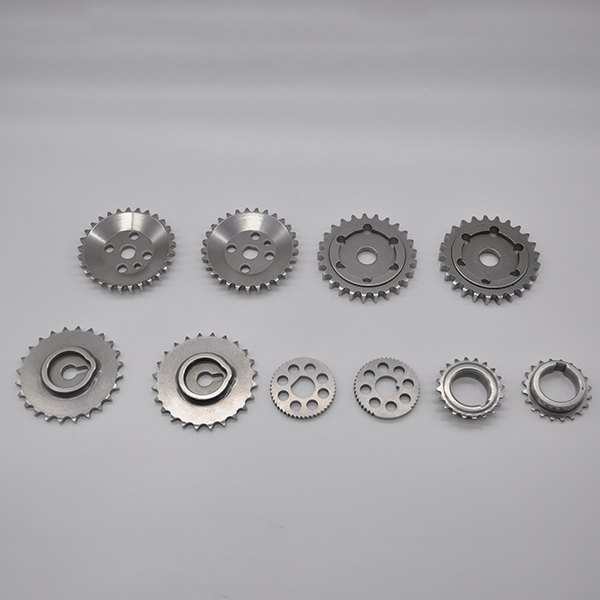
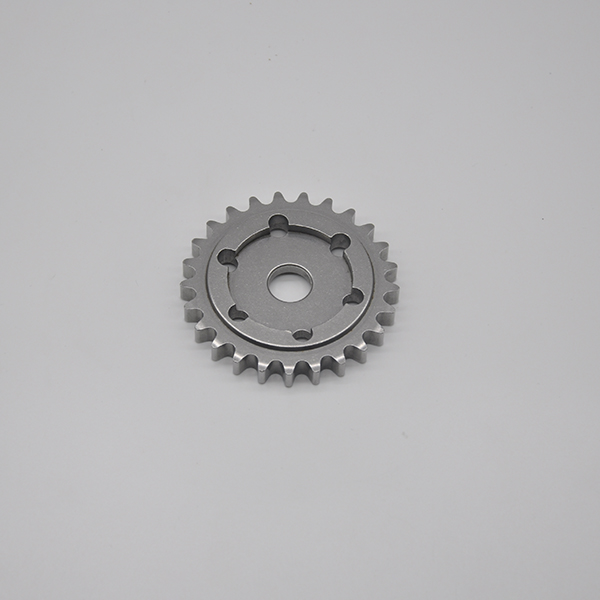
| Materiale | Jernpulver, Jernlegeringspulver |
| Sertifikat | ISO9001, TS16949 |
| Toleranse | +/- 0,02 mm |
| Tetthetsområde | 6-7,2/cm3(Fe) |
| Overflatebehandling | Svarte, polering, sandblåsing, galvanisering |
| Varmebehandling | Vanlig bråkjøling, karbonisering, ritriding, høyfrekvent slukking |
| Søknad | Sportsutstyr, husholdningsapparater, transmisjonsdeler, kjøretøy, etc |
| Ytelse | Høy presisjon, høy slitestyrke, lav støy, jevn og stødig, billig |
| Prosessteknologi | Pulvermetallurgi |
| Behandle | Blanding-Mekanisk forming-Hydraulisk støping-Deteksjonsstyrke og hardhet-pakking og frakt |
Manufactured from high-quality carbon steel, alloy steel, stainless steel, or engineering-grade materials, gear wheels are engineered to withstand high loads, continuous operation, and demanding working conditions. Advanced heat treatment processes such as carburizing, quenching, and tempering significantly improve surface hardness and wear resistance, ensuring long service life and stable performance under high-speed or heavy-duty operation.
Precision machining is a key factor in gear wheel performance. CNC cutting, hobbing, shaping, and grinding processes ensure accurate tooth profiles and tight tolerances, allowing smooth meshing between gears. This precision reduces friction, vibration, and noise during operation while maximizing transmission efficiency. Balanced rotation also helps minimize mechanical stress on connected components.
Gear wheels are available in various types, including spur gears, helical gears, bevel gears, and timing gears, each designed for specific transmission requirements. Depending on application needs, they can be customized in terms of module, number of teeth, bore size, pressure angle, and surface finish.
In automotive applications, gear wheels are essential for engines, transmissions, steering systems, and auxiliary drives, ensuring reliable power delivery and synchronized movement. In industrial equipment, they support conveyor systems, pumps, compressors, and reducers, providing stable and efficient power transmission.
With strict quality control, durable materials, and precision manufacturing, the gear wheel delivers excellent load capacity, accurate motion control, and long-term reliability. It is an indispensable component for any mechanical system requiring efficient and dependable power transmission.
Common Types of Gear Wheels and Their Industrial Applications
Gear wheels are classified into several common types based on tooth shape, shaft orientation, and transmission requirements. Each type is designed to meet specific mechanical and industrial application needs.
Spur gears are the most widely used gear wheels, featuring straight teeth parallel to the gear axis. They are known for high efficiency, simple structure, and ease of manufacturing. Spur gears are commonly applied in conveyors, pumps, compressors, and general machinery where moderate speed and load are required.
Helical gears have angled teeth that engage gradually, resulting in smoother and quieter operation. Due to their higher load-carrying capacity, helical gear wheels are frequently used in automotive transmissions, industrial reducers, and heavy-duty machinery. Their design reduces vibration and improves operational stability.
Bevel gears are designed to transmit motion between intersecting shafts, typically at a 90-degree angle. They are widely used in differential systems, power tools, and industrial equipment requiring directional changes in power transmission.
Worm gears consist of a worm and a worm wheel, offering high reduction ratios in a compact design. These gear wheels are ideal for lifting equipment, conveyors, and positioning systems where controlled speed reduction and self-locking functions are needed.
Timing gears ensure precise synchronization between rotating components and are commonly used in engines, printing machines, and automation systems. Their accurate tooth profiles prevent slippage and maintain timing accuracy.
Thanks to this wide range of designs, gear wheels are essential components across industries such as automotive, manufacturing, mining, agriculture, and energy production.
Key Performance Advantages of High-Precision Gear Wheels
High-precision gear wheels are engineered to deliver superior performance in demanding mechanical systems. One of their most significant advantages is accurate power transmission, achieved through precise tooth geometry and tight manufacturing tolerances. This ensures smooth meshing between gears and consistent rotational motion.
Another key advantage is reduced noise and vibration. Precision-ground gear teeth engage more evenly, minimizing impact forces during operation. This results in quieter performance and improved working environments, especially in high-speed or continuous-duty applications.
High-precision gear wheels also offer enhanced load capacity and durability. Advanced materials combined with heat treatment processes such as carburizing and induction hardening improve surface hardness and fatigue resistance. This allows gears to withstand higher torque and longer operating cycles without premature wear.
Improved transmission efficiency is another important benefit. Reduced friction between meshing teeth lowers energy loss, contributing to better system efficiency and reduced power consumption. This is particularly valuable in energy-sensitive industrial applications.
Additionally, precision gear wheels help extend the lifespan of associated components such as shafts, bearings, and housings by reducing mechanical stress. This leads to lower maintenance requirements and reduced downtime.
Overall, high-precision gear wheels provide reliable performance, operational stability, and long-term cost efficiency, making them the preferred choice for high-performance machinery and critical transmission systems.
How to Choose the Right Gear Wheel for Different Machinery Applications
Selecting the right gear wheel is essential for achieving optimal machinery performance and reliability. The first consideration is the application requirement, including load capacity, operating speed, torque, and working environment. These factors determine the appropriate gear type and material.
The gear type should be chosen based on shaft arrangement and performance needs. Spur gears are suitable for simple, low-noise-tolerant systems, while helical gears are preferred for high-speed and heavy-load applications. Bevel or worm gears are ideal when directional changes or high reduction ratios are required.
Material selection is another critical factor. Steel and alloy steel gear wheels offer high strength and wear resistance for heavy-duty use, while stainless steel provides corrosion resistance in harsh environments. Engineering plastics may be suitable for lightweight or noise-sensitive applications.
Precision level and tolerance requirements should also be evaluated. High-precision gear wheels are recommended for applications requiring smooth motion, low vibration, and high positioning accuracy, such as automation and CNC equipment.
Additional factors include gear size, module, number of teeth, and surface treatment. Proper lubrication compatibility and maintenance requirements should also be considered to ensure long service life.
By carefully evaluating these factors, users can select the most suitable gear wheel that meets performance demands, improves efficiency, and ensures reliable long-term operation across various machinery applications.











