






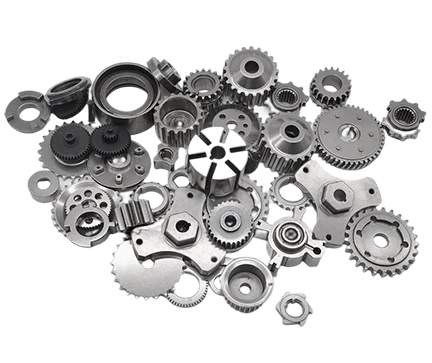
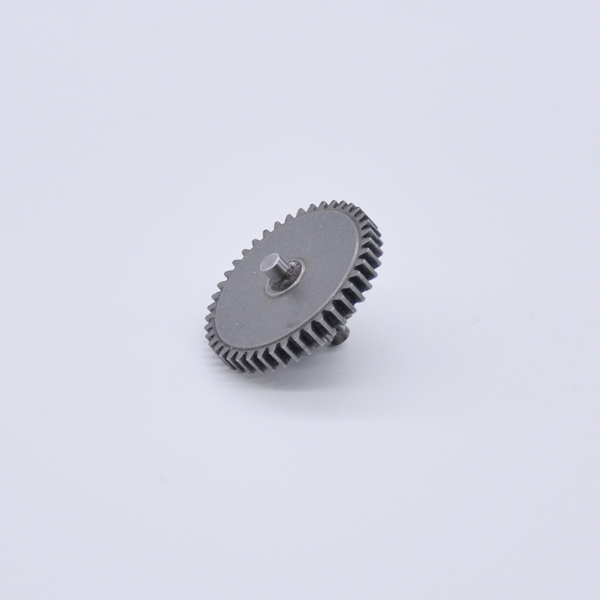
| Tuotteen nimi | Räätälöidyt jauhemetallurgiavarusteet, sintratut varusteet |
| Materiaali | Rautajauhe |
| Pintakäsittely | Sammutus, höyryhapetus, öljykyllästys, e-pinnoitus, tärinähionta |
| käsitellä | Jyrsintä, hionta, poraus, taivutus, valu, laserleikkaus |
| Todistus | ISO9001, TS16949 |
| Toimitusaika | 20-45 päivää riippuu asiakkaan pyynnöstä |
| MOQ | 10000 |
Jauhemetallurgiset OEM-vaihteet, jotka sisältävät: rengashammaspyörät, isokokoiset sisärengaspyörät, sisärengaspyörät, kaivinkoneen rengaspyörät, kaivinkoneen hammaspyörät, kaivinkoneen planeettapyörät, kaivurin aurinkovaihde, kaivurin kääntöpyörät, autojen rengaspyörät, suuret teollisuusrengaspyörät, teollisuuskehäpyörät hammaspyörät, halkaisijaltaan suuri hammaspyörät, erikoisvaihteet, voimansiirtovaihteet, hammaspyörät, kierukkavaihteet, kierrehammaspyörät, hammaspyörät, kartiohammaspyörät, rengaspyörät, sisäiset rengaspyörät, sementtisekoittimen rengaspyörät ja niin edelleen.
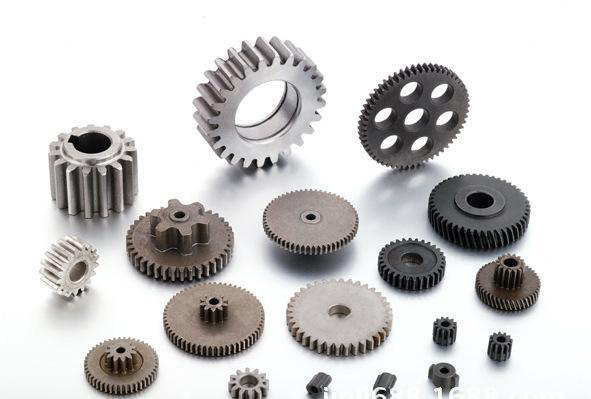
Working Principle of PM Gear in Mechanical Transmission Systems
The PM gear (Powder Metallurgy gear) is an essential component in modern mechanical transmission systems, valued for its strength, precision, and cost-efficiency. Its working principle involves the efficient transfer of rotational motion and torque between components while maintaining alignment and minimizing backlash. PM gears are widely used in automotive gearboxes, industrial machinery, and power transmission applications due to their reliability and versatility.
At the core of the PM gear’s operation is its precision-tooth design. Unlike traditional machined gears, PM gears are manufactured using a powder metallurgy process, which allows for near-net-shape production and highly accurate tooth geometry. This ensures smooth engagement with mating gears, reducing vibration, noise, and energy loss in the system. Proper tooth alignment is critical to maintaining torque transmission and preventing premature wear, especially in high-speed or high-load environments.
The mechanical transmission system typically relies on a combination of input and output shafts, bearings, and the PM gear itself. When the input shaft rotates, the PM gear’s teeth engage with those of a mating gear, transmitting motion and torque through the gear train. The inherent precision of PM gears ensures even load distribution across the teeth, which enhances efficiency and reduces localized stress. This is particularly important in systems where continuous operation or variable load conditions are common.
Another key aspect of the working principle is material behavior. PM gears are manufactured from metal powders, often iron-based alloys, that are compacted and sintered to achieve structural integrity. The porous structure of the gear allows for oil impregnation, enabling self-lubrication during operation. This feature reduces friction between gear teeth, minimizes heat generation, and extends service life without requiring constant external lubrication.
In addition, PM gears are designed to handle both static and dynamic loads. Static loads occur during torque transmission, while dynamic loads result from shock, vibration, and sudden acceleration or deceleration. The combination of precise geometry, controlled material composition, and self-lubricating properties allows PM gears to operate reliably under varying conditions, making them suitable for both automotive and industrial applications.
In summary, the working principle of PM gear in mechanical transmission systems revolves around precise tooth engagement, efficient torque transfer, balanced load distribution, and durable material performance. By leveraging the advantages of powder metallurgy manufacturing, these gears provide long-lasting, high-performance solutions for demanding mechanical systems.
Material Selection and Manufacturing Process of PM Gear
The performance and reliability of a PM gear are largely determined by material selection and the powder metallurgy manufacturing process. These factors ensure that the gear can withstand heavy loads, repetitive cycles, and harsh operating environments commonly encountered in automotive and industrial applications.
Material selection begins with choosing high-quality metal powders, typically iron-based alloys. These powders are often combined with alloying elements such as copper, nickel, or molybdenum to enhance key properties. Copper improves compressive strength and reduces friction, nickel enhances toughness and resistance to shock loads, and molybdenum increases wear resistance and fatigue life. The composition is tailored to meet the specific requirements of each application, whether it is a high-torque automotive gearbox or a heavy-duty industrial machine.
Once the appropriate powder blend is prepared, it is compacted under high pressure in a precision die to form a near-net-shape gear, often called the “green” compact. This stage allows the formation of complex features such as hubs, flanges, or internal splines, reducing the need for secondary machining. Compaction parameters, including pressure and die design, are critical to achieving uniform density and consistent mechanical properties throughout the gear.
Sintering follows compaction. The green gear is heated in a controlled-atmosphere furnace to a temperature below the melting point of the base metal. During this process, the powder particles bond metallurgically, producing a dense and strong component. Sintering parameters such as temperature, duration, and atmosphere are carefully controlled to achieve the desired mechanical characteristics, including hardness, tensile strength, and fatigue resistance.
Post-sintering treatments can further enhance gear performance. Techniques like carburizing, heat treatment, or surface densification improve wear resistance and tooth hardness while maintaining a tough core capable of absorbing shocks. Oil impregnation is commonly used to provide self-lubrication, reducing friction and prolonging service life. These features are particularly valuable in automotive gearboxes or industrial drives, where maintenance access may be limited.
Powder metallurgy also offers the advantage of near-net-shape production, minimizing material waste and manufacturing costs. By combining optimal material selection with precise compaction, sintering, and post-processing treatments, PM gears achieve a balance of strength, durability, and cost-efficiency. This makes them highly suitable for both high-volume production and specialized mechanical systems.
In conclusion, material selection and manufacturing process of PM gears are critical for ensuring consistent performance, long service life, and reliability in demanding mechanical applications.
Applications of PM Gear Across Automotive and Industrial Sectors
PM gears (Powder Metallurgy gears) are widely used across automotive and industrial sectors due to their versatility, precision, and ability to operate under high loads. Their unique combination of strength, durability, and cost-effective manufacturing makes them ideal for a range of transmission and motion control applications.
In the automotive industry, PM gears are commonly found in manual and automatic transmissions, differentials, oil pumps, and auxiliary drive systems. They provide reliable torque transfer while maintaining low noise and vibration levels, which are critical for modern vehicles. The self-lubricating properties of PM gears, enabled by oil-impregnated porous structures, reduce friction and wear, enhancing the longevity of automotive components.
PM gears also play an important role in industrial machinery. They are used in gearboxes, conveyor systems, actuators, and power transmission drives. Industrial applications often require gears to endure continuous operation under heavy loads, and powder metallurgy allows precise control over gear geometry, material properties, and tooth profiles. This ensures consistent performance even in demanding environments with frequent load changes or high-cycle operations.
In addition, PM gears are utilized in small electric motors, power tools, and household appliances, where compact size, light weight, and quiet operation are important. The ability to produce near-net-shape components reduces assembly complexity, improves alignment, and lowers manufacturing costs. This makes PM gears suitable for high-volume consumer products where precision and durability are required.
Emerging applications include robotics, automation systems, and renewable energy equipment, where precision, reliability, and long service life are essential. PM gears in these applications must handle varying loads, rotational speeds, and environmental conditions. Advanced powder metallurgy techniques allow customization of gear material, porosity, and post-processing treatments to meet these specialized requirements.
Overall, the applications of PM gears across automotive and industrial sectors highlight their adaptability and reliability. By combining precision manufacturing, optimal material selection, and self-lubricating properties, PM gears deliver consistent performance, reduced maintenance needs, and long operational life across a wide range of mechanical systems.











