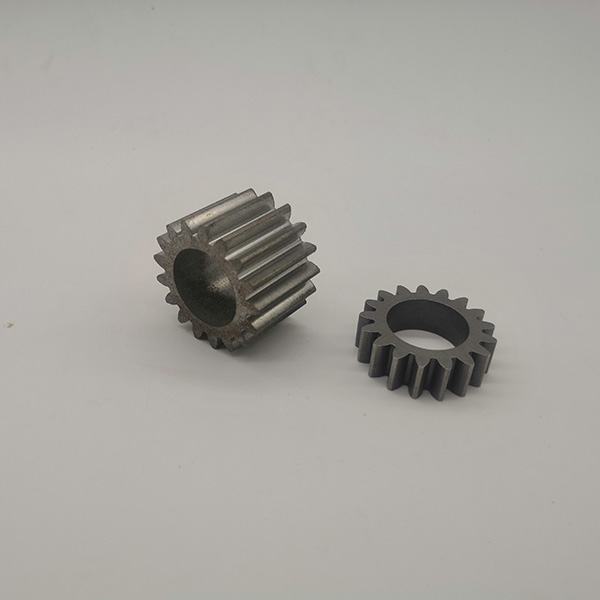





Reliable High Speed Gearbox Manufacturers for Sintered Parts
Procuring precision-engineered components for high-velocity transmissions requires a strategic balance between material integrity and geometric accuracy. For engineers in the automotive and industrial machinery sectors, the shift toward powder metallurgy has redefined how complex gears and structural parts are manufactured. By utilizing advanced sintering techniques, it is now possible to achieve tight tolerances and high strength-to-weight ratios that traditional machining often struggles to deliver cost-effectively.
This technical guide examines the role of custom powder metal sintered parts in modern drivetrain assemblies. We explore how specific material compositions, such as iron powder and composite alloys, address the mechanical stresses associated with high-speed rotations. For procurement managers evaluating high speed gearbox manufacturers, understanding the intersection of powder metallurgy and CNC finishing is critical to ensuring long-term component reliability and reducing operational downtime in demanding automotive environments.

The Engineering Logic Behind Powder Metallurgy for High-Performance Gear Components
Powder metallurgy (PM) offers a sophisticated alternative to traditional casting and forging, particularly for components requiring intricate geometries. The process begins with the precise blending of metal powders—typically iron or composite materials—which are then compacted under extreme pressure in automated molding machines ranging from 60T to 300T. This creates a "green" part that maintains the shape of the mold with high initial precision.
The critical transformation occurs during the sintering stage. Utilizing push-rod or mesh-belt sintering furnaces, the compacted powder is heated below its melting point, causing the particles to bond molecularly. This results in a component with exceptional material uniformity and a controlled pore structure, which can be further optimized for oil immersion to enhance lubrication in high-speed applications. For components used in gear transmissions, this process ensures that the final part possesses the necessary hardness and wear resistance to withstand continuous mechanical stress.
Furthermore, the ability to customize alloy content allows manufacturers to tailor specific properties. By adjusting the composite material blend, engineers can enhance corrosion resistance or increase the fatigue strength of the part, making it ideal for the rigorous demands of automotive engine and drivetrain systems where failure is not an option.

Critical Performance Attributes of Sintered Iron and Composite Parts
When analyzing the suitability of sintered parts for high-speed environments, several technical KPIs must be considered. Unlike traditional wrought parts, sintered components exhibit a unique balance of strength and damping capacity. The use of iron powder and composite materials provides a high strength-to-weight ratio, which is essential for reducing the rotational inertia of gearbox components, thereby increasing overall system efficiency.
- Dimensional Precision: Through the combination of advanced molding and post-sintering CNC machining, parts achieve tight tolerances that ensure seamless integration into complex assemblies.
- Wear Resistance: High-frequency quenching and shot peening processes are applied to the surface to increase hardness and induce compressive residual stresses, significantly extending the service life of the gear teeth.
- Material Uniformity: The automated batching system eliminates human error in material composition, ensuring that every batch of 5,000 to 100,000 pieces maintains identical mechanical properties.
- Surface Integrity: Options such as oil immersion and fiber marking provide both functional lubrication and precise traceability for OEM quality standards.
These attributes make custom powder metal parts superior for applications where mechanical stress and exposure to harsh chemicals are prevalent. By integrating rigorous quality control—including density testing and video measuring—manufacturers can guarantee that every part meets TS16949 and ISO9001 certifications before shipment.
Application Scenarios in Automotive and Industrial Machinery
The versatility of sintered components allows them to be deployed across a wide array of high-stress environments. In the automotive sector, these parts are indispensable for engine components, motorcycle transmission systems, and structural OEM parts. Because the powder metallurgy process can create complex shapes that are difficult to machine, it is often the first choice for specialized gear transmission parts and powder metal rotors.
In industrial machinery, the demand for durability and precision leads to the use of sintered bushings, housings, and custom structural components. These parts are engineered to operate under extreme conditions, including high temperatures and constant vibration. The ability to provide customized non-standard models means that components can be tailored to a specific machine's torque requirements and spatial constraints.
For OEM buyers, the primary value lies in the ability to move from design to mass production rapidly. Short production cycles and efficient delivery (typically 15-45 days) allow automotive manufacturers to maintain lean inventories while ensuring that their assembly lines are supplied with components that meet the exact specifications of their engineering blueprints.
Technical Specification and Selection Matrix for Sintered Parts
| Material Type | Common Application | Primary Advantage | Typical Surface Treatment |
|---|---|---|---|
| Pure Iron Powder | Structural OEM Parts | High Material Uniformity | CNC Machining |
| Composite Alloy | High-Speed Gear Teeth | Extreme Wear Resistance | High-Frequency Quenching |
| Sintered Iron | Motorcycle Parts | Cost-Effective Complexity | Oil Immersion |
| Specialty Sintered Metal | Powder Metal Rotors | Optimized Weight Ratio | Shot Peening |
| Custom Composite | Industrial Bearings | Tailored Hardness | Ultrasonic Cleaning |
Evaluating Supplier Capabilities for Powder Metallurgy Components
Selecting the right partner for sintered components requires a deep dive into their manufacturing infrastructure. A capable supplier should not only possess the molding equipment but also a comprehensive suite of finishing and testing tools. The presence of automatic batching systems and high-standard automated lines ensures that the output is consistent across large volumes, which is vital for maintaining the quality of an entire vehicle fleet.
Quality assurance should be evidenced by certifications such as TS16949 and SGS. Beyond the certificate, the actual testing capability—such as the use of video measuring machines and hardness testers—demonstrates a commitment to precision. When evaluating high speed gearbox manufacturers, buyers should ask about the specific sintering furnace technology used, as the temperature control in push-rod or mesh-belt furnaces directly affects the density and strength of the final part.
Furthermore, a supplier's ability to provide end-to-end OEM services, from initial design assistance to final packaging in customized wooden pallets, reduces the logistical burden on the buyer. The capacity to handle both high-volume mass production (up to 100,000 pieces) and smaller specialized runs (MOQ of 5,000 pieces) indicates a flexible manufacturing environment capable of scaling with the customer's growth.
Future Trends in Sintered Metal Components and Procurement Strategies
The automotive industry is currently transitioning toward more lightweight and efficient drivetrain systems. This trend is driving the development of new composite powders that offer even higher strength-to-weight ratios than traditional iron-based sintered parts. We expect to see an increase in the use of hybrid manufacturing, where powder metallurgy is combined with advanced laser sintering or precision grinding to create components with near-zero tolerances.
For procurement professionals, the strategy should shift toward "Design for Manufacturing" (DfM). By collaborating with suppliers early in the R&D phase, engineers can optimize part geometry to take full advantage of the sintering process, thereby reducing waste and lowering the unit cost. The focus is moving away from simple part replacement toward the creation of integrated components that combine multiple functions into a single sintered piece.
In conclusion, the reliability of a high-speed transmission depends on the microscopic integrity of its smallest parts. By leveraging the precision of powder metallurgy and the rigorous quality standards of certified manufacturers, companies can ensure their products remain competitive in a market that increasingly demands higher performance and longer service lives.
Technical FAQs Regarding Custom Sintered Metal Parts
What are the primary advantages of powder metallurgy over traditional CNC machining for gears?
Powder metallurgy allows for the creation of complex, near-net-shape geometries with significantly less material waste. It provides superior material uniformity and the ability to control porosity, which is ideal for self-lubricating parts, while remaining more cost-effective for high-volume production.
Which certifications are most important when sourcing automotive sintered parts?
TS16949 is the gold standard for the automotive industry as it ensures a rigorous quality management system. Additionally, ISO9001 and SGS certifications provide further validation of consistent production quality and safety compliance.
How does the sintering process affect the strength of the component?
Sintering bonds metal powder particles through heat and pressure below the melting point. This creates a strong, cohesive structure. Strength can be further enhanced through secondary processes like high-frequency quenching and shot peening to increase surface hardness.
Can custom alloy compositions be requested for specific environmental needs?
Yes, the material composition can be tailored by adjusting the alloy content of the iron powder. This allows for the enhancement of specific properties such as improved corrosion resistance, higher hardness, or better machinability depending on the application.
What is the typical lead time for a custom OEM sintered part order?
Delivery times generally range from 15 to 45 days, depending on the complexity of the design, the volume of the order, and the required surface treatments such as CNC machining or oil immersion.
What is the minimum order quantity (MOQ) for custom sintered structural parts?
The typical minimum order quantity is 5,000 pieces, although this can vary based on the specific technical requirements and the tooling needed for the automated powder molding machines.
Technical References and Industry Standards
- ISO Standards for Powder Metallurgy Quality Management
- IATF 16949 Automotive Quality Management Systems
- Guidelines for High-Precision Sintered Component Testing
- Materials Science Research on Sintered Iron Alloys
For engineering teams seeking to optimize their drivetrain components, transitioning to high-precision sintered parts offers a path toward increased efficiency and reduced cost. By partnering with a manufacturer that integrates advanced molding, sintering, and CNC finishing, you can ensure your products meet the most stringent automotive standards.
Industry Insights and Technical Guides