




Sourcing high-precision transmission components requires a strategic balance between material durability and cost-efficiency. In the automotive and industrial sectors, the shift toward specialized metallurgy has transformed how procurement managers approach gears wholesale, moving away from generic parts toward engineered solutions.
The complexity of modern engine and transmission systems demands components that can withstand high stress while maintaining tight tolerances. This has led to the widespread adoption of powder metallurgy, a process that allows for the creation of intricate geometries without the material waste associated with traditional machining.
Understanding the technical nuances of sintered components is essential for optimizing machinery lifespan and reducing operational overhead. This analysis explores the mechanical advantages of powder-based gear and bushing production and provides a framework for evaluating wholesale suppliers.


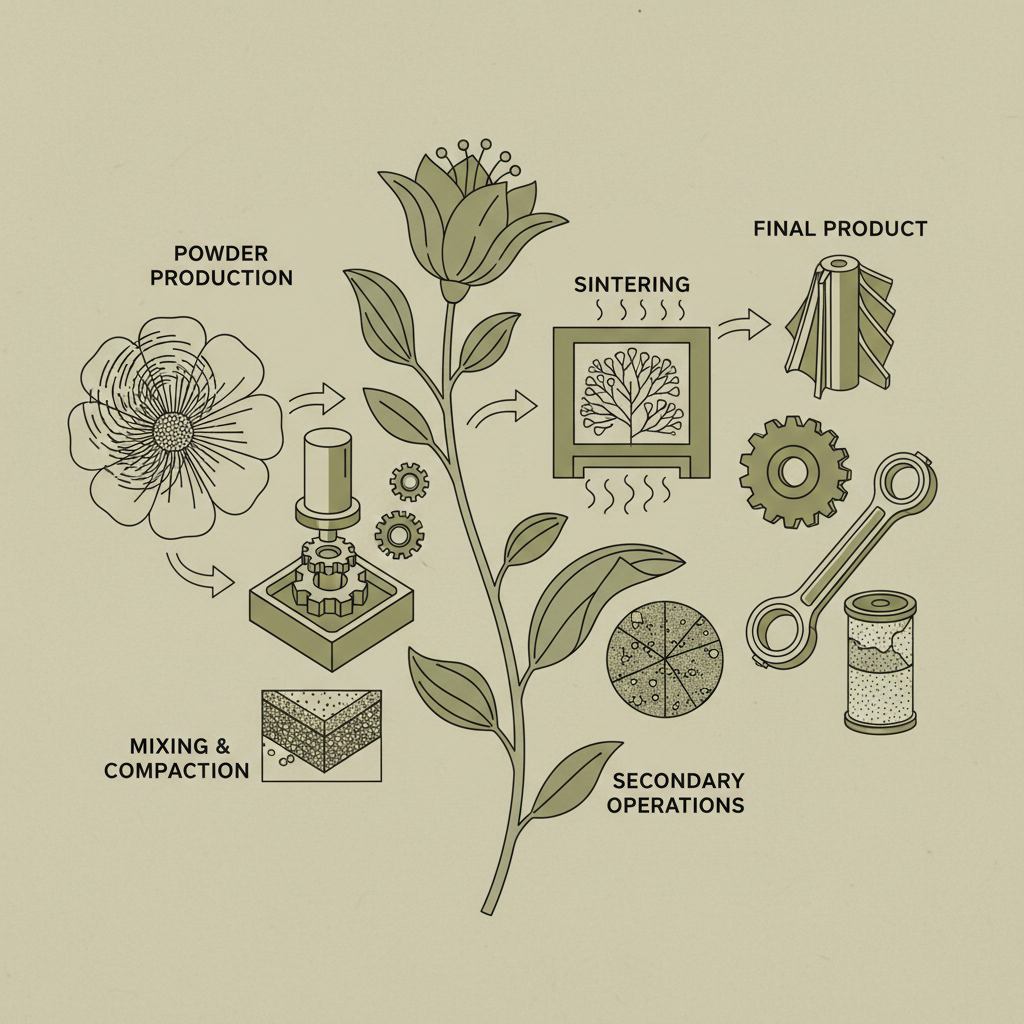
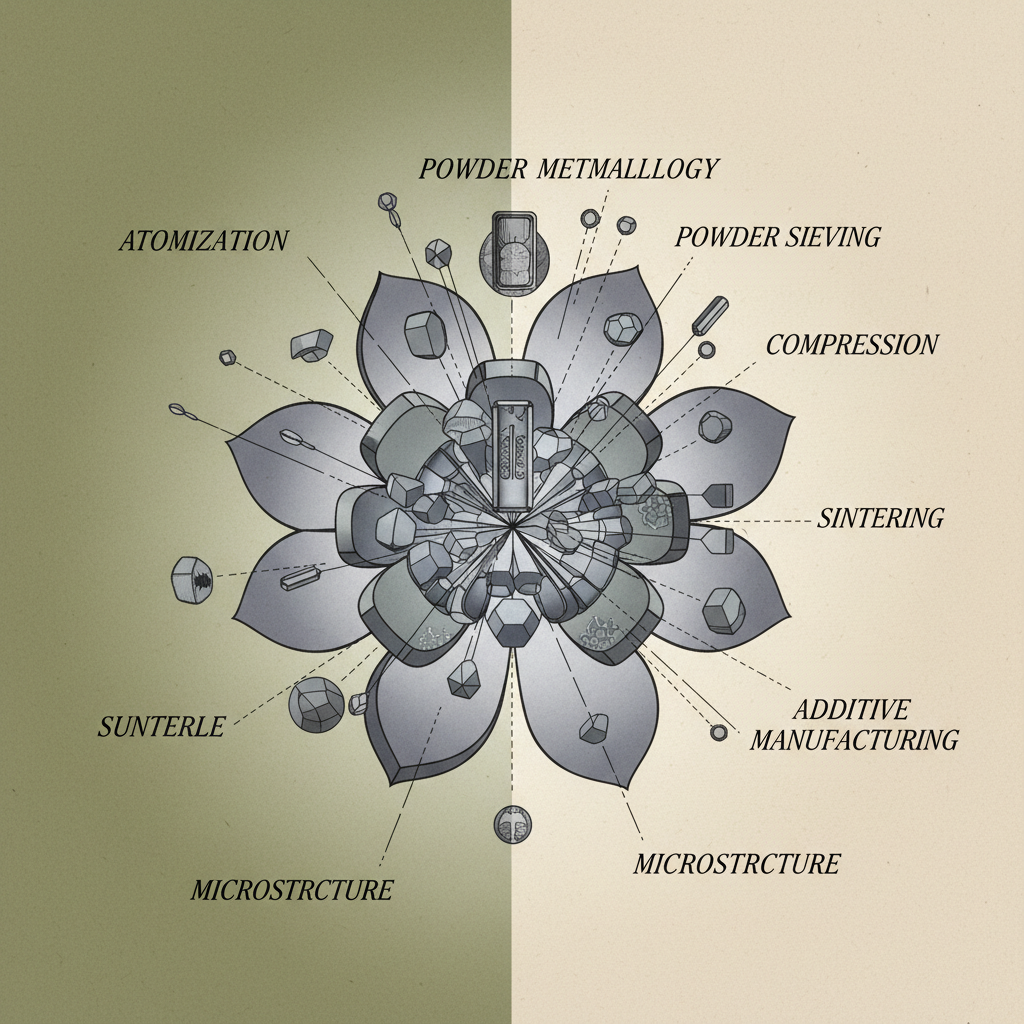
Powder metallurgy (PM) operates on the principle of compacting metal powders under high pressure and then heating them—sintering—below their melting point. This creates a solid structure with controlled porosity, which is a distinct advantage for components like iron-based bushings.
By adjusting the composition of the iron-based alloy and the sintering temperature, manufacturers can fine-tune the mechanical properties. This enables the production of complex shapes, such as hexagonal or stepped bushings, with minimal post-processing, making it a highly efficient route for those managing gears wholesale procurement.
The primary mechanical advantage of PM parts lies in their dimensional stability. Unlike traditional casting or forging, where thermal contraction can lead to variance, sintered bodies are formed in a mold at one time. This ensures high product size consistency and tight tolerances, which are critical for gear transmission parts and automotive engine components.
Furthermore, the ability to select specific iron-based alloys allows for the customization of hardness and corrosion resistance. Depending on the application—whether it is a high-load suspension system or a low-friction electrical equipment part—the alloy composition can be adjusted to optimize the balance between ductility and strength.
This technical flexibility is what allows OEM structural parts to be both cost-effective and high-performance. By eliminating the need for extensive cutting and machining, the material utilization rate is significantly increased, reducing the overall environmental impact and cost per unit.
One of the most unique characteristics of powder metallurgy is the inherent porosity of the sintered body. While often viewed as a void, in the context of bushings and transmission parts, these pores serve as reservoirs for lubricating oils.
Self-lubricating properties achieved through oil-impregnated pores significantly reduce friction and wear between moving parts, extending the service life of industrial machinery without requiring external lubrication systems.
This "oil-bearing" effect is particularly valuable in automotive suspension systems and high-stress environments. By combining this porosity with advanced surface treatments and high-frequency quenching, components can achieve a hard, wear-resistant exterior while maintaining a supportive, shock-absorbing internal structure.
When comparing powder metallurgy to traditional CNC machining for high-volume production, the differences in efficiency are stark. PM reduces the production cycle by forming complex geometries in a single step, which is a critical factor for enterprises seeking scalable gears wholesale solutions.
The following index illustrates the relative performance of powder metallurgy across key production metrics compared to traditional subtraction methods.
In a typical industrial setting, iron-based powder metallurgy bushings are deployed where durability and long-term performance are non-negotiable. For example, in automotive engine components, the ability to maintain tight tolerances under thermal expansion prevents premature wear and ensures operational smoothness.
Similarly, for motorcycle parts and electrical equipment, the design flexibility of PM allows for the creation of flange and complex bushings that fit into constrained spaces while providing high load-bearing capacity. This makes them a reliable alternative to traditional cast parts, especially when combined with precision grinding and ultrasonic cleaning for final finishing.
The demands for OEM structural parts are shifting toward "light-weighting" and enhanced fatigue resistance. Modern manufacturing now integrates metallurgical composite materials, which can only be produced via powder metallurgy, to create parts that are lighter than solid steel but offer comparable strength.
This evolution is driven by the need for higher energy efficiency in the automotive sector. By utilizing automated production lines—including automatic batching and high-frequency quenching—manufacturers can now produce parts that meet TS16949 standards with extreme precision.
The current trend focuses on "diversified processing," where surface treatments are tailored to the specific operational environment of the part, whether it is resisting saltwater corrosion in marine applications or handling high heat in engine blocks.
When evaluating a partner for gears wholesale and sintered parts, procurement teams should look beyond unit price. The ability of a supplier to handle the entire lifecycle—from OEM design to final material testing—is the true indicator of long-term value.
Key indicators of a professional supplier include the presence of advanced testing equipment, such as video measuring machines and density testers, and certifications like TS16949. These ensure that the dimensional stability and mechanical properties of the sintered body are consistent across millions of units.
The following table provides a decision framework for selecting the appropriate bushing or gear material based on common operational requirements.
| Operational Requirement | Recommended Material | Technical Advantage | Typical Application |
|---|---|---|---|
| High Load-Bearing | High-Density Iron Base | Maximized Structural Strength | Automotive Suspension |
| Low Friction / No Lube | Oil-Impregnated Sintered | Self-Lubricating Pores | Electrical Equipment |
| Complex Geometry | Custom Powder Alloy | Near-Net Shape Forming | Gear Transmission Parts |
| Corrosion Resistance | Alloyed Sintered Steel | Enhanced Surface Chemistry | Industrial Machinery |
| High Precision | Sintered + Ground Finish | Tight Tolerance Control | Engine Valve Components |
| Cost-Sensitive Mass Prod | Standard Iron Powder | Low Cycle Time / Low Waste | Motorcycle Parts |
The primary advantage is the ability to achieve near-net shapes, which means the part is formed very close to its final dimensions. This drastically reduces material waste and eliminates the need for multiple cutting steps. For high-volume gears wholesale, this results in a shorter production cycle and significantly lower costs per unit while maintaining high size consistency across the batch.
In powder metallurgy, controlled porosity allows the metal to be immersed in lubricating oil. This creates a self-lubricating component where the oil is released during operation, reducing friction and wear between moving parts. This is critical for automotive suspension systems and other high-stress environments where manual lubrication is impractical or impossible.
Yes, through a combination of high-precision molds and secondary processes. While the sintering process itself provides high consistency, critical dimensions can be further refined using grinders and high-frequency quenching. This allows manufacturers to produce OEM structural parts that meet the rigorous precision requirements of the automotive and aerospace industries.
Selection should be based on the operating environment. Factors include the required load-bearing capacity, the presence of corrosive agents, and the expected thermal range. Different compositions of steel and cast iron powders can be used to enhance hardness, increase ductility, or improve resistance to wear, ensuring the part is optimized for its specific application.
PM is most cost-effective for mass production due to the initial cost of the molds. However, for specialized OEM parts, the ability to create complex geometries without expensive multi-axis machining can make it viable for medium volumes. The efficiency gain in the production cycle often offsets the tooling cost when compared to traditional cutting methods.
Quality verification involves several rigorous steps: density testing to ensure structural integrity, video measuring machines for dimensional accuracy, and hardness testers to verify heat treatment results. Adherence to international standards, such as the TS16949 certificate, provides a baseline for reliability and safety in automotive applications.
The transition toward powder metallurgy in the automotive and industrial sectors is more than a cost-saving measure; it is a technical evolution. By leveraging controlled porosity and precision sintering, manufacturers can produce components that exceed the performance of traditionally machined parts in terms of wear resistance and dimensional consistency.
For those managing gears wholesale and transmission components, the focus must remain on the synergy between material science and production technology. Partnering with suppliers who integrate advanced automated lines and rigorous quality control is the only way to ensure long-term reliability in high-stress engineering environments.


Shijiazhuang JingShi New Material Science and Technology Co., Ltd was founded since 2014, located in Shijiazhuang, Hebei province, China. The company covers an area of over 10,000 square meters and has


PRODUCTS

CONTACT US
Address:TIANSHAN INTERNATIONAL MANUFACTURING INDUSTRY PARK NO.57, YUANSHI, SHIJIAZHUANG CITY, HEBEI PROVINCE, CHINA
Address:TIANSHAN INTERNATIONAL MANUFACTURING INDUSTRY PARK NO.57, YUANSHI, SHIJIAZHUANG CITY, HEBEI PROVINCE, CHINA