






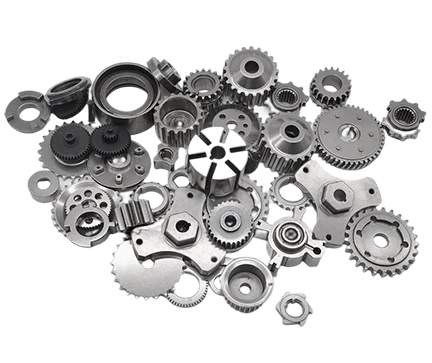
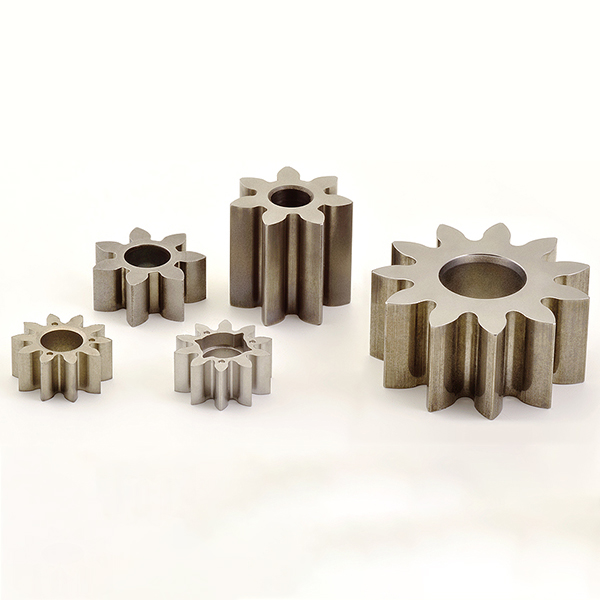
Mô tả sản phẩm
Công nghệ: Luyện kim bột
Tiêu chuẩn vật liệu: Dòng MPF, MPIF 35, DIN 30910, JIS Z2550
Mật độ: 6,2 - 7,1 g/cm3
Độ cứng vĩ mô: 45-80 HRA
Độ bền kéo: 1650 Mpa Ultimate
Giới hạn chảy (0,2%): 1270 Mpa tối đa
| Kích cỡ | Chào mừng OEM/ODM. Chúng tôi cần bản vẽ của bạn ở dạng CAD, 3D hoặc PDF. Hoặc bạn gửi cho chúng tôi mẫu của bạn, chúng tôi sẽ vẽ cho bạn. |
| Vật liệu | sắt, đồng, đồng thau hoặc tùy chỉnh |
| Xử lý bề mặt | Làm nguội, đánh bóng, tẩm dầu, oxit đen, làm cứng hoàn toàn hoặc tùy chỉnh |
| Màu sắc | tùy chỉnh |
| Sản xuất hàng loạt | 10-30 ngày tùy thuộc vào số lượng sau khi nhận được tiền đặt cọc |
| Ứng dụng | Ô tô, xe máy, máy dệt, máy khâu công nghiệp, dụng cụ điện, dụng cụ kim khí, điện, máy móc kỹ thuật, v.v. |
Powder metallurgy OEM gears containing: ring gear,big size internal ring gear,inner ring gear,Excavator ring gear,excavator gear, excavator planetary gear, excavator sun gear, excavator swing gears, automotive ring gears, industrial ring gear, external ring gears, large ring gear, bull ring gears, large diameter ring gears, special gear,transmission gear,gear wheel,worm gear, helical gears,spur gears, bevel gears, ring gear, internal ring gear,ring gear for cement mixer and so on.
Thiết bị luyện kim bột tùy chỉnh
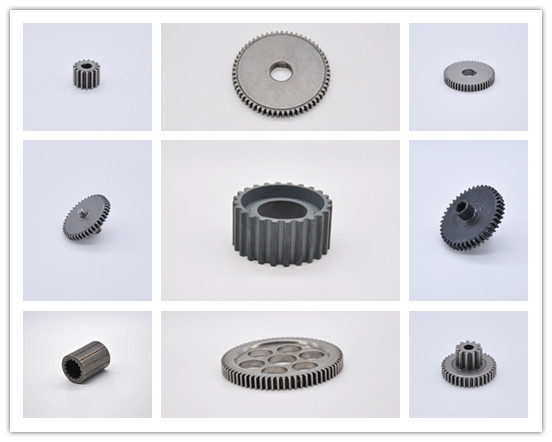
Key Applications of Sintered Gears in Automotive and Industrial Systems
Sintered gears play a critical role in modern automotive and industrial systems due to their high dimensional accuracy, material efficiency, and suitability for mass production. Manufactured through powder metallurgy, sintered gears offer consistent quality and excellent performance in demanding mechanical environments.
In the automotive industry, sintered gears are widely used in transmissions, oil pumps, timing systems, and engine auxiliary components. Their ability to achieve near-net-shape manufacturing reduces machining requirements, making them ideal for high-volume automotive production. Sintered gears are commonly found in automatic transmissions, variable valve timing systems, and electric power steering units, where precision and durability are essential.
Industrial systems also benefit significantly from sintered gear technology. These gears are extensively applied in industrial gearboxes, electric motors, power tools, compressors, and conveyor systems. Their uniform material structure ensures stable torque transmission and low noise operation, which is crucial for continuous-duty industrial equipment. Additionally, sintered gears can be designed with controlled porosity, allowing for self-lubricating properties that enhance service life in low-maintenance applications.
Another important application area is in home appliances and automation equipment, where compact design and cost efficiency are key requirements. Sintered gears support lightweight structures while maintaining mechanical strength, making them suitable for high-speed and repetitive motion systems.
Overall, the versatility of sintered gears across automotive and industrial systems highlights their importance in modern mechanical design. Their ability to meet strict performance requirements while reducing production costs makes them a preferred solution for manufacturers seeking reliable and scalable gear components.
Advantages of Sintering Gear Manufacturing for High-Precision Components
Sintering gear manufacturing offers distinct advantages when producing high-precision mechanical components, especially in applications that demand tight tolerances and consistent performance. The powder metallurgy process allows manufacturers to form complex gear geometries with exceptional repeatability and minimal material waste.
One major advantage of sintering gear manufacturing is dimensional accuracy. Since gears are formed directly in precision molds, variations between parts are significantly reduced compared to traditional machining methods. This makes sintered gears ideal for high-precision components used in automotive transmissions, precision motors, and industrial automation systems.
Another key benefit is design flexibility. Sintered gears can incorporate complex shapes, internal features, and customized tooth profiles that would be difficult or costly to achieve through conventional cutting or forging processes. Multi-level structures and integrated components can often be produced in a single pressing operation, simplifying assembly and improving overall system reliability.
Material efficiency is also a significant advantage. The sintering process uses metal powders efficiently, resulting in minimal scrap and lower raw material costs. This contributes to sustainable manufacturing practices while maintaining high mechanical performance. In addition, secondary operations such as heat treatment, surface hardening, or sizing can further enhance strength, wear resistance, and precision.
For high-volume production, sintering gear manufacturing provides excellent cost control and scalability. Once tooling is established, large quantities of precision gears can be produced with stable quality and predictable lead times. These advantages make sintered gear manufacturing an optimal solution for industries that require both precision and economic efficiency.
How Sintered Gear Technology Improves Performance and Cost Efficiency
Sintered gear technology significantly improves both performance and cost efficiency by combining advanced material engineering with streamlined manufacturing processes. Through powder metallurgy, sintered gears achieve a balance between mechanical strength, accuracy, and economic production that is difficult to match with traditional gear-making methods.
From a performance perspective, sintered gears offer uniform material density and controlled porosity, which contribute to stable load distribution and reduced vibration during operation. This results in smoother gear engagement, lower noise levels, and enhanced wear resistance. When combined with heat treatment or surface densification, sintered gears can meet demanding torque and fatigue requirements in automotive and industrial applications.
Another performance advantage lies in self-lubricating capabilities. The porous structure of sintered gears allows lubricants to be retained within the material, reducing friction and extending service life in applications where continuous lubrication is challenging. This feature is particularly valuable in compact gearboxes and enclosed mechanical systems.
In terms of cost efficiency, sintered gear technology minimizes material waste and machining time. Near-net-shape production reduces the need for extensive cutting, grinding, or finishing operations, lowering labor and energy costs. High automation levels in sintering processes also ensure consistent quality while supporting large-scale production.
Furthermore, the ability to integrate multiple functions into a single sintered gear component reduces assembly complexity and inventory costs. By improving performance while controlling production expenses, sintered gear technology provides manufacturers with a competitive advantage in both quality and pricing.











