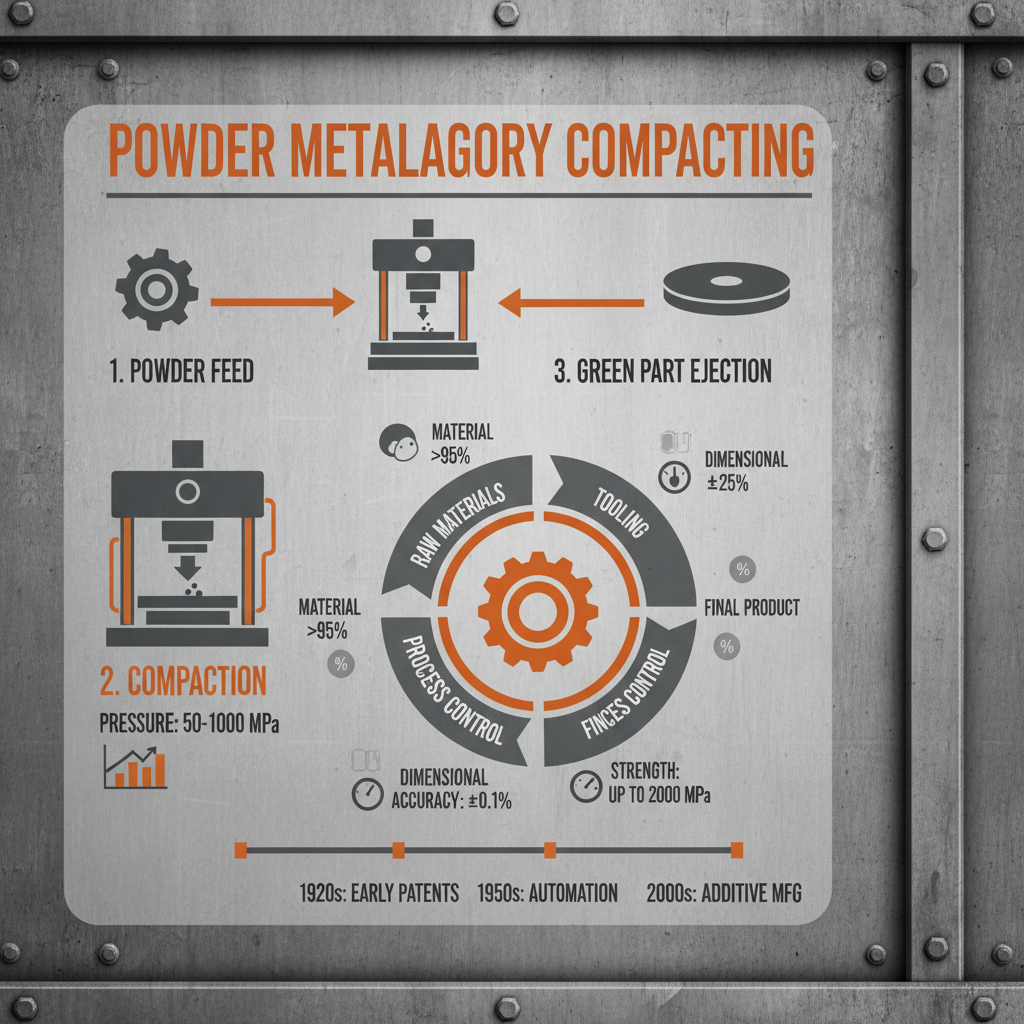





Engineering precise motion control in the automotive and industrial sectors often hinges on the ability to source custom gears that balance dimensional accuracy with cost-effective production. For many OEMs, the challenge lies in moving away from expensive subtractive machining toward processes that reduce waste without compromising tooth profile integrity.
The shift toward powder metallurgy has redefined how transmission components are manufactured, offering a pathway to achieve high repeatability and lubrication-free operation. By utilizing specialized sintering processes, manufacturers can now produce complex geometries—from planetary gears to helical designs—in a single molding step.
Understanding the trade-offs between traditional gear cutting and sintered solutions is essential for procurement officers and design engineers aiming to optimize their supply chain and improve the lifespan of automotive engine and transmission assemblies.

The Technical Logic of Powder Metallurgy Gears

At its core, the production of sintered gears relies on the compaction of metal powders within a high-precision mold, followed by a heating process called sintering. Unlike traditional hobbing or milling, which removes material to create gear teeth, this additive-style approach forms the near-net shape of the gear in one primary operation.
This method is particularly effective for achieving complex tooth shapes and high dimensional accuracy across large batches. Because the process is mold-based, the repeatability of each part is exceptionally high, ensuring that tens of thousands of units maintain identical tolerances, which is critical for automotive transmission stability.
Furthermore, the ability to control the porosity of the metal during sintering allows for the creation of "oil-containing" parts. These gears act as their own lubricant reservoirs, significantly reducing the need for external lubrication systems in sealed environments.
Core Advantages of Sintered Gear Manufacturing
The primary economic driver for choosing powder metallurgy is the "one-time molding" capability. By eliminating the need for secondary tooth-cutting or extensive finishing processes, manufacturers can drastically lower the unit cost while increasing the overall production cadence.
Beyond cost, resource efficiency is a major sustainability factor. In conventional machining, a significant percentage of the raw steel billet becomes scrap shavings. Powder metallurgy utilizes nearly 100% of the raw material, making it the most resource-efficient method for producing structural gear parts.
From a maintenance perspective, the potential for lubrication-free operation reduces the total cost of ownership for the end-user, as it minimizes the risk of lubrication failure and simplifies the assembly of gearboxes and DC motor systems.
Industrial Application Scenarios for Custom Transmission Parts
Custom gears manufactured via sintering find their most critical applications in the automotive industry, specifically within engine timing systems and transmission assemblies. The ability to produce precise sun gears and planetary gears makes this technology ideal for automatic transmissions where space is limited and precision is paramount.
In the electronics and robotics sectors, mini motor gears and DC motor gears require extreme consistency to avoid vibration and noise. Sintered parts provide the smooth tooth profiles necessary for quiet operation in high-RPM environments, such as small household appliances or industrial actuators.
Additionally, motorcycle parts and OEM structural components benefit from the high strength-to-weight ratios achievable through specific powder blends and high-frequency quenching, ensuring that gears can withstand high torque loads without deformation.
Comparing Production Efficiency and Material Utilization
When evaluating the performance of custom gears, the industry often looks at the ratio of material waste and the cycle time per part. Sintering significantly outperforms subtractive methods in these specific metrics, particularly as volume increases.
The following data represents typical industry benchmarks comparing standard machined gears against those produced through advanced powder metallurgy processes across five key operational dimensions.
custom gears Performance Metrics
The data suggests that while traditional machining may be faster for a single prototype, the scalability of sintered gears leads to a dramatic increase in production efficiency and a near-total elimination of material waste during the forming stage.
Procurement Strategies for High-Precision OEM Components
Procuring high-quality custom gears requires a shift in focus from "per-unit price" to "total system cost." Buyers must evaluate a supplier's capability in automated batching and the precision of their powder molding machines, which typically range from 60T to 300T in high-standard facilities.
Quality assurance should be verified through the presence of advanced testing equipment, such as video measuring machines and density testers. A supplier's adherence to TS16949 certification is a non-negotiable baseline for automotive-grade components to ensure safety and reliability.
Furthermore, the ability of a partner to handle the entire pipeline—from initial drawing analysis to high-frequency quenching and ultrasonic cleaning—reduces the risk of logistical delays and quality drift between different vendors.
Future Directions in Sintered Metal Gear Technology
The evolution of gear technology is moving toward "smart materials" and hybrid sintering processes. We are likely to see an increase in the use of alloy powders that offer higher hardness and wear resistance without requiring extensive surface coatings.
Automation in powder batching and the integration of fiber marking for traceability are becoming standard. This allows OEMs to track the lifecycle of every single gear within a transmission system, improving the ability to analyze failure modes in the field.
As electric vehicles (EVs) continue to proliferate, the demand for high-precision, low-noise sintered gears for reduction gearboxes is expected to grow. This will drive further innovation in the accuracy of the press-molding process to meet the stricter NVH (Noise, Vibration, Harshness) standards of electric drivetrains.
Selection Guide for Different Gear Geometries
Choosing the right gear type depends entirely on the application's torque requirements, spatial constraints, and required transmission ratio. Different geometries offer distinct mechanical advantages and production considerations.
The table below provides a comparative analysis of the most common custom gear types produced via powder metallurgy to assist engineers in their selection process.
| Gear Type | Primary Application | Key Technical Strength | Production Consideration |
|---|---|---|---|
| Planetary Gears | Automatic Transmissions | High Torque Density | Complex Mold Alignment |
| Helical Gears | High-Speed Drivetrains | Low Noise/Smooth Flow | Axial Thrust Management |
| Bevel Gears | Right-Angle Transmission | Directional Change | Precision Angle Sintering |
| Sun Gears | Epicyclic Gearsets | Central Load Distribution | High Dimensional Stability |
| DC Motor Gears | Small Actuators/Robotics | Compact Size/Repeatability | Tight Tolerance Molding |
| Sintered Double Gears | Compound Reductions | Integrated Component Design | Multi-Level Pressing |
Ultimately, the decision should be based on a holistic review of the operational environment. For those evaluating these options, detailed technical specifications and company capabilities can be reviewed at www.jssintering.com.
Frequently Asked Questions
Conclusion
The transition to powder metallurgy for custom gears represents a strategic shift toward efficiency, sustainability, and precision. By leveraging one-time molding and high-density sintering, manufacturers can meet the rigorous demands of the automotive and industrial sectors while significantly reducing material waste and production costs.
For engineers and procurement professionals, the key to success lies in partnering with a supplier that integrates advanced molding technology with strict quality control systems. Those seeking to optimize their transmission components can find comprehensive solution details and OEM capabilities via www.jssintering.com.