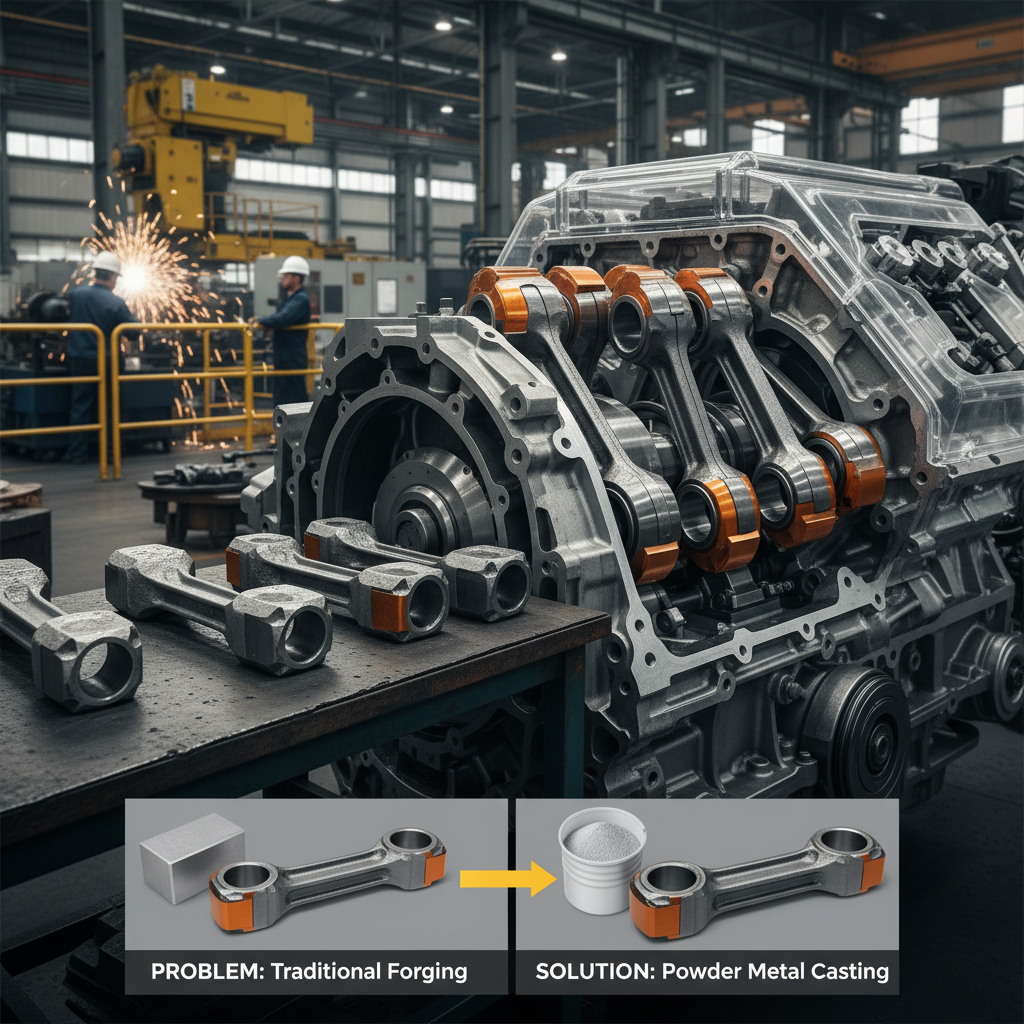





When sourcing high-precision transmission components, the criteria for evaluating aerospace gear suppliers often center on the ability to balance extreme durability with minimal weight. In the context of advanced machinery, whether for aviation or high-end automotive systems, the integrity of planetary gear sets determines the overall reliability of the power transmission. The challenge lies in achieving tight tolerances and high wear resistance without compromising the manufacturing cycle or escalating costs beyond sustainable levels.
The intersection of powder metallurgy and precision engineering has redefined how these components are produced. By utilizing high-temperature sintering and precise forming processes, manufacturers can now create gears that meet complex power transmission requirements while ensuring smooth operation. This technological shift is particularly critical for industries requiring high torque output and long-term high-load stability, where traditional machining might lead to excessive material waste and higher unit costs.
Understanding the technical nuances of material composition and sintering parameters is essential for procurement officers and engineers. This analysis explores the critical factors that define quality in gear production and how specialized aerospace gear suppliers utilize customized powder metallurgy to deliver components that excel in strength, precision, and cost-efficiency.


Powder metallurgy represents a paradigm shift from subtractive manufacturing to a near-net-shape process. By mixing high-quality iron or iron alloy powders and subjecting them to hydraulic molding and high-temperature sintering, manufacturers can produce planetary gears with exceptional structural integrity. This process minimizes the need for extensive post-processing, which is vital for maintaining the precise tooth profiles required in high-efficiency transmission systems.
The core advantage of this approach is the ability to control material density and composition at a granular level. For components used in demanding environments, the sintering parameters are optimized to ensure that the resulting gears possess the necessary resistance to bending and fatigue. This allows the components to withstand high torque output while maintaining a low noise profile and smooth operational stability.
To ensure a gear operates reliably under high loads, several critical factors must be aligned. First, the choice of raw material—typically iron powder or specialized alloy powders—sets the foundation for hardness. Second, the sintering process must achieve a density range typically between 6-7.2/cm³ for iron-based parts, as density directly correlates with the gear's tensile strength and wear resistance.
Precision is measured by tolerances as tight as +/- 0.002mm, ensuring that gear tooth profiles are consistent. This level of accuracy reduces energy loss during transmission and prevents premature failure caused by uneven load distribution across the gear teeth.
Furthermore, surface treatments such as carburizing, nitriding, or high-frequency quenching are employed to enhance the outer shell's hardness. These heat treatments, combined with finishing processes like polishing or sand blasting, ensure that the gears can operate in abrasive environments without significant degradation of the tooth geometry.
Customization in powder metallurgy extends beyond simple dimensions. It involves the precise calibration of the module, the number of teeth, and the specific alloy composition to match the operational load of the final system. This flexibility allows for the creation of OEM structural parts that are perfectly adapted to unique mechanical layouts, reducing the need for adapter components.
The true value of customized sintering is found in the reduction of the total cost of ownership. High material utilization rates and shorter processing flows significantly lower manufacturing costs for medium to large-scale production without sacrificing mechanical properties.
By integrating design and production, companies can optimize the weight-to-strength ratio of the gears. This is particularly beneficial for mobile applications, such as automotive and motorcycle parts, where reducing unsprung weight contributes directly to better fuel efficiency and system responsiveness.
The relationship between material density and gear performance is linear: higher density typically results in superior fatigue strength. For standard industrial applications, a moderate density is sufficient, but for high-torque systems, pushing the density toward the upper limit of 7.2/cm³ is essential to prevent tooth shear.
When evaluating different powder metallurgy grades, it is important to look at the balance between hardness and ductility. Over-sintering can lead to brittleness, while under-sintering leaves the part porous and susceptible to wear. The following data illustrates the relative performance improvements as density increases.
Precision planetary gears find their most critical use in automotive transmission systems and industrial robotics. In these settings, the gear must provide high transmission efficiency while operating under fluctuating loads. The ability to maintain a smooth and steady output is what separates professional-grade sintered gears from standard components.
Beyond vehicles, these parts are indispensable in intelligent devices and power tools. In these applications, low noise and high wear resistance are prioritized to improve user experience and extend the service interval of the tool. The versatility of powder metallurgy allows for a single production line to serve these diverse needs by simply adjusting the material mix and sintering temperature.
The global shift toward green manufacturing has placed powder metallurgy at the forefront of sustainable production. Unlike traditional CNC machining, which generates significant amounts of metal scrap, the powder process utilizes nearly all the raw material. This high utilization rate drastically reduces the environmental footprint of each component produced.
Energy consumption is also lowered through optimized sintering cycles. By using automated batching systems and precise temperature controls, manufacturers can produce thousands of parts with a fraction of the energy required for multiple forging and milling stages. This alignment with sustainable goals makes it an attractive option for companies adhering to ISO and TS certifications.
Looking forward, the integration of new alloy powders will likely allow for even lighter parts with higher strength, further reducing the carbon footprint of the end-use vehicles and machines they power.
Despite the advantages, achieving extreme precision in powder metallurgy requires rigorous quality control. One common challenge is managing the shrinkage that occurs during sintering. This is solved through advanced mold design and the use of video measuring machines to verify final dimensions against the original blueprints.
Another hurdle is the potential for non-uniform density within complex gear geometries. To counter this, high-pressure hydraulic molding (ranging from 60T to 300T) is used to ensure that the powder is packed evenly throughout the part, preventing weak spots that could lead to fatigue failure under load.
Finally, surface friction can be a limiting factor. By implementing a variety of surface treatments—from blackening for corrosion resistance to electroplating for reduced friction—manufacturers can tailor the gear's surface properties to the specific environment of the application.
| Requirement | Material Choice | Heat Treatment | Surface Finish |
|---|---|---|---|
| High Torque | Iron Alloy Powder | Carburizing | Polishing |
| Low Noise | High-Density Fe | Quenching | Sand Blasting |
| Corrosion Resistance | Iron Powder | Ordinary Quenching | Dacromet Plated |
| Cost-Efficiency | Standard Iron Powder | None/Basic | Blacken |
| Wear Resistance | Alloy Powder | Nitriding | Electroplating |
| Tight Tolerance | Precision Mix | High Frequency | Polishing |
Powder metallurgy allows for near-net-shape production, which significantly reduces material waste and post-processing costs. It provides the ability to create complex tooth profiles with high consistency and tight tolerances (+/- 0.002mm), ensuring higher transmission efficiency and reduced noise compared to traditional machining.
Strength is ensured by optimizing the material composition and sintering parameters to achieve a high density (up to 7.2/cm³). Additionally, heat treatments such as carburizing and high-frequency quenching are applied to increase surface hardness and resistance to fatigue and bending.
Yes, customization is a core part of the process. Size, number of teeth, module, material, and surface treatments can all be tailored to meet the specific torque and precision requirements of industrial robots or intelligent devices, ensuring a perfect fit for the OEM system.
You should look for ISO9001 and TS16949 certifications. These standards ensure that the manufacturer follows strict quality management systems and automotive-grade production protocols, which are essential for the reliability and safety of transmission components.
For medium to large-scale production, powder metallurgy is generally more cost-effective. The high material utilization rate and shorter processing flow reduce the per-unit cost significantly, although initial mold design costs may be higher than simple machining.
Available treatments include Dacromet plating and electroplating for corrosion resistance, and polishing or sand blasting for friction reduction. For extreme wear, nitriding and carburizing are recommended to create a hard, durable surface layer.
The selection of a reliable partner for precision gear production depends on the balance between technical capability and cost-efficiency. By leveraging powder metallurgy, industries can achieve the high strength and precise tooth profiles necessary for modern transmission systems while adhering to sustainable manufacturing practices. The ability to control density and apply targeted heat treatments ensures that these components perform reliably under the most demanding operational loads.
For organizations seeking customized OEM solutions that meet TS16949 standards, focusing on a supplier with a fully automated production line and rigorous testing protocols is key. To explore how high-precision sintered gears can optimize your system's performance and reduce manufacturing costs, you can visit www.jssintering.com for detailed technical specifications and consultation.


Shijiazhuang JingShi New Material Science and Technology Co., Ltd was founded since 2014, located in Shijiazhuang, Hebei province, China. The company covers an area of over 10,000 square meters and has


PRODUCTS

CONTACT US
Address:TIANSHAN INTERNATIONAL MANUFACTURING INDUSTRY PARK NO.57, YUANSHI, SHIJIAZHUANG CITY, HEBEI PROVINCE, CHINA
Address:TIANSHAN INTERNATIONAL MANUFACTURING INDUSTRY PARK NO.57, YUANSHI, SHIJIAZHUANG CITY, HEBEI PROVINCE, CHINA