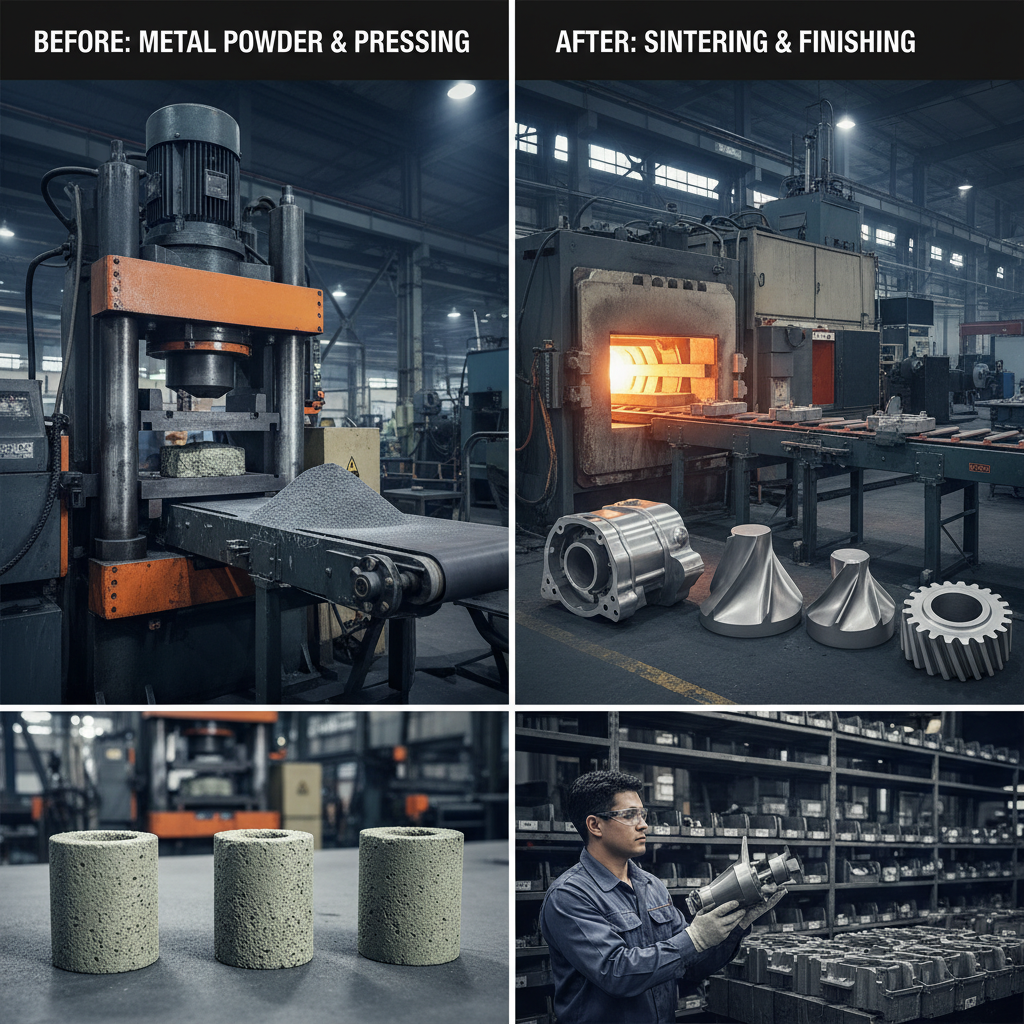





Professional gears manufacturers specialize in the design and production of high-precision transmission components essential for mechanical power transfer. By utilizing advanced powder metallurgy and sintering techniques, these manufacturers create rotors and gears that ensure efficient fluid handling and reliable rotational movement in diverse industrial environments.
In the automotive and industrial sectors, the demand for components that can withstand high-pressure environments while minimizing friction is critical. Many procurement teams struggle with balancing material hardness and dimensional accuracy, leading to premature wear and increased system downtime in hydraulic and pumping systems.
This guide provides a comprehensive technical analysis of powder metal sintered components, offering insights into material selection, surface treatment options, and procurement criteria to help engineers and buyers select the most durable solutions for their specific operational requirements.

1Powder Metallurgy in Gear Manufacturing

Powder metallurgy (PM) is a highly efficient process used by gears manufacturers to produce complex shapes with minimal material waste. The process involves compacting metal powders into a mold and sintering them at high temperatures to create a dense, strong component. This technique is particularly effective for producing inner rotors for vane pumps, where precision is paramount.
By leveraging automated production lines, including automatic batching and high-frequency quenching furnaces, manufacturers can achieve consistent quality across large batches. This scalability makes PM the preferred choice for high-volume OEM structural parts and automotive components.
Compared to traditional machining, powder metallurgy reduces the need for secondary operations, lowering the overall production cost while maintaining strict adherence to ISO9001 and TS16949 certifications.
2Core Technical Specifications and Materials
The performance of a sintered gear or rotor depends heavily on the raw materials used. Common choices include iron, stainless steel, copper, and various alloy steels. These materials are selected based on the required hardness, corrosion resistance, and thermal expansion properties of the final application.
Surface treatments play a crucial role in extending the service life of these parts. Techniques such as high-frequency quenching, steam oxidation, and oil impregnation are applied to achieve a hardness range of HRA 30-79, ensuring the parts resist wear and metal pitting.
Precision engineering allows for an accuracy of Ra1, which is critical for reducing friction and mechanical stress. This level of detail ensures that the inner rotor operates seamlessly within the pump, maintaining consistent flow rates and minimal noise.
3Industrial Applications of Sintered Rotors
Sintered rotors and gears are integrated into a wide array of hydraulic and pumping systems. In automotive applications, they are found in oil pumps and water pumps, where they manage fluid transfer under demanding thermal and pressure conditions.
Beyond automotive use, these components are vital for gearboxes, transmission cases, and professional electric tools. Their ability to be customized in size and material composition makes them versatile for specific industrial requirements, such as enhanced sealing or resistance to harsh environmental factors.
The reliability of these parts ensures that hydraulic systems can operate with high efficiency and reduced vibration, which is essential for the longevity of the overall machinery.
4Performance Analysis and Metrics
When evaluating the quality of components from gears manufacturers, several key performance indicators (KPIs) are used. Density is a primary metric, as higher density typically correlates with higher strength and better fatigue resistance.
Hardness testing (HRA) and dimensional inspection using video measuring machines ensure that every part meets the exact OEM specifications. These rigorous quality control processes prevent defects such as crumbling, cracks, or burrs.
gears manufacturers Performance Metrics
The data indicates that sintered components often outperform traditional cast parts in terms of dimensional stability and cost-efficiency for high-volume production, particularly when considering the reduced waste of raw materials.
5Procurement and Selection Criteria
Procuring the right gear components requires a deep understanding of the operational environment. Buyers should prioritize manufacturers who can provide full inspection reports and hold recognized certifications like TS16949, which is critical for automotive supply chains.
Material compatibility is another essential factor. For instance, stainless steel should be specified for applications involving corrosive fluids, while alloy steel is preferred for high-torque transmission parts.
Delivery timelines also impact procurement decisions. Standard moulding production typically takes around 20 days, with overall delivery ranging from 10 to 45 days depending on the complexity and volume of the order.
6Future Trends in Gear Fabrication
The industry is moving toward even higher precision and the integration of smart materials. We are seeing a shift toward additive manufacturing (3D printing) of metal powders for prototyping, which then informs the large-scale sintering process.
Energy-saving production techniques are becoming a priority, with manufacturers optimizing sintering furnace cycles to reduce carbon footprints while maintaining part integrity.
Additionally, the development of new alloy powders is allowing for components that can operate at higher temperatures, expanding the use of sintered gears in aerospace and advanced robotics.
7Comparison of Manufacturing Technologies
Choosing between powder metallurgy and traditional CNC machining depends on volume and complexity. PM is vastly superior for high-volume, complex structural parts, whereas CNC is better suited for low-volume, ultra-high precision custom pieces.
The following table compares the key attributes of various production methods used by gears manufacturers to help procurement teams make informed decisions.
| Technology | Material Waste | Production Speed | Typical Use Case |
|---|---|---|---|
| Powder Metallurgy | Very Low | Very High | High-volume OEM parts |
| CNC Machining | High | Low | Custom Prototypes |
| Die Casting | Medium | High | Large Structural Housings |
| Forging | Medium | Medium | Heavy-duty Shafts |
| Sintering (Advanced) | Low | High | Precision Pump Rotors |
| Cold Pressing | Low | Very High | Simple Gear Blanks |
Ultimately, the combination of powder metallurgy with secondary surface treatments provides the best balance of cost, performance, and durability for industrial gear components.
Frequently Asked Questions
Conclusion
Selecting the right gears manufacturers involves evaluating their technical capability in powder metallurgy, their adherence to international quality standards, and their ability to provide customized material solutions. By focusing on density, hardness, and precise dimensional accuracy, companies can ensure the long-term reliability of their hydraulic and transmission systems.
For procurement teams and engineers seeking high-performance sintered rotors or OEM structural parts, reviewing technical specifications and certifications is the first step toward optimizing system efficiency. Detailed product information and available solutions can be found at www.jssintering.com.