






Opis produktu
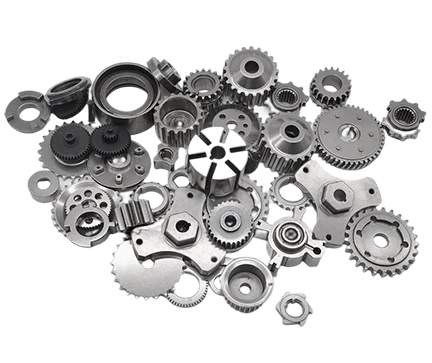
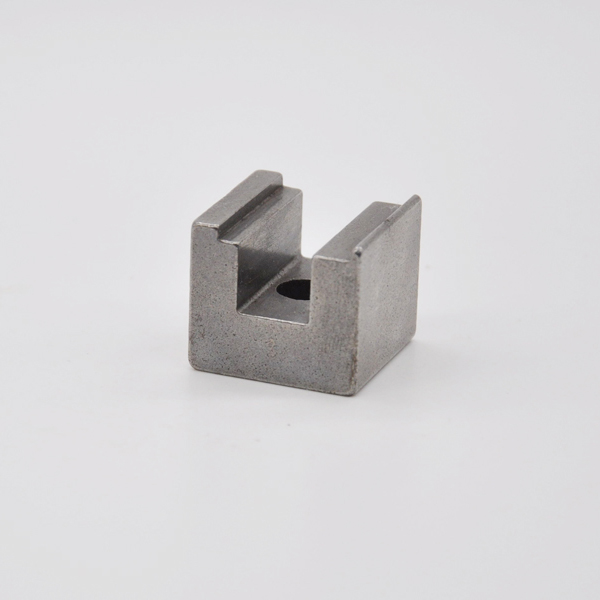
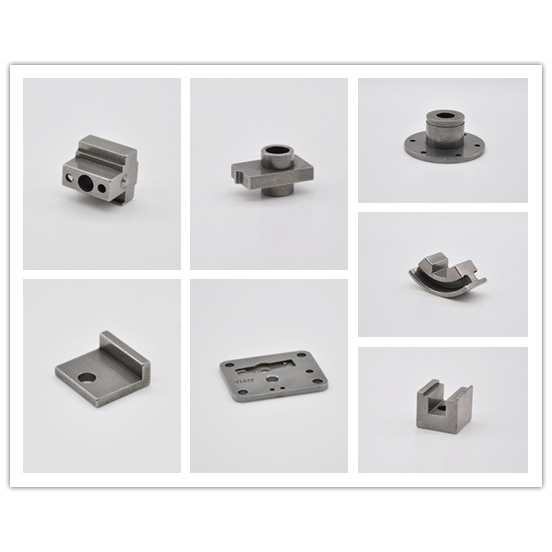
Powder metallurgy sintered complex structural mechanical parts, adopting advanced powder metallurgy technology, are specially designed to meet the requirements of high precision, high strength and complex structures. By precisely proportioning metal powders and forming them under high-temperature sintering, we can achieve complex geometric designs that are difficult to reach through traditional machining, while ensuring outstanding mechanical properties.
Flexible design and complex shapes: The powder metallurgy process can easily manufacture complex shapes such as holes, inner cavities, and gears, reducing the number of parts and simplifying the assembly process.
High-performance material selection: According to application requirements, various materials such as iron-based, stainless steel, copper-based, and alloy steel can be selected to achieve different properties such as wear resistance, corrosion resistance, or high strength.
Dimensional accuracy and batch consistency: By adopting precise molds and process control, the consistency and high dimensional accuracy of parts in mass production are ensured, reducing the demand for subsequent processing.
Significant cost-effectiveness: Compared with traditional forging and machining, powder metallurgy significantly reduces raw material waste and processing time, making it particularly suitable for medium and large-scale production.
Green and environmentally friendly manufacturing: The production process has low energy consumption and high material utilization rate, which conforms to the development trend of sustainable manufacturing.
Szczegóły materiału: Proszek żelaza, proszek stopu żelaza, stal nierdzewna, miedź, stal, żelazo, stal stopowa (C, Sn, Zn),
Maksymalna gęstość: 6,0 g/cm2~6,9 g/cm2
Proces produkcyjny: mieszanie proszku-zagęszczanie proszku-spiekanie-kształtowanie-obróbka skrawaniem-wykończenie powierzchni
Obróbka powierzchni: obróbka skrawaniem, zanurzanie w oleju, utlenianie parą wodną, galwanizacja, powierzchnia niebieska
Norma: DIN, JIS, ASTM, GB
Zastosowanie: Elektryczne urządzenia domowe, Maszyny elektroniczne, Maszyny służbowe, Samochody
Opakowanie wewnętrzne: Folia antykorozyjna; Worki próżniowe z tworzywa sztucznego
Opakowanie zewnętrzne: Twardy karton; Skrzynia drewniana; Paleta drewniana
Metalurgia proszkowa wykorzystuje proszek metalowy jako surowiec, poprzez formowanie i spiekanie, wytwarzanie materiałów metalowych, materiałów kompozytowych i różnych typów produktów. Technologia metalurgii proszkowej może być bezpośrednio wytwarzana w materiałach i produktach porowatych, półkompaktowych lub w pełni kompaktowych, takich jak części samochodowe, części zamienne do sprężarek.











