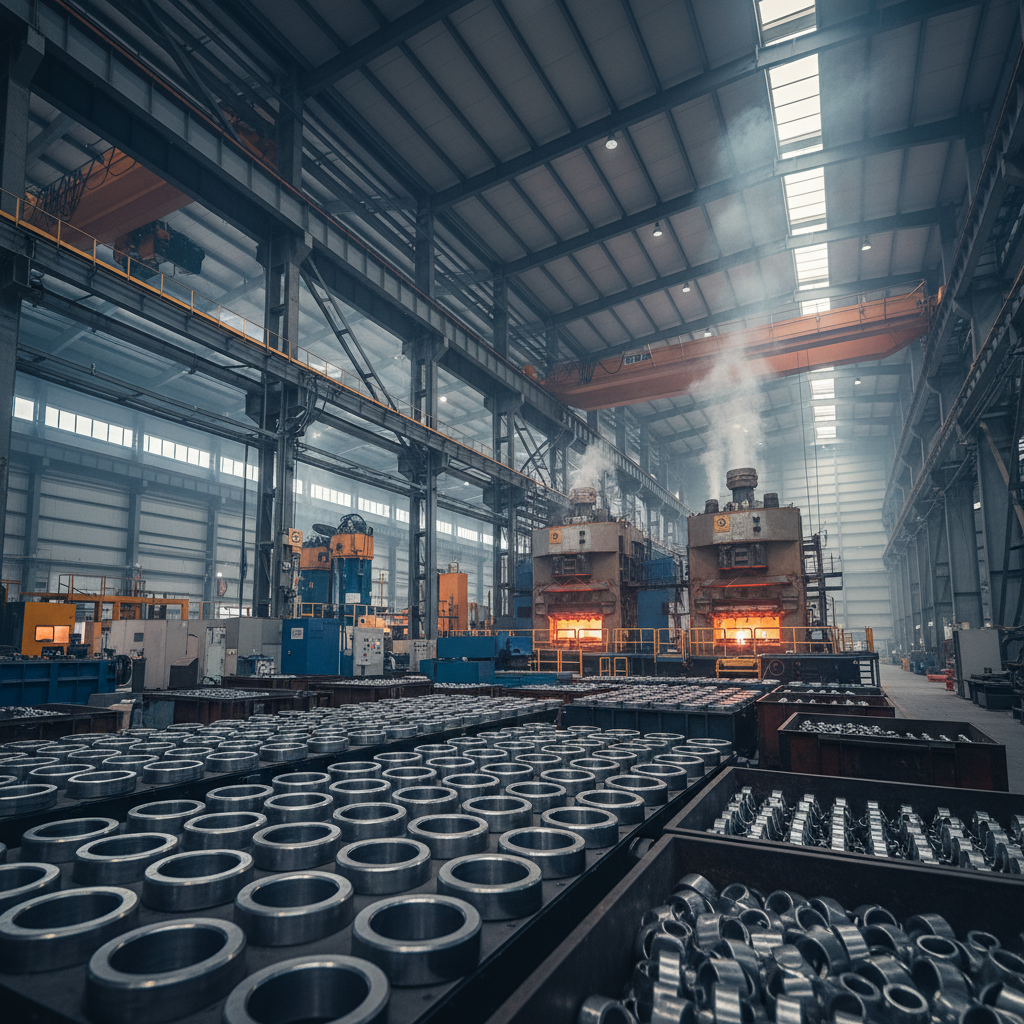
The powder metallurgy market isn't just about metals and powders; it's about solving real-world engineering challenges. After years on construction sites and in factories, seeing what actually works and what doesn't, I can tell you this technology is quietly revolutionizing how things are made. We’re talking about everything from automotive parts demanding higher performance and lighter weight, to medical implants needing precise biocompatibility, and even cutting-edge aerospace components. It's a surprisingly versatile process, and the recent advancements are making it a go-to solution for more and more demanding applications.
For too long, manufacturing was limited by traditional methods – machining, casting, forging. These processes create waste, require extensive finishing, and often can't deliver the complex geometries modern designs demand. Powder metallurgy cuts through all that. It’s about starting with the material exactly as you need it, reducing waste, and creating parts that are stronger, more durable, and often cheaper to produce in the long run. You see a lot of buzz about additive manufacturing, but PM is a mature, scalable technology that’s delivering results today.
Honestly, a lot of folks still think of PM as just making simple gears and bearings. That was true 20 years ago. Now, with techniques like Metal Injection Molding (MIM) and additive manufacturing building on the core principles of PM, we're talking about near-net-shape components with incredible complexity. And it’s not some lab experiment; it’s being used in high-volume production across industries, saving companies time and money and delivering better products.
The Growing Relevance of powder metallurgy market
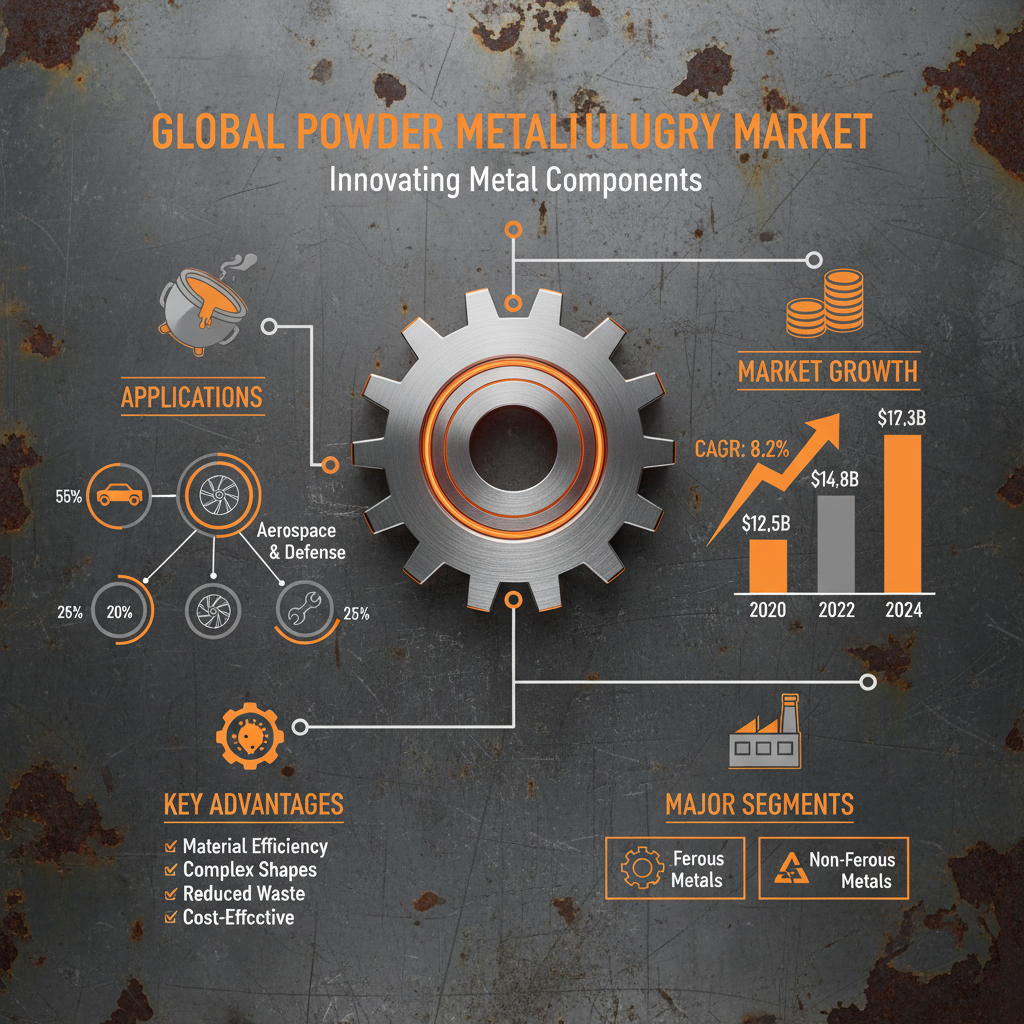
The demand for high-performance, cost-effective materials is driving significant growth in the powder metallurgy market. According to a recent report by Grand View Research, the global powder metallurgy market size was valued at USD 34.87 billion in 2022 and is projected to reach USD 51.26 billion by 2030. This isn’t just about numbers; it's about a fundamental shift in manufacturing priorities. Industries are moving away from wasteful processes and toward solutions that optimize material usage and reduce environmental impact.
We’re seeing this firsthand on job sites. The need for lighter, stronger components in automotive, aerospace, and even power tools is escalating. Traditional manufacturing methods simply can’t keep up with the demand for these complex geometries and tight tolerances. The powder metallurgy market addresses this challenge head-on, offering a versatile and scalable solution for producing high-quality parts with minimal waste.
Understanding the Powder Metallurgy Market
The powder metallurgy market encompasses the production of metal powders and the fabrication of parts from those powders. It’s a surprisingly broad field, ranging from simple pressed and sintered parts to complex near-net-shape components created using techniques like Metal Injection Molding (MIM) and additive manufacturing. It’s not just about making the powder; it's about understanding the entire process – powder characteristics, compaction methods, sintering parameters, and finishing operations.
I've spent enough time in plants to know that the real value isn’t just in the technology itself, but in the expertise of the people running it. Finding engineers who understand the nuances of powder behavior, sintering kinetics, and material science is crucial. A poorly controlled process can lead to defects, inconsistent properties, and ultimately, scrapped parts.
The market is segmented by material type (iron-based, copper-based, nickel-based, stainless steel, etc.), application (automotive, aerospace, industrial, medical), and process (pressing, sintering, MIM, 3D printing). This complexity highlights the diverse range of solutions PM offers, and the importance of selecting the right approach for each specific application.
Defining Powder Metallurgy Market
The powder metallurgy market is essentially a way to manufacture parts by compacting metal powders into a desired shape and then heating them (sintering) to bond the particles together. Think of it like building with LEGOs, but with metal. Instead of machining away material from a solid block, you’re starting with the exact amount of material you need and forming it directly into the final part. This translates to significant material savings and reduced waste.
The connection to modern industry and even humanitarian needs is profound. Consider the need for lightweight, fuel-efficient vehicles. PM components help reduce weight without compromising strength. Or think about medical implants that require precise porosity for bone ingrowth. PM can deliver that level of control. And in disaster relief situations, the ability to quickly produce critical replacement parts using portable PM equipment could be a game-changer.
It's a departure from traditional subtractive manufacturing. PM allows for complex geometries, close tolerances, and the creation of parts with unique material properties. The key is controlling every step of the process, from powder production to final sintering, to ensure consistent quality and performance.
Key Advantages in Practical Applications
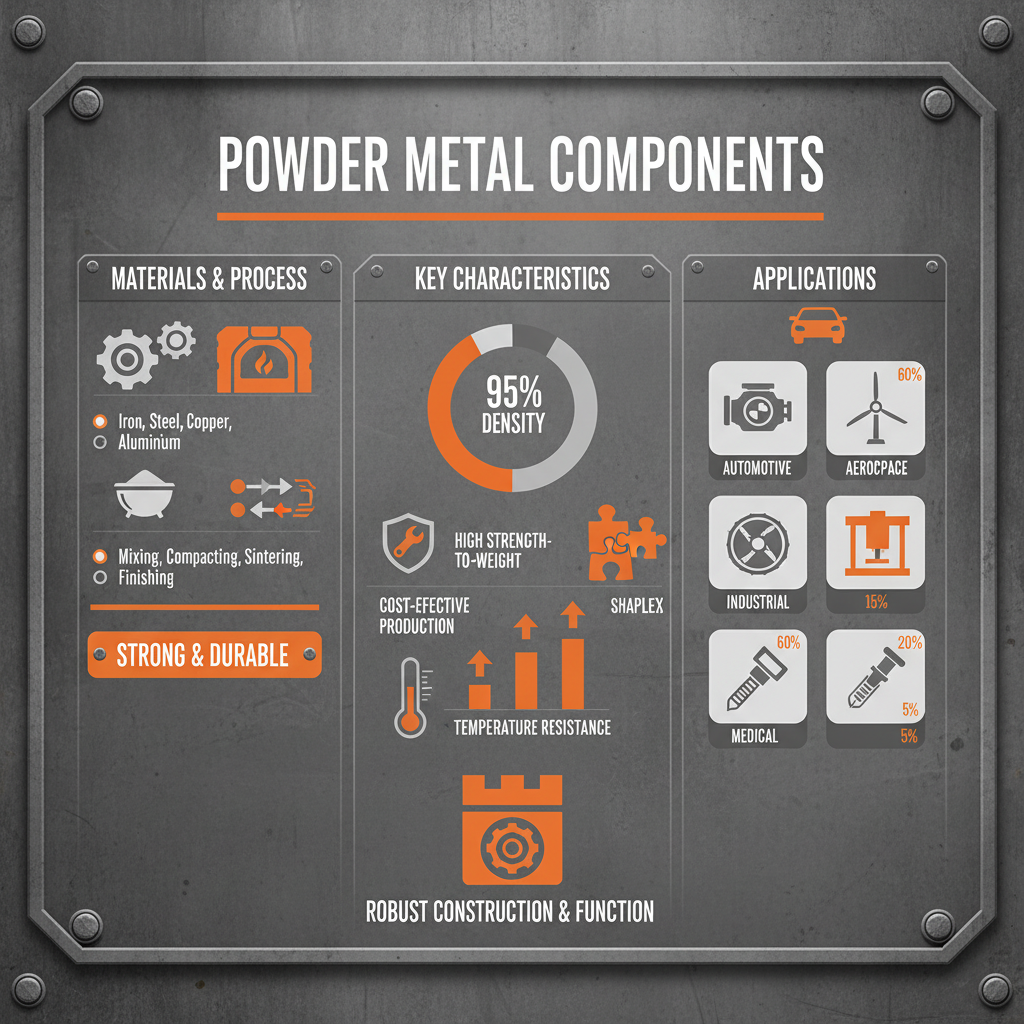
The beauty of powder metallurgy lies in its inherent advantages. First, there’s Material Utilization. You’re starting with only the material needed for the final part, minimizing waste compared to machining. Second, Complex Geometries are readily achievable, allowing for intricate designs that would be impossible or prohibitively expensive to create with other methods. Third, Controlled Porosity – incredibly important for applications like filters and bearings – allows for tailored material properties.
Then you have Enhanced Mechanical Properties. The sintering process can create a microstructure that yields higher strength, toughness, and wear resistance. And don’t underestimate Cost Efficiency, especially for high-volume production runs. Once the tooling is set up, the process is highly automated and repeatable.
Powder Metallurgy Market: Process Comparison
Global Applications and Industries Benefiting
The applications for powder metallurgy are remarkably diverse. Automotive is a huge driver, with PM components used in gears, bearings, connecting rods, and engine valves. Aerospace benefits from the lightweight, high-strength properties of PM parts for structural components and engine parts. We also see a lot of activity in the medical field, producing implants and surgical instruments with precise biocompatibility.
I’ve even seen PM used in specialized applications like diamond tools and cutting inserts. The ability to distribute hard particles evenly within a metal matrix creates tools with exceptional wear resistance and cutting performance. Regions like North America and Europe are currently leading the market, but Asia-Pacific is experiencing rapid growth due to increasing manufacturing activity and demand for automotive and aerospace components.
Long-Term Value and Sustainability
The benefits extend beyond just cost savings. Powder metallurgy is inherently more sustainable than many traditional manufacturing processes. By minimizing material waste and reducing energy consumption, it helps lower the environmental footprint. Plus, PM parts often have longer lifespans, reducing the need for frequent replacements.
From a reliability standpoint, PM components can be designed to withstand harsh operating conditions and deliver consistent performance over time. This translates to reduced downtime, lower maintenance costs, and increased overall efficiency. There’s a level of control over the final product that you just don’t get with other methods.
And honestly, there’s a peace of mind knowing you’re using a process that’s actively contributing to a more sustainable future. It’s a win-win for businesses and the environment.
Future Trends and Innovation in PM
The powder metallurgy market is far from static. We’re seeing a surge in additive manufacturing (3D printing) techniques building on PM principles, allowing for even more complex geometries and customized parts. The development of new powder materials, like high-entropy alloys and advanced ceramics, is also opening up exciting new possibilities.
Digitalization is playing a major role, with real-time process monitoring and data analytics improving quality control and optimizing production parameters. And the focus on sustainability is driving research into eco-friendly powder production methods and the use of recycled materials.
We’re also seeing a push towards “smart PM” – integrating sensors and data analytics into the manufacturing process to predict and prevent defects, optimize performance, and enable closed-loop control. The future of powder metallurgy is about smarter, more efficient, and more sustainable manufacturing.
Powder Metallurgy Market: Challenges and Mitigation Strategies
| Challenge |
Impact on Powder Metallurgy Market |
Mitigation Strategy |
Expected Outcome |
| Powder Cost |
High powder costs can limit adoption, especially for specialized alloys. |
Develop cost-effective powder production methods; explore powder recycling initiatives. |
Reduced material costs, increased affordability of PM components. |
| Process Control |
Maintaining consistent powder characteristics and sintering parameters is critical for quality. |
Implement real-time process monitoring and control systems; utilize statistical process control (SPC). |
Improved part quality, reduced scrap rates, enhanced process reliability. |
| Dimensional Accuracy |
Achieving tight tolerances can be challenging, particularly with complex geometries. |
Optimize tooling design and compaction methods; employ post-sintering machining when necessary. |
Enhanced dimensional accuracy, reduced need for post-processing operations. |
| Material Limitations |
Not all materials are readily processable using traditional PM techniques. |
Invest in research and development of new powder materials and processing techniques. |
Expanded material options, increased application range for PM. |
| Scalability Challenges |
Scaling up production from prototype to mass production can be complex. |
Invest in automated equipment and optimized production layouts; collaborate with experienced PM manufacturers. |
Efficient and cost-effective mass production of PM components. |
| Skilled Labor Shortage |
Lack of trained personnel in PM technologies can hinder innovation and growth. |
Invest in training programs and apprenticeships; collaborate with universities and research institutions. |
Increased availability of skilled workers, enhanced innovation in PM technologies. |
FAQS
The biggest costs are usually the metal powder itself, followed by tooling, especially for high-volume production. Sintering can also be energy intensive. However, remember that PM often reduces overall costs by minimizing material waste and eliminating the need for extensive machining. We always look at the total cost of ownership, not just the upfront expense.
Currently, additive manufacturing is generally slower for high-volume production. PM excels at producing large quantities of parts efficiently. However, 3D printing offers advantages for prototypes, complex geometries, and small production runs where the speed isn’t as critical. They aren’t necessarily competitors, but rather complementary technologies.
Iron-based powders are the most common due to their cost-effectiveness and good mechanical properties. However, we also work with stainless steels, nickel alloys, copper alloys, and even titanium alloys, depending on the application requirements. The choice of material depends on the desired strength, corrosion resistance, and operating temperature.
Yes, absolutely! Through techniques like core rod technology and specialized powder blends, we can create parts with complex internal features. This is particularly useful for applications like heat exchangers, cooling channels, and fluid delivery systems. It's another area where PM really shines.
Typical tolerances range from +/- 0.3% to +/- 1.0%, depending on the part size and complexity. We can achieve tighter tolerances with careful tooling design, controlled sintering parameters, and post-sintering machining. It’s all about optimizing the process for the specific application.
Yes, it's significantly more environmentally friendly than many traditional methods. PM minimizes material waste, reduces energy consumption, and allows for the use of recycled materials. It's a key part of a more sustainable manufacturing future, which is something we're all striving for.
Conclusion
The powder metallurgy market isn't just about making parts; it's about solving real engineering problems with innovative, sustainable, and cost-effective solutions. From automotive and aerospace to medical and industrial applications, PM is proving its value time and again. Its ability to create complex geometries, control material properties, and minimize waste makes it a crucial technology for the future of manufacturing.
The industry is poised for continued growth, driven by advancements in materials science, additive manufacturing, and digitalization. If you're looking for a manufacturing solution that delivers performance, sustainability, and value, I highly recommend exploring the possibilities of powder metallurgy. To learn more about how we can help you with your specific application, visit our website: www.jssintering.com.