

WeChat.png
sintered metal parts
email.png
whatsapp.png
top.png
0%

Table of Contents

Powder metal casting, a sophisticated manufacturing process, is gaining prominence globally due to its versatility and cost-effectiveness. This technique, involving the compaction and sintering of metal powders, offers a unique pathway to creating complex shapes with minimal material waste. Its increasing adoption is driven by demands across diverse industries, from automotive and aerospace to medical and consumer goods, reflecting a broader shift towards precision engineering and sustainable production practices.

The relevance of powder metal casting extends beyond mere manufacturing efficiency. As global supply chains evolve and the demand for customized, high-performance components rises, powder metallurgy provides a compelling solution. Furthermore, its ability to utilize recycled materials aligns with growing environmental concerns and promotes a circular economy. Innovations in powder materials, pressing technologies, and sintering processes are continually expanding the possibilities and applications of this pivotal technique.

Understanding powder metal casting is crucial for professionals across engineering, manufacturing, and materials science. Its unique capabilities – enabling near-net shape production, tailored material properties, and high-volume manufacturing – address critical challenges in a wide range of sectors. The benefits translate to reduced production costs, improved product performance, and a more sustainable approach to manufacturing, making it a cornerstone of modern industrial processes.
Exploring the Versatility and Advantages of Powder Metal Casting Techniques

The Fundamentals of powder metal casting

Exploring the Versatility and Advantages of Powder Metal Casting Techniques

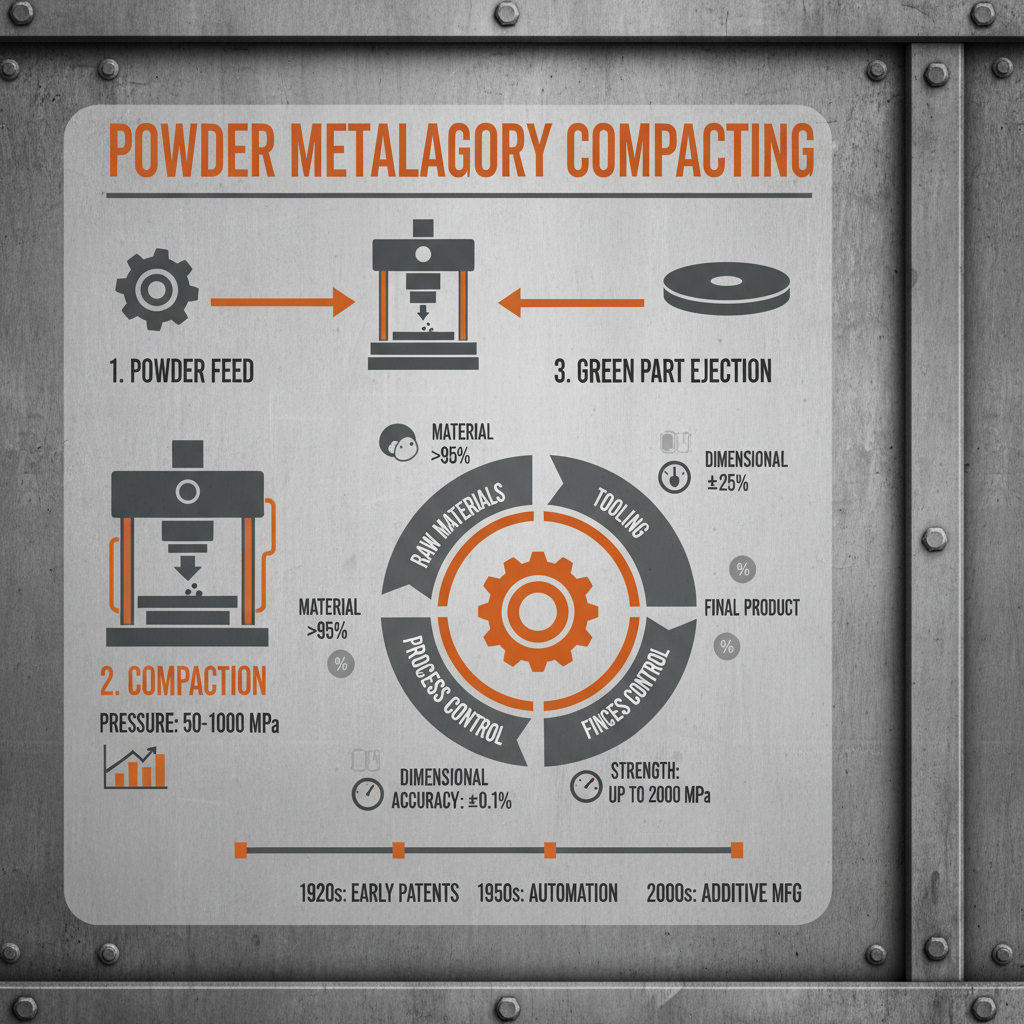
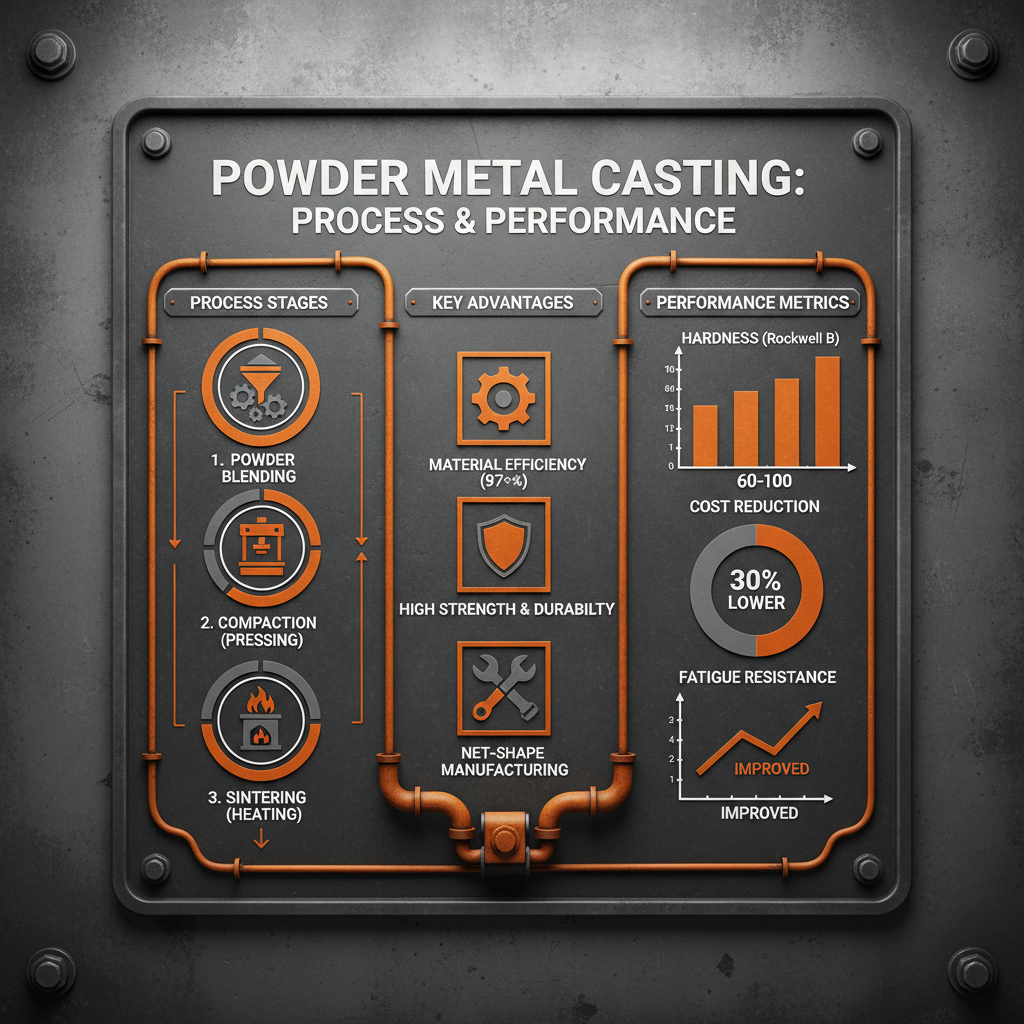
At its core, powder metal casting involves taking finely divided metal particles – the powder – and compressing them into a desired shape. This compaction process creates a ‘green compact’ which, while having shape, lacks the strength of a fully formed metal part.

The subsequent stage, sintering, is where the real magic happens. The green compact is heated to a high temperature, but below the metal's melting point. This process causes the powder particles to bond together, resulting in a solid, dense component. The success of powder metal casting hinges on controlling particle size, powder composition, compaction pressure, and sintering parameters.

Global Relevance and Market Dynamics

Powder metal casting is a globally significant industry, integral to a vast spectrum of manufacturing processes. Demand is driven by countries with robust industrial sectors, including the United States, China, Germany, Japan, and increasingly, India and Brazil. According to a report by the Metal Powder Industries Federation (MPIF), the global powder metallurgy market is projected to reach \$12.5 billion by 2027, demonstrating consistent growth.

The industry's growth is fueled by the increasing adoption of powder metal components in the automotive sector for lightweighting and improved fuel efficiency. Aerospace applications benefit from the ability to create complex, high-strength parts. The medical industry relies on powder metallurgy for implants and surgical instruments requiring precise tolerances and biocompatibility.

A major challenge facing the powder metal casting industry is the volatility of raw material costs, particularly metal powders. Geopolitical factors and supply chain disruptions can significantly impact pricing. Additionally, competition from alternative manufacturing processes, such as additive manufacturing (3D printing), requires continuous innovation and process optimization to maintain market share.

Defining powder metal casting: A Technical Overview

Powder metal casting is a net-shape or near-net-shape manufacturing process, meaning minimal machining is required after the component is formed. It differentiates itself from traditional casting methods by starting with metallic powders rather than molten metal. The basic steps involve powder selection, mixing (often with binders and lubricants), compaction, and sintering.

The process is remarkably adaptable to a wide range of metals and alloys, including iron, steel, aluminum, nickel, and titanium. The type of powder used – its particle size, shape, and composition – significantly influences the final properties of the component. Sophisticated powder metallurgy techniques allow for control over porosity, density, and mechanical characteristics, tailoring the material to specific application requirements.

Powder metal casting offers advantages in producing complex geometries, especially those with undercuts or intricate internal features, that would be difficult or impossible to achieve with conventional methods. It also allows for the creation of materials with controlled microstructure, enhancing their performance and durability.

Key Advantages of powder metal casting

One of the primary advantages of powder metal casting is its material efficiency. Because it's a near-net shape process, minimal material is wasted compared to machining from a solid block. This contributes to cost savings and reduces environmental impact.

Another significant benefit is the ability to produce components with tailored properties. By controlling powder composition and processing parameters, engineers can achieve specific levels of strength, hardness, ductility, and corrosion resistance. This makes powder metal casting ideal for applications where performance is critical.

Comparative Advantages of powder metal casting Methods


Real-World Applications of powder metal casting

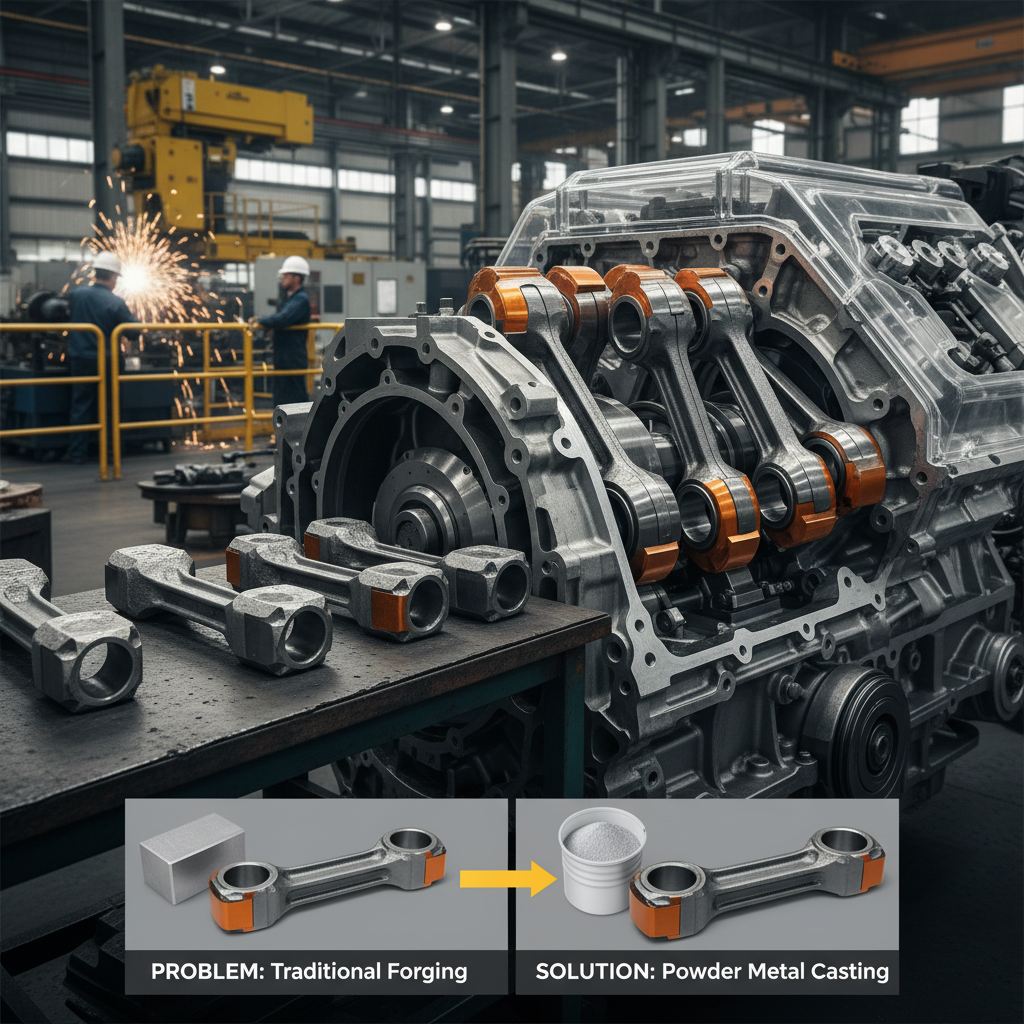
The automotive industry is a major consumer of powder metal casting components. Gears, connecting rods, and engine valves are frequently manufactured using this process, offering lightweighting and improved fuel efficiency. In the aerospace sector, powder metal casting is used to produce turbine blades, structural components, and engine parts that demand high strength and temperature resistance.

Beyond these core industries, powder metal casting finds applications in medical implants, power tools, sporting goods, and even consumer electronics. Its versatility and ability to create complex shapes with tailored properties make it an indispensable manufacturing technique across numerous sectors.

Long-Term Value and Economic Benefits

Investing in powder metal casting technologies and expertise yields significant long-term economic benefits. Reduced material waste translates directly to lower production costs. The near-net shape capability minimizes machining requirements, saving time and labor. Furthermore, the ability to tailor material properties leads to enhanced product performance and increased lifespan, reducing the need for frequent replacements.

The sustainability aspects of powder metal casting are increasingly important. The process can utilize recycled materials, reducing reliance on virgin resources. Its energy efficiency, compared to some traditional manufacturing methods, contributes to a lower carbon footprint. These factors enhance a company’s brand image and appeal to environmentally conscious consumers.

Future Trends and Innovation in powder metal casting

The future of powder metal casting is inextricably linked to ongoing advancements in materials science, automation, and digital technologies. Research into new powder materials, including high-performance alloys and composite powders, will unlock even greater capabilities. Automation, incorporating robotics and artificial intelligence, will improve process control, increase efficiency, and reduce labor costs.

Additive manufacturing (3D printing) and powder metal casting are increasingly converging. Hybrid processes, combining the precision of 3D printing with the scalability of powder metallurgy, are emerging as promising solutions for complex component production. Furthermore, digital twins – virtual representations of physical components – will enable predictive maintenance and process optimization, further enhancing the efficiency and reliability of powder metal casting.

Summary of Key Challenges and Solutions in powder metal casting

Challenge Impact on powder metal casting Potential Solution Implementation Level (1-5)
Raw Material Cost Volatility Increased production costs, reduced profitability. Strategic sourcing, long-term contracts, exploring alternative materials. 4
Porosity Control Reduced mechanical properties, compromised component integrity. Optimized sintering parameters, HIP treatment. 5
Complex Geometry Production Limitations in achieving intricate designs. Hybrid manufacturing approaches (PM + AM). 3
Tooling Costs High initial investment, particularly for low-volume production. Utilizing flexible tooling designs, exploring 3D-printed tooling. 3
Process Control Variations in component quality, reduced reliability. Implementation of advanced process monitoring and control systems. 4
Skilled Workforce Shortage Lack of expertise in powder metallurgy principles. Investment in training programs, collaboration with universities. 2

FAQS

What are the primary benefits of choosing powder metal casting over traditional machining?

Powder metal casting offers several key advantages over machining. Firstly, it's a near-net shape process, resulting in significantly less material waste. Secondly, it allows for the creation of complex geometries that would be difficult or expensive to machine. Thirdly, it enables the production of components with tailored material properties, offering superior performance characteristics. Finally, it’s often more cost-effective for high-volume production runs.

How does the size and shape of the metal powder impact the final properties of the component?

The characteristics of the metal powder – its particle size, shape, and distribution – directly influence the final properties of the powder metal casting component. Smaller particle sizes generally lead to higher green strength and improved density after sintering. Spherical particles promote better flowability during compaction, resulting in more uniform density. The shape and distribution affect the sintering behavior and the final microstructure, impacting mechanical properties like strength, ductility, and fatigue resistance.

What types of metals are commonly used in powder metal casting?

A wide range of metals can be used in powder metal casting, including iron, steel (carbon and alloy), stainless steel, aluminum, copper, nickel, titanium, and their alloys. Iron and steel are the most commonly used materials due to their cost-effectiveness and versatility. Aluminum alloys are popular for lightweight applications, while titanium alloys are utilized in high-performance, aerospace applications requiring exceptional strength-to-weight ratios.

Can powder metal casting be used to create parts with internal porosity?

Yes, powder metal casting can be specifically controlled to create parts with a defined level of internal porosity. This is often achieved by adjusting the compaction pressure and sintering parameters. Porous components are desirable in applications such as filters, bearings (for lubrication), and medical implants (to promote bone ingrowth). The porosity level can be precisely tailored to meet the specific requirements of the application.

What are the limitations of powder metal casting?

While incredibly versatile, powder metal casting does have limitations. Components are often more expensive for very low production volumes. The mechanical properties, particularly ductility, may be lower than those of wrought materials. Also, achieving full density can be challenging for complex geometries, potentially requiring secondary operations like infiltration. The cost of specialized powders and tooling can also be a factor.

How is powder metal casting evolving with Industry 4.0?

Industry 4.0 technologies are significantly impacting powder metal casting. Advanced process monitoring and control systems, utilizing sensors and data analytics, are optimizing sintering cycles and ensuring consistent component quality. Digital twins are being used to simulate the powder metal casting process, allowing for predictive maintenance and improved process design. Automation and robotics are increasing efficiency and reducing labor costs. These innovations are driving a new era of smart manufacturing in the powder metallurgy industry.

Conclusion

Powder metal casting stands as a vital manufacturing process, offering a unique blend of cost-effectiveness, material efficiency, and design flexibility. From automotive and aerospace to medical and industrial applications, its ability to create complex, high-performance components with tailored properties is driving innovation across diverse sectors. The ongoing advancements in materials science, automation, and digital technologies are poised to further enhance its capabilities and broaden its reach.

Investing in powder metal casting knowledge and technology is crucial for manufacturers seeking to optimize their processes, reduce costs, and meet the growing demands for sustainable and customized products. We encourage you to explore the potential of powder metal casting for your specific applications. Visit our website at www.jssintering.com to learn more about our capabilities and how we can help you achieve your manufacturing goals.


Brian Rodriguez

Brian Rodriguez

Brian Rodriguez is a Research and Development Engineer at JingShi New Material. He is responsible for exploring new material formulations and innovative manufacturing processes to expand the company's capabilities. Brian works closely with the engineering team to develop customized solutions for clients, applying his knowledge of gear transmission parts and
Previous Exploring the Versatility and Growth of Powder Metal Components Manufacturing
Next Exploring the Versatility and Advantages of Powder Metal Bearings

If you are interested in our products, you can choose to leave your information here, and we will be in touch with you shortly.