






The compaction process in powder metallurgy is a crucial step in creating strong, precisely shaped metal parts. It’s a manufacturing process where metal powders are compressed into a desired form, laying the foundation for durable components used across diverse industries. Understanding this process is vital for optimizing production, controlling material properties, and ensuring the quality of finished products.
Globally, powder metallurgy (PM) is experiencing significant growth, driven by the increasing demand for lightweight, high-performance materials. According to industry reports, the PM market is projected to reach billions of dollars in the coming years, particularly in automotive, aerospace, and medical applications. This growth underscores the importance of mastering the compaction process in powder metallurgy to meet evolving industrial needs and maintain a competitive edge.
The compaction process in powder metallurgy addresses the challenge of efficiently producing complex geometries with minimal material waste. Traditional machining processes often involve removing significant amounts of material, leading to higher costs and environmental impact. Powder metallurgy offers a cost-effective and sustainable alternative, enabling the creation of parts with intricate designs and near-net-shape accuracy.
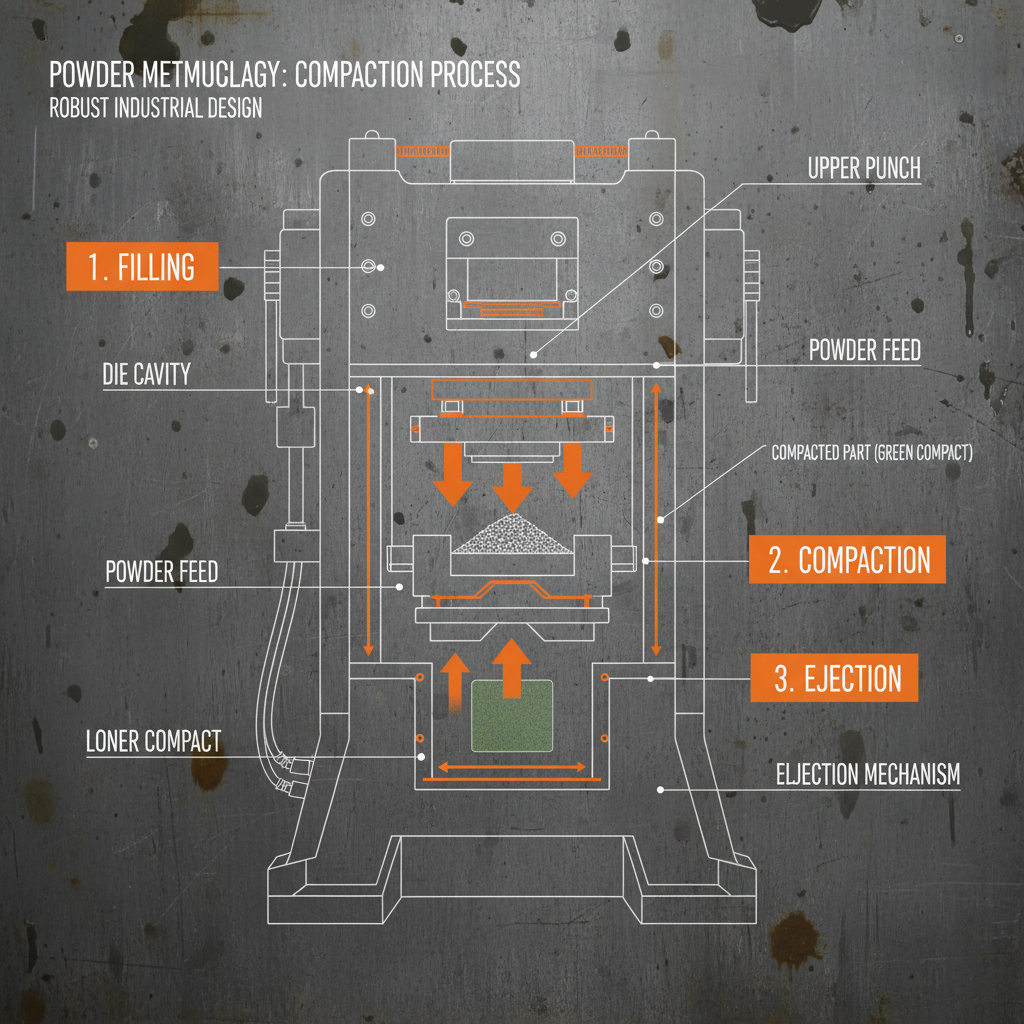
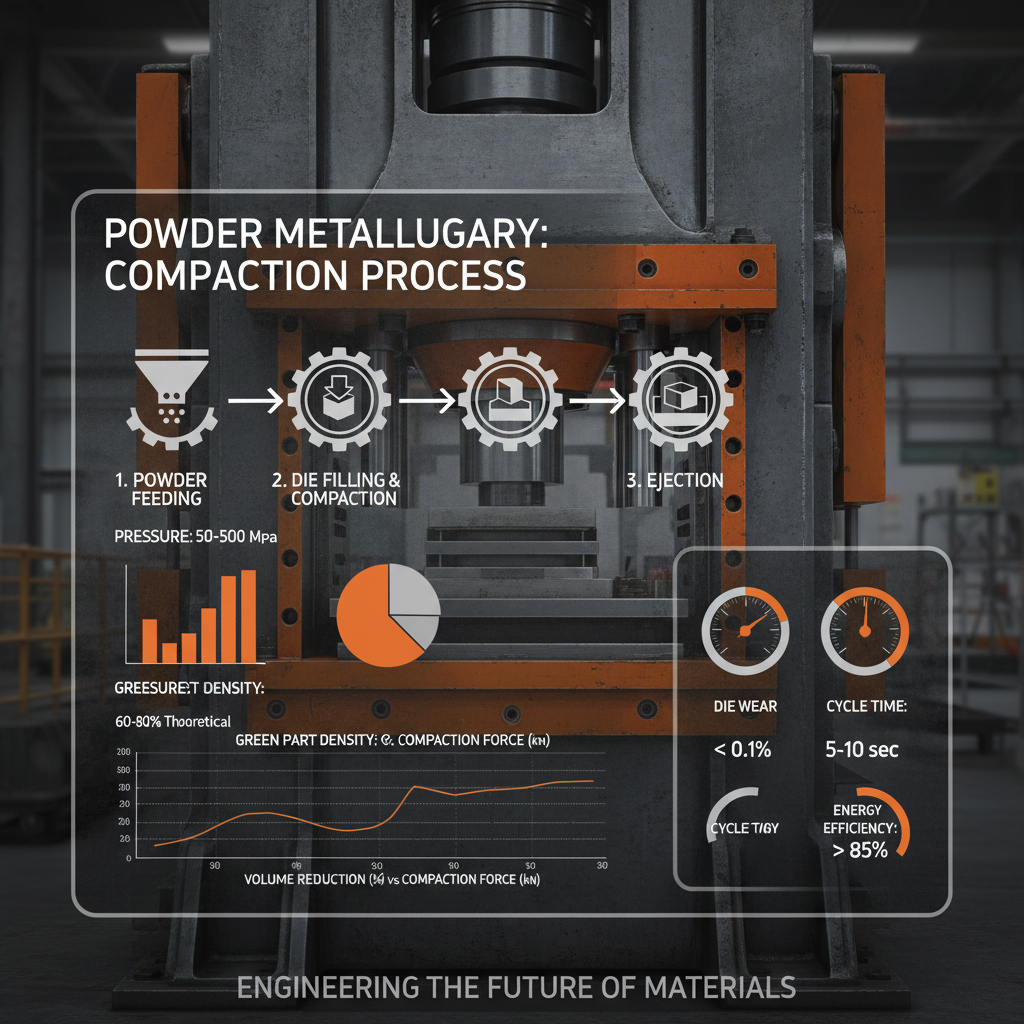
Compaction is the heart of the powder metallurgy process, transforming loose powder into a solid “green” compact. This initial consolidation dictates the density, strength, and ultimately the quality of the final sintered part. Controlling the compaction parameters is therefore critical to achieving desired mechanical properties.
The effectiveness of the compaction process in powder metallurgy directly impacts downstream operations such as sintering, where the compact is heated to fuse the particles together. A well-compacted green body reduces sintering time and energy consumption while minimizing distortion and shrinkage.
The density achieved through compaction process in powder metallurgy typically ranges from 50% to 90% of the theoretical density of the material. This varies significantly depending on factors like powder characteristics (shape, size distribution), compaction pressure, and the type of compaction method employed. Isostatic pressing, for example, generally yields higher densities compared to conventional die pressing.
Powder particle shape is crucial. Spherical powders generally exhibit better flowability and pack more densely, resulting in higher green strength. Irregularly shaped particles can interlock, increasing green strength but potentially reducing density. Mastering particle morphology is therefore central to optimizing the compaction process in powder metallurgy.
Die wear is a significant concern, primarily caused by abrasive action of the powder during compaction. Factors such as powder hardness, compaction pressure, and the frequency of cycles contribute to wear. This can lead to dimensional inaccuracies in the compacted parts and necessitate frequent die replacement or refurbishment, increasing production costs.
Lubrication plays a vital role. Lubricants reduce friction between the powder and the die walls, facilitating powder flow, ejection of the compact, and minimizing die wear. However, excessive lubrication can negatively impact sintering by leaving a residue, thus careful lubricant selection and application are critical to the compaction process in powder metallurgy.
Uniaxial pressing applies pressure from one or two directions, while isostatic pressing applies uniform pressure from all directions using a fluid medium. Isostatic pressing generally achieves higher densities, especially in complex shapes, but is typically more expensive and slower. Uniaxial pressing is suited for high-volume production of simpler geometries.
Green strength can be improved by increasing compaction pressure, using finer powders, adding binders, or optimizing particle shape. Binders temporarily hold the particles together before sintering. Careful control of these parameters during the compaction process in powder metallurgy is crucial for handling and subsequent processing.
The compaction process in powder metallurgy is a foundational manufacturing technique offering a unique combination of design flexibility, material control, and cost-effectiveness. From automotive and aerospace to medical and industrial applications, it continues to enable the production of high-performance, complex parts that meet the evolving needs of various industries. Understanding the intricacies of this process – from powder characteristics to tooling design – is essential for maximizing efficiency and achieving optimal part properties.
As technology advances, we can expect to see further innovations in compaction process in powder metallurgy, including the integration of automation, additive manufacturing, and advanced materials. Continued research and development will unlock new possibilities for this versatile process, solidifying its role as a key enabler of manufacturing excellence. Visit our website at www.jssintering.com to learn more.


Shijiazhuang JingShi New Material Science and Technology Co., Ltd was founded since 2014, located in Shijiazhuang, Hebei province, China. The company covers an area of over 10,000 square meters and has


PRODUCTS

CONTACT US
Address:TIANSHAN INTERNATIONAL MANUFACTURING INDUSTRY PARK NO.57, YUANSHI, SHIJIAZHUANG CITY, HEBEI PROVINCE, CHINA
Address:TIANSHAN INTERNATIONAL MANUFACTURING INDUSTRY PARK NO.57, YUANSHI, SHIJIAZHUANG CITY, HEBEI PROVINCE, CHINA
