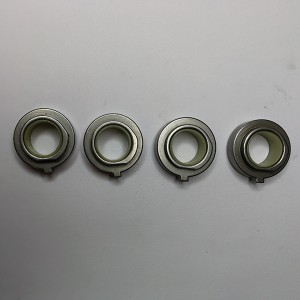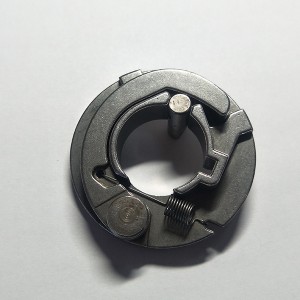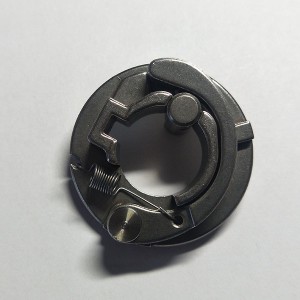





Descripción del Producto
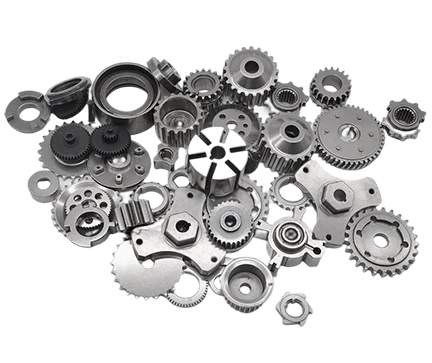
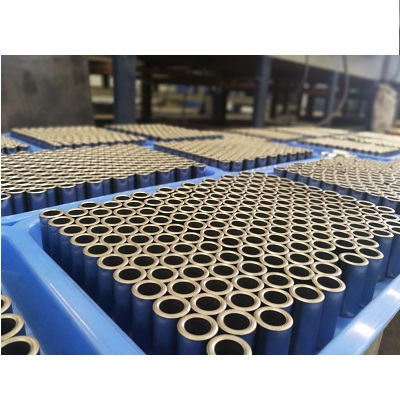
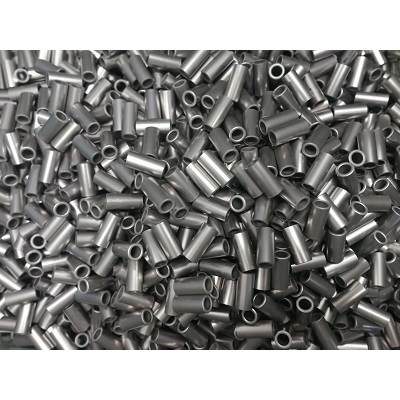
Buje hexagonal de pulvimetalurgia, buje de brida, buje complejo, buje a base de hierro, buje escalonado,
El cuerpo sinterizado producido mediante pulvimetalurgia utilizando polvo metálico como materia prima principal es inherentemente poroso y tiene las ventajas técnicas de poder ajustar libremente el número, tamaño, forma y distribución de los poros durante el proceso de fabricación.
Iron-based powder metallurgy bushings are precision-engineered components designed for high-performance applications that require durability, strength, and resistance to wear and corrosion. These bushings are manufactured using advanced powder metallurgy techniques, where iron-based metal powders are compacted and sintered at high temperatures to form a dense, solid structure. The sintering process ensures that the bushings exhibit excellent mechanical properties, such as high strength, wear resistance, and dimensional stability, making them ideal for use in a variety of industrial and automotive applications.
The bushings are used to reduce friction and wear between moving parts in machinery, allowing for smoother operation and extended service life. Iron-based alloys, including a variety of steel and cast iron compositions, can be selected to meet the specific needs of each application, offering additional properties such as enhanced hardness or resistance to corrosion. These bushings are commonly used in high-stress environments, such as in automotive suspension systems, industrial machinery, and electrical equipment, where durability and long-term performance are critical. The powder metallurgy process also allows for the creation of complex shapes and tight tolerances, providing design flexibility and the ability to produce bushings that are both cost-effective and high-performance. Customization options include variations in size, material composition, and surface treatments to meet the specific operational requirements of each application. Iron-based powder metallurgy bushings are ideal for applications that require high load-bearing capacity, excellent wear resistance, and resistance to harsh operating conditions, making them a reliable solution for many industries. Rigorous quality control processes, including dimensional inspections and material testing, ensure that each bushing meets or exceeds industry standards for performance and reliability.
Las ventajas de la producción de bujes mediante pulvimetalurgia:
1. El ciclo de producción en masa es corto y el costo es bajo.
2. No se requiere corte o se requiere muy poco, y la tasa de utilización del material es alta.
3. El molde se forma de una sola vez, con pequeña tolerancia y alta consistencia del tamaño del producto.
4. Los poros se pueden sumergir en aceite lubricante, que tiene buena resistencia al desgaste y capacidad de absorción de impactos.
5. Puede fabricar materiales compuestos metalúrgicos.
6. La mayoría de los metales refractarios y sus compuestos y materiales porosos sólo pueden fabricarse mediante pulvimetalurgia.
7. Se puede proporcionar un procesamiento diversificado según las necesidades del cliente.