







With the continuous advancement in the motorcycle industry, the demand for motorcycle engine parts and related components like engine camshaft parts and sprocket is ever growing. High-performance, durability, and precision engineering are crucial as two-wheeler users expect both reliability and longevity from their machines. In this article, we break down global industry trends, technical insights, manufacturing processes, and real-world case studies, with a focus on the OEM Motorcycle Engine Camshaft Pulley Block.
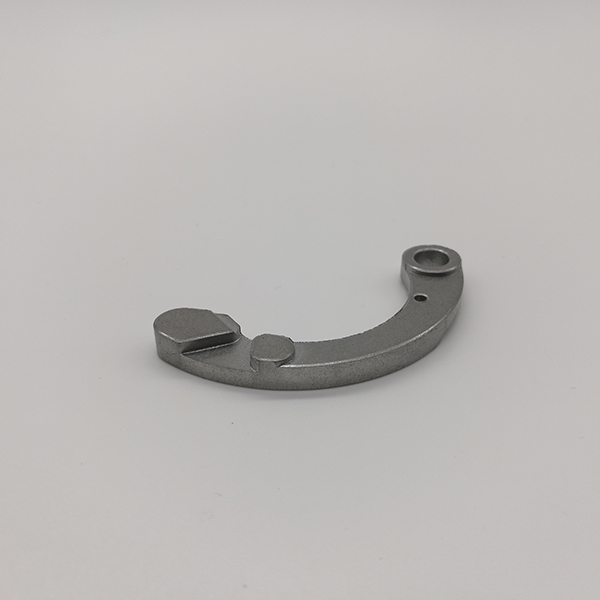
Industry Overview & Market Trends
The global motorcycle engine parts market was valued at USD 12.2 billion in 2023, with a CAGR expected at 4.6% (2023-2028). Asia-Pacific remains dominant, led by China, India, and Southeast Asia, due to urbanization and two-wheeler affordability. Hybrid engines and electrification are shaping new engine part requirements, while advanced manufacturing like CNC machining, heat treatment, and surface finishing sets modern quality benchmarks.
Key trends:
- Material shift to high-strength alloy steels & sintered metals for improved lifespan.
- Rising demand for precision engine camshaft parts with low tolerance (<15μm).
- Stricter compliance to ISO 9001:2015, IATF16949, and ANSI standards.
- Sprocket innovation: Integration of noise/vibration damping features & anti-corrosion coatings.
Technical Parameters Comparison — Motorcycle Engine Parts
Below is a detailed technical comparison of standard motorcycle engine parts, including Engine Camshaft, Sprocket, Crankshaft and Piston:
| Component | Common Material | Typical Size Range (mm) | Hardness (HRC) | Surface Finish | Service Life (hrs) | Key Standard |
|---|---|---|---|---|---|---|
| Engine Camshaft | Alloy Steel, Sintered Iron | 100-250 | 55-65 | Ra ≤ 0.4μm | 30,000–40,000 | ISO 606, IATF16949 |
| Sprocket | Carbon Steel (20MnCr5), Stainless Steel (SS420) | 80-180 | 45-55 | Black/Color Zinc-plated | 25,000–35,000 | ANSI B29.1, ISO 9001 |
| Crankshaft | Forged Alloy Steel (42CrMo4) | 150-290 | 60-68 | Induction Hardened | 50,000 | ISO 6621 |
| Piston | Al-Si Alloy, Forged Aluminum | 55-120 | 90–120 HB | Hard Anodized | 20,000–25,000 | ISO 6623, JIS B8013 |
In-Depth: Manufacturing Process of OEM Motorcycle Engine Camshaft Pulley Block
Component Highlight: OEM Motorcycle Engine Camshaft Pulley Block
OEM Motorcycle Engine Camshaft Pulley Block Manufacturing Flow
Raw Fe, Cu alloy powders mixed for uniform performance.
Powder pressed at 600–800 MPa into “green” blank.
Heated at 1120°C in H2/N2 atmosphere for strong bonding.
Bearing, keyways, and critical surfaces processed to ≤0.012mm tolerance.
Anti-corrosion coating, heat treat to 60HRC.
CMM, Rockwell tester, and visual QA per ISO/IATF standards.
Sealed anti-static bags, barcoded labeling.
Key advantages of this process:
- Powder metallurgy allows optimized microstructure for strength & wear resistance.
- Precision CNC improves dimensional stability (critical for camshaft timing accuracy).
- Anti-corrosion coat + heat treat for enhanced service life (>35,000 hours).
Product Metrics: OEM Motorcycle Engine Camshaft Pulley Block vs Common Camshaft Parts
| OEM Camshaft Pulley Block | Conventional Camshaft Gear | |
|---|---|---|
| Material | Fe-Cu Sintered Alloy | Carbon Steel 42CrMo |
| Surface Hardness | 60 ±3 HRC | 54-58 HRC |
| Dimension Tolerance | ≤0.012mm | 0.018mm |
| Corrosion Protection | Eco Electroplating | Standard Black Oxide |
| Wear Resistance (Fretting Test) | Errors <3μm after 250h | Errors <7μm after 250h |
| Service Life (bench) | >35,000 hrs | 27,000–30,000 hrs |
| Standard Compliance | ISO 9001:2015, IATF16949 | ISO 9001 |
Key Applications & Advantages — From Urban Commute to Industrial Use
The OEM motorcycle engine camshaft pulley block finds its place in a wide range of motorcycles, from 100cc city commuters to high-performance 250cc+ sports bikes, as well as applications in industrial drives for petrochemical, metallurgy, and water treatment sectors where robust engine cam drive assemblies are essential.
- High Fatigue Strength: Sintered microstructure and heat-treated surface greatly boost resistance to cyclic loads found in aggressive engine profiles.
- Superior Corrosion Resistance: Specialized eco electroplating ensures operation in high humidity, chemical, or saline environments.
- Noise/Vibration Optimized: Close-tolerance fit and precise tooth forming minimize timing errors and noise.
- Longevity: Service intervals are extended (factory test: >35,000h) lowering total cost of ownership for end customers.
- Custom Machining: Flexible CNC enables rapid adaptation for small or large series, special tooth profiles, or keyway geometries.
Application Case: Camshaft Drive in Urban Scooter (EAC Group, India)
- Background: EAC’s commuter fleet were experiencing premature camshaft failure due to poor wear resistance in humid, urban environments.
- Solution: Adopted OEM camshaft pulley block (Fe–Cu sintered alloy, eco-plated) with custom CNC key slot for transmission reliability.
- Outcome: Increased cam drive life by 38%, service interval extended from 18 to 30 months, reduced warranty claims by 27%.
Industrial Integration: Engine Sprocket Modules
- Client: Steelworks maintenance operator (Europe)
- Implementation: Integrated sintered camshaft pulley block & sprocket set for engine-powered valve actuators.
- Result: Gear backlash reduced by 41%, unplanned shutdowns dropped by 22% in first operational year due to upgraded component fatigue resistance.
Supplier Comparison — OEM Manufacturer vs General Supplier
| Feature | OEM Manufacturer (JSSintering, Profile) |
General Supplier |
|---|---|---|
| Core Process | Powder Metallurgy + CNC + Custom Heat Treatments | Drop Forging + Standard Machining |
| Design Capability | Custom engineering per spec, rapid prototyping | Catalog parts; limited customization |
| Quality Certification | ISO 9001:2015, IATF 16949, SGS, CE | ISO 9001, occasionally ANSI |
| Testing | 100% CMM, spectroanalysis, runout & balance, NDT | Random sample, visual QA |
| After-sales Support | 2-year warranty, field engineering, fast response | Standard return policy |
| Production Lead Time | 10-20 days (custom); 5 days (stock) | 20-30 days (standard only) |
Custom Solutions: Tailored Motorcycle Engine Parts for OEM Programs
Whether you represent a global motorcycle OEM or a regional industrial enterprise, motorcycle engine parts can be designed and manufactured following your application-specific requirements.
Custom Options Include:
- Material selection: Fe-Cu, 20MnCr5, 42CrMo4, advanced stainless, Ni-resist alloys
- Gear module, pitch, and tooth profile per design
- Surface treatments: Black oxide, Zn/Cr eco-plating, DLC, PVD coatings
- Quality monitoring: Real-time SPC, 3D scanning, 100% functional test per ISO/ANSI
- Low-MOQ for prototyping to millions for serial program delivery
FAQ — Professional FAQ on Motorcycle Engine Parts & Camshaft Components
- Q1: What’s the main advantage of Fe-Cu sintered alloy in motorcycle camshaft parts?
- A1: Fe-Cu alloys combine high wear resistance, self-lubrication (due to pores), and excellent machinability. Sintering enhances microstructure uniformity, improving fatigue strength in demanding engine conditions.
- Q2: How accurate are dimensional tolerances for modern engine camshaft & sprocket parts?
- A2: CNC machining enables tolerances as tight as 0.012mm for critical features, ensuring smooth cam belt operation and minimizing timing errors as per ISO 606/ANSI B29.1 specs.
- Q3: What coating/finishing options exist for corrosion resistance?
- A3: Eco-friendly Zn/Cr electro-plating, black oxide, and advanced PVD coatings are common; these achieve salt spray resistance >276h (per ASTM B117) — essential for coastal/industrial uses.
- Q4: Which standards certify premium motorcycle engine parts?
- A4: Accredited products comply with ISO 9001:2015, IATF 16949, and ANSI. This ensures process control, traceability, and compatibility with OEM quality systems.
- Q5: How is product longevity validated?
- A5: Accelerated bench cycling (ASTM D7005), ultrasonic flaw detection, CMM dimensional checks, and hardness profiling are standard. For OEM camshaft pulley block, reference table: service exceeding 35,000h at 95% confidence.
- Q6: Can you customize sprocket or camshaft gear tooth design?
- A6: Yes. Tooth count, module, pressure angle, and special chamfer profiles can be engineered for optimized load transfer and noise control per application.
- Q7: What are the best practices for installation?
- A7: Always use calibrated torque tools, follow OEM alignment marks, and apply recommended lubricants. Improper mounting can induce pre-load errors and shorten lifespan — refer to IATF 16949 install guidelines.
Delivery, Warranty & Customer Support
- Production Lead Time: 10–20 days for custom parts, 5–7 days for stock items.
- Warranty: 2-year unconditional guarantee on all motorcycle engine parts.
- Certifications Defect Liability: 100% replacement or refund per ISO/ANSI claim process.
- Support: Pre-sales tech consultation, post-sales field support, and global shipping. Multilingual engineering team, 8-hour average reply speed.
- Traceability: All batches barcoded and records kept 7 years for quality tracking.









