






Product Description
Technology: Powder Metallurgy
Material Standard: MPF series, MPIF 35, DIN 30910, JIS Z2550
Density: 6.2 - 7.1 g/cm3
Macro Hardness: 45-80 HRA
Tensile Strength: 1650 Mpa Ultimate
Yield Strength(0.2%): 1270 Mpa Ultimate
| Size | Welcome OEM/ODM.We need your drawings in CAD, 3D or PDF. Or you send us your sample, we draw for you. |
| Material | iron,copper,brass or as customized |
| Surface Treatment | Quenching, Polishing, Oil impregnation, black oxide, full hardening or as customized |
| Color | customized |
| Mass Production | 10-30 days depending on the quantity after receiving the deposit |
| Application | Automotive, motorcycles, textile machinery, industrial sewing machines, power tools, hardware tools, Electrical, engineering machinery, etc. |
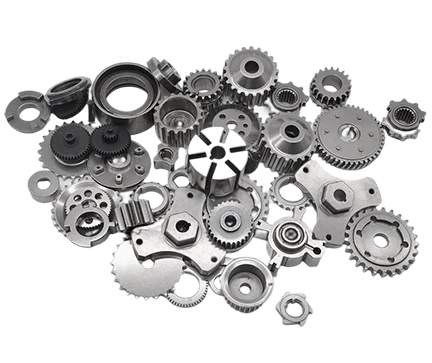
Powder metallurgy OEM gears containing: ring gear, big size internal ring gear, inner ring gear, Excavator ring gear,excavator gear, excavator planetary gear, excavator sun gear, excavator swing gears, automotive ring gears, industrial ring gear, external ring gears, large ring gear, bull ring gears, large diameter ring gears, special gear,transmission gear,gear wheel, worm gear, helical gears, spur gears, bevel gears, ring gear, internal ring gear, ring gear for cement mixer and so on.
Application widely used in the the gear box/reducer/mixer/blender/pump/machinery/power tools
Applications of High Precision Sintered Spur Gears in Automotive and Industrial Systems
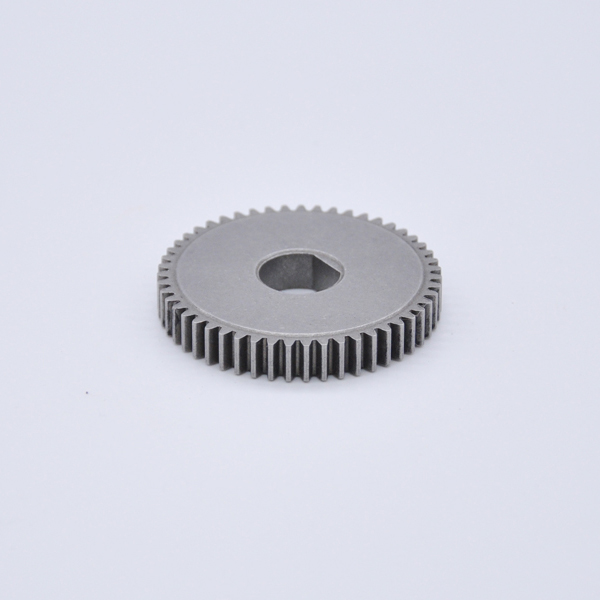
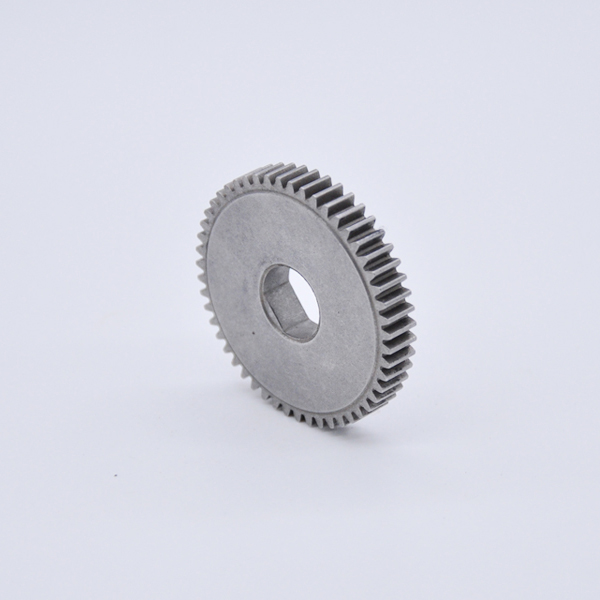
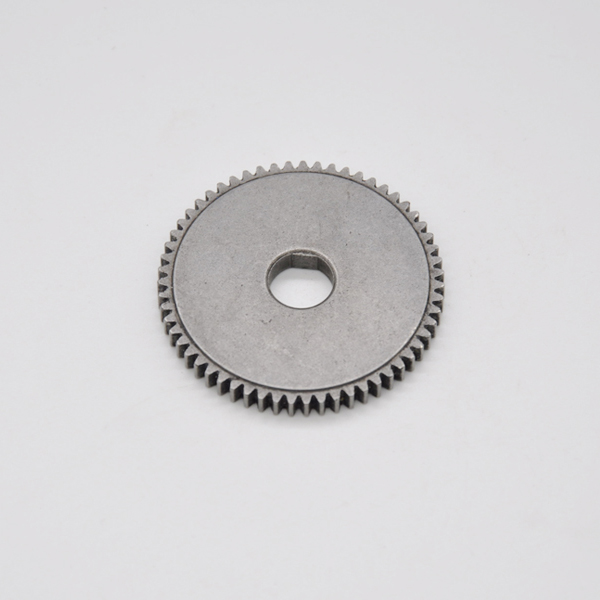
High precision sintered spur gears produced via powder metallurgy have become a cornerstone in modern automotive and industrial systems due to their accuracy, durability, and cost-effective production. These gears are widely used where reliability, consistent performance, and precise torque transmission are essential.
In the automotive sector, high precision sintered spur gears are commonly employed in transmission systems, differential assemblies, and powertrain mechanisms. Their precise tooth geometry ensures smooth engagement with mating gears, reducing noise, vibration, and energy loss. Oil-impregnated porous structures allow self-lubrication, which minimizes maintenance requirements while enhancing gear life. Automotive applications often demand high repeatability under varying loads, and powder metallurgy gears meet these needs due to their consistent density and dimensional accuracy achieved during sintering. High precision sintered spur gears are also used in auxiliary systems such as windshield wipers, window regulators, and HVAC actuators, where reliability and quiet operation are critical.
In industrial applications, sintered spur gears are utilized in gearboxes, conveyor systems, automated machinery, and robotics. These gears are capable of handling continuous operation under heavy loads, high-speed rotation, and harsh working conditions. The ability to integrate hubs, flanges, or splines during the powder metallurgy process reduces assembly complexity and enhances alignment accuracy, which is crucial in industrial automation systems. Sintered spur gears are particularly valuable in repetitive, high-cycle applications where consistency and durability directly impact productivity.
Additionally, these gears are employed in precision instruments and power tools, including drills, milling machines, and small electric motors. The near-net-shape production process minimizes machining needs while maintaining tight tolerances, allowing manufacturers to produce lightweight, high-accuracy gears for compact mechanical assemblies.
Emerging applications in renewable energy and robotics also rely on high precision sintered spur gears. Wind turbines, robotic actuators, and automated guided vehicles require gears that can deliver efficient torque transmission, long service life, and minimal maintenance. Powder metallurgy manufacturing ensures the consistency and precision needed for these advanced systems.
Overall, high precision sintered spur gears combine strength, accuracy, and cost-effectiveness, making them indispensable in both automotive and industrial environments. Their adaptability to high-load, high-speed, and high-precision requirements ensures reliable performance and long service life across a broad range of applications.
Performance and Durability of OEM High Precision Powder Metallurgy Spur Gears
OEM high precision powder metallurgy (PM) spur gears are engineered to provide exceptional performance and long-term durability in demanding applications. Their superior characteristics make them ideal for automotive, industrial, and mechanical systems requiring consistent torque transmission and minimal maintenance.
The performance of these gears begins with material composition. Iron-based powders alloyed with copper, nickel, and molybdenum enhance strength, toughness, and wear resistance. Copper reduces friction and improves compressive strength, nickel increases toughness under shock loads, and molybdenum enhances fatigue resistance. This tailored material selection allows OEM PM spur gears to endure repeated cycles, high torque, and extreme operational conditions.
Precision manufacturing plays a critical role in durability. Near-net-shape compaction and controlled sintering produce gears with consistent tooth profiles, dimensional accuracy, and minimal porosity. The accurate tooth geometry ensures smooth engagement with mating gears, reducing localized stress and preventing premature wear. Post-sintering treatments, such as heat treatment, carburizing, or surface densification, further enhance wear resistance and hardness while maintaining a tough core capable of absorbing impact loads.
Self-lubricating properties are another key factor. The porous structure of powder metallurgy gears can be impregnated with oil during production. This allows continuous lubrication during operation, reducing friction, heat buildup, and surface wear. In automotive transmissions and industrial gearboxes, this feature minimizes maintenance requirements and increases service intervals, improving overall system reliability.
OEM high precision PM spur gears are designed to withstand both static and dynamic loads. Static loads occur during torque transmission, while dynamic loads arise from vibration, shock, or sudden speed changes. The combination of high-quality materials, accurate manufacturing, and self-lubrication ensures these gears operate reliably under challenging conditions, making them ideal for high-performance applications.
Environmental factors, such as dust, humidity, and corrosive fluids, can also impact gear durability. Protective coatings, controlled alloying, and sealed assemblies help mitigate these effects, ensuring consistent performance over long operational cycles.
In conclusion, the performance and durability of OEM high precision powder metallurgy spur gears derive from advanced materials, precise manufacturing, self-lubrication, and tailored design. These features provide long service life, reliable torque transmission, and minimal maintenance across automotive, industrial, and mechanical applications.
Innovations in High Precision Powder Metallurgy and Sintered Spur Gear Manufacturing
The manufacturing of high precision powder metallurgy (PM) and sintered spur gears has evolved significantly in recent years, driven by the need for superior accuracy, durability, and cost-efficiency in automotive, industrial, and mechanical systems. Innovations span materials, production techniques, surface treatments, and digital design.
One major innovation is advanced powder materials. Iron-based powders alloyed with copper, nickel, and molybdenum provide enhanced strength, wear resistance, and fatigue life. Tailored powder compositions allow manufacturers to customize gears for specific applications, such as high-torque automotive transmissions or continuous-duty industrial machinery. Optimized powder particle size and uniformity ensure consistent densification during sintering, improving mechanical properties and dimensional accuracy.
Near-net-shape production is another key advancement. High-pressure compaction and precision die technology allow complex gear geometries—including hubs, flanges, and internal splines—to be formed in a single process. This reduces secondary machining, material waste, and assembly complexity, while maintaining tight tolerances required for high precision applications.
Sintering innovations include controlled-atmosphere furnaces and rapid thermal processing, which ensure uniform bonding of metal particles and consistent mechanical properties. Post-sintering treatments, such as carburizing, induction hardening, and surface densification, enhance hardness and wear resistance while retaining a tough core to absorb shocks.
Self-lubrication techniques have also advanced. Oil impregnation and optimized porosity provide long-lasting lubrication, reducing friction and wear during operation. Some manufacturers are developing gears with integrated micro-porous structures to enhance lubrication retention and reduce maintenance intervals, particularly important in automotive and industrial applications.
Digital design and simulation tools are transforming gear manufacturing. Engineers can model tooth contact, stress distribution, and fatigue life using computer-aided engineering (CAE), enabling optimized designs before production. This reduces prototyping costs, accelerates development, and ensures performance consistency across high-volume manufacturing.
Finally, hybrid additive manufacturing and powder metallurgy approaches are emerging. These methods allow the creation of highly customized gears with complex internal geometries, catering to robotics, automation, and renewable energy systems where traditional manufacturing is limited.
In summary, innovations in high precision powder metallurgy and sintered spur gear manufacturing—from advanced powders and near-net-shape production to digital design and self-lubricating features—are enhancing gear performance, reliability, and cost-effectiveness. OEM manufacturers can now produce gears that meet stringent automotive and industrial standards, delivering superior efficiency, durability, and long-term value.











