







Hydraulic Gerotors Are Quietly Powering a Big Shift in Motion Control
If you spend enough time around power units, you start noticing a pattern: the quietest, most reliable assemblies tend to use well-made hydraulic parts. It sounds obvious, but in the field it’s surprisingly rare. Today I’m spotlighting a component I’ve seen win over tough customers—Jingshi’s high precision oil pump gerotor hydraulic pump rotor—because it captures a few key industry trends: powder‑metal precision, tighter size control, and relentless consistency at volume.
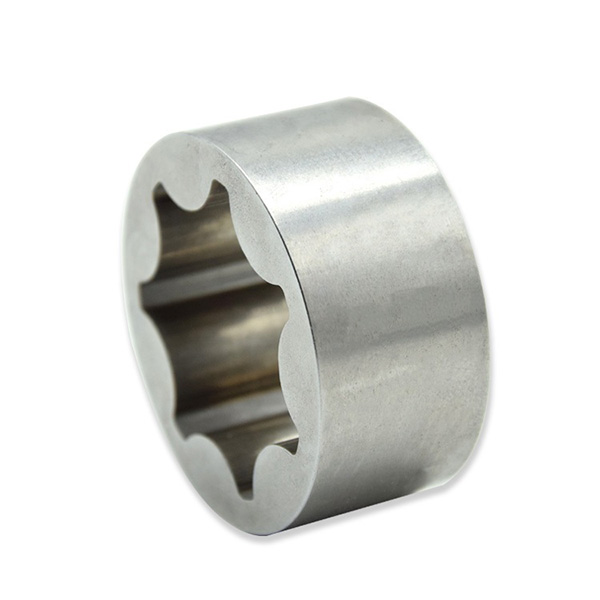
Product snapshot: High precision oil pump gerotor rotor
Origin: Tianshan International Manufacturing Industry Park No.57, Yuanshi, Shijiazhuang, Hebei, China. Brand: Jingshi. Many customers say the part “just drops in” on Acura oil pump rebuilds, which is exactly the vibe you want from a critical rotor.
| Parameter | Spec (≈ real-world may vary) | Notes |
|---|---|---|
| Material standards | MPIF 35 / DIN 30910 / JIS Z2550 | Powder‑metal gear grade |
| Density | 6.4–7.1 g/cm³ | Post‑sizing improves consistency |
| Apparent hardness | 20–43 HRC | Steam oxidation finish |
| Micro hardness | ≈ 60 HRC | Edge and flank protection |
| Strength (max) | UTS ≈ 1250 MPa; YS ≈ 700 MPa | Lab values under controlled coupons |
| Dimensional control | ≈ ±0.02–0.05 mm | After sizing/grinding; application‑dependent |
| Service life | ≈ 5,000–10,000 h | With filtered oil (ISO 4406 ≤ 16/14/11) |
| Supply ability | Up to 1,000,000 pcs/month | Stable automotive volume |
| Packaging | 5/10 pcs per kraft roll; 60–70 rolls/ctn | Transit scuff protection |
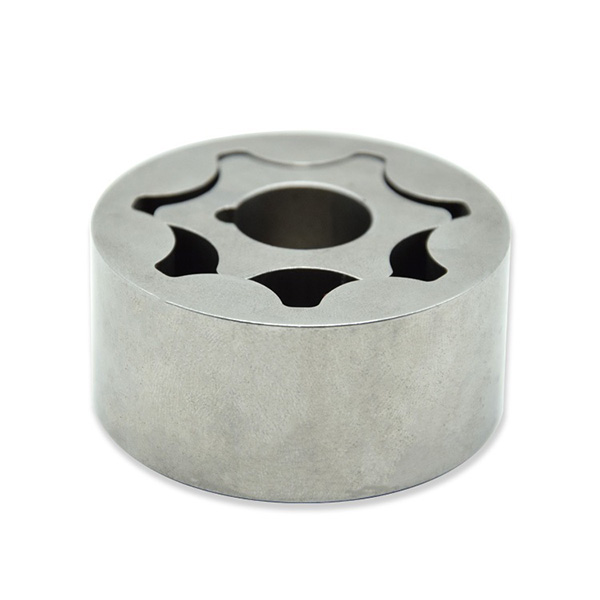
How it’s made (quick process flow)
Materials: alloyed Fe powders per MPIF 35. Methods: blending → compaction → sintering → sizing/grinding → steam oxidation (anti‑corrosion) → 100% visual + gauge checks. Testing: density and microstructure per MPIF/DIN/JIS; hardness per ASTM methods; cleanliness targets matched to ISO 4406 system specs. To be honest, the steam‑oxidized finish holds up well for oil pump duty cycles.
Where it’s used
Automotive oil pumps (Acura fitments noted), compact hydraulic power units, low‑noise gerotor motors for AGV/AMR drivetrains, and industrial lube systems. In fleets, engineers like hydraulic parts that keep volumetric efficiency high even after thermal cycles—this rotor has become a go‑to.
Vendor comparison (what buyers usually weigh)
| Vendor Type | Typical Tolerance | Lead Time | Certs | Cost @ 10k |
|---|---|---|---|---|
| Jingshi sintered gerotor | ≈ ±0.02–0.05 mm | 4–6 weeks after sample | ISO 9001; IATF 16949 (industry typical) | Low–Medium |
| Generic cast gear vendor | ≈ ±0.10–0.20 mm | 6–10 weeks | Varies | Low |
| CNC billet specialist | ≈ ±0.01–0.02 mm | 2–4 weeks (small runs) | ISO 9001 | High |
For high‑volume, sintered rotors hit the sweet spot. For prototypes, CNC is great. I guess it depends on your ramp plan and how strict your pump’s leakage targets are.
Customization and practical feedback
Options include tooth profile tweaks, density targets, surface finishing, and matched inner/outer rotor sets. Several buyers reported quieter cold‑start NVH and tighter idle pressure after switching—one plant maintenance lead told me, “we stopped chasing micro‑scoring in the housing.” That’s what good hydraulic parts should do.
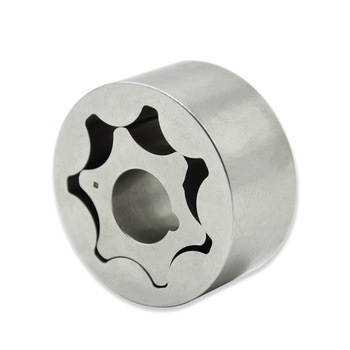
Quality, testing, and standards
Dimensional checks (air gauges, go/no‑go) on every batch; hardness per ASTM methods; material conformance to MPIF 35/DIN 30910/JIS Z2550; fluid cleanliness guidance per ISO 4406; and system‑level APQP/PPAP for automotive programs. Actually, that last bit—PPAP—still saves launches.
Final thought
In a market leaning toward compact, efficient pumps and electrified auxiliaries, durable hydraulic parts like this gerotor rotor are quietly doing the heavy lifting. Not flashy—just right.









