







- Introduction: The Growing Role of Metal Gear Manufacturers
- Market Demand and Data Insights
- Technological Advancements in Gear Production
- Comparative Analysis: Gear Manufacturers Worldwide
- Customization Strategies for Industrial Needs
- Application Case Studies Across Industries
- Conclusion: Choosing a Metal Gear Manufacturer for Future Growth
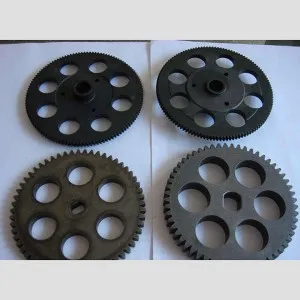
(metal gear manufacturer)
Introduction: The Dynamic Landscape of Metal Gear Manufacturer Industry
In a world where industrial advancement dictates the pace of progress, metal gear manufacturer
s have emerged as silent catalysts powering sectors from transportation to renewable energy. Global reliance on precision-engineered gears places the spotlight on those who can meet rigorous demands for strength, accuracy, and longevity. The supply chain disruptions of recent years have further highlighted the need for resilient, technologically adept partners. This discussion navigates through key facets shaping the metal and girth gear manufacturing landscape, examining the data, innovations, customization possibilities, and real-world applications that define leading gear manufacturers in the competitive global arena.
Market Demand and Compelling Data Insights
The worldwide gear manufacturing market demonstrated robust growth, estimated at USD 155.6 billion in 2023, with projections reaching USD 190.1 billion by 2028 (CAGR of 4.2%). This surge is predominantly fueled by sectors like automotive, energy, aerospace, and heavy machinery. Metal gear manufacturers are leveraging innovations in metallurgy, heat-treatment, and electrochemical machining to stay ahead, as the trend shifts toward lightweight but ultra-strong alloys.
Notably, girth gear manufacturers are experiencing amplified demand from cement, mining, and power generation industries, where large rotary kilns and mills depend on unyielding reliability. Industry surveys indicate that over 67% of buyers now prioritize precision and traceability over simple cost metrics. Additionally, digital transformation has led to a notable 30% increase in the implementation of IIoT (Industrial Internet of Things) sensors within gear assemblies since 2020.
These trends signal fundamental changes in procurement priorities and manufacturer capabilities, necessitating a fresh perspective on technological competitiveness and strategic partnerships.
Technological Advancements in Gear Production
The backbone of every world-class gear manufacturer lies in technological prowess. The last decade has borne witness to rapid leaps in CNC precision machining, additive manufacturing, and advanced metrology. High-speed hobbing and skiving—capable of micron-level tolerances—have become standard, ensuring minimal backlash and optimal gear mesh.
- Materials Science: The adoption of high-nickel alloy steels and case-hardened processes ensures gears can withstand both cyclical and shock loads, lengthening lifecycle by up to 40% on average.
- Quality Assurance: Innovations like 3D laser scanning and real-time digital twin modeling enable process accountability and rapid defect correction.
- Energy Efficiency: Precision engineering leads to smoother power transmission, reducing operational energy costs by 8–15% in large-scale industrial settings.
Girth gear specialists in particular now offer segmental assembly and on-site installation services, drastically reducing downtime and logistical costs compared to traditional monolithic solutions.
Comparative Analysis: Gear Manufacturers Worldwide
The market for metal and girth gear manufacturers is propelled by both established multinational firms and agile regional players. Key differentiators include production capacity, technology portfolio, lead time, and after-sales support. The table below presents a comparative overview of world-leading players across these metrics:
| Manufacturer | Annual Output (tons) | Technology Focus | Lead Time (weeks) | After-Sales Service | Customization Flexibility |
|---|---|---|---|---|---|
| Siemens AG | 45,000 | Advanced CNC, IIoT Integration | 14–18 | Global, 24/7 support | High |
| David Brown Santasalo | 38,500 | Modular Girth Gears, Retrofit | 12–16 | Regional centers, Remote monitoring | Very High |
| SEW-EURODRIVE | 30,000 | Precision Hobbing, Automated QA | 10–14 | On-site & Online | Moderate |
| Horsburgh & Scott | 28,000 | Heat-treatment, Custom Design | 16–20 | U.S. Focus, On-demand spares | High |
| Shanthi Gears (India) | 20,000 | High-Volume, Mass Customization | 8–12 | Regional, Online tracking | Moderate |
This data underscores the spectrum of choices and value propositions available. For firms with unique operating environments, exceptional after-sales service and proven customization capabilities can be as critical as upfront manufacturing metrics.
Customization Strategies for Industrial Needs
As machinery applications diversify, the need for highly customized gears—ranging from complex helical profiles to oversized girth gears—has surged. Leading gear manufacturers now embrace co-design initiatives, working closely with OEMs and end-users from concept through to validation.
- Collaborative Engineering: Clients are included early in the design phase, leveraging software simulations (FEA, CAD) to optimize load paths and surface finishes.
- Material Tailoring: Custom metallurgy and surface hardening allow gears to endure exposure to corrosive environments, high temperatures, or non-standard load cycles.
- Functional Prototyping: Rapid prototyping facilities, including metal additive manufacturing, cut development cycles and minimize costly iteration.
- Industry 4.0 Integration: Smart gear systems featuring embedded sensors deliver operational insight and predictive maintenance alerts, reducing unscheduled downtime by as much as 22% according to manufacturer trials.
Such strategies not only enable tailored solutions but also future-proof critical business operations against evolving demands and constraints.
Application Case Studies Across Industries
The real-world impact of advancements in gear manufacturing is best seen in cross-industry applications. A review of recent projects highlights the versatility and transformative potential of high-quality metal gears.
- Wind Energy: Modern wind turbines employ helical and planetary gearbox assemblies to convert low-speed generator input into usable electrical output. By switching to hardened steel alloys and laser-honed teeth, average operational lifespans have increased by 25%, while noise and vibration metrics have decreased by nearly 40%.
- Cement and Mining: Girth gear systems underpin rotary kilns and grinding mills, where 24/7 uptime is mission-critical. Recent retrofits using segmental girth gears reduced scheduled outage times from an industry average of 12 days per cycle to just 7 days.
- Automotive Industry: Gear manufacturers supplying electric vehicle platforms now integrate custom hypoid gears, enabling smoother torque transitions and extended drivetrain warranties (up to 200,000 miles, as per OEM records).
- Oil & Gas Sector: Downhole drilling equipment relies on highly specialized spiral bevel gears, where surface nitriding and multi-stage QA have cut premature failure rates by 35% over baseline forged counterparts.
Each scenario underscores how innovative engineering by world-class manufacturers manifests as measurable gains in performance, reliability, and total cost of ownership.
Conclusion: Selecting the Right Metal Gear Manufacturer for Sustainable Growth
As global industries accelerate toward greater productivity and smarter machinery, the imperative to partner with a capable metal gear manufacturer is more pressing than ever. From market data and technical advantages to differentiators in service and customization, informed decision-making empowers businesses to unlock new efficiencies and capitalize on market opportunities. By insisting on high standards, data-backed performance, and a forward-looking approach to technological integration, businesses position themselves for long-term reliability and growth.
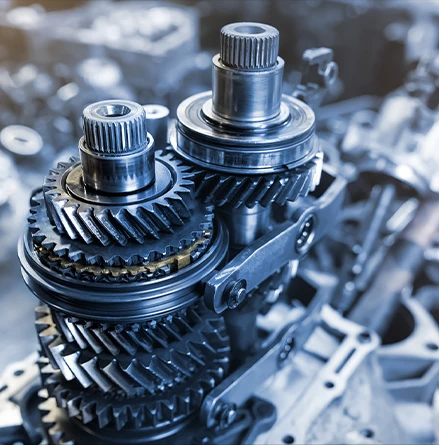
(metal gear manufacturer)









