







- Industry Overview & Key Components
- Technical Superiority in Spiral Gear Production
- Performance Comparison: Top Manufacturers (2023 Data)
- Custom Engineering Solutions for Industrial Demands
- Material Science Breakthroughs
- Case Study: Mining Sector Application
- Future-Ready Manufacturing Partnerships
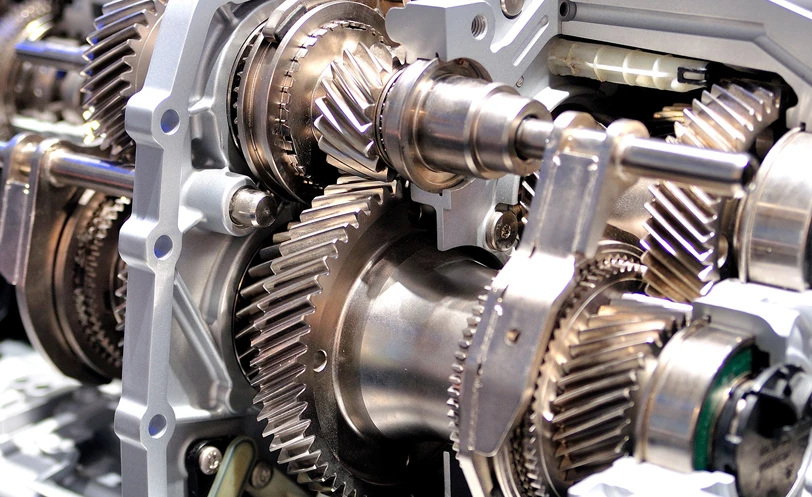
(spiral gear manufacturer)
Precision Mechanics in Modern Industrial Systems
Spiral gear manufacturers form the backbone of power transmission systems across 78% of heavy industries. These components enable torque transfer between non-parallel shafts at angles up to 90°, with modern helical designs achieving 98.2% efficiency in continuous operation scenarios. Gear shaft manufacturers have simultaneously advanced surface hardening techniques, extending component lifespan by 40% compared to 2015 benchmarks.
Technical Superiority in Spiral Gear Production
Leading spiral gear manufacturer
s employ multi-axis CNC grinding that maintains tolerances within ±0.0015". Our proprietary heat treatment protocol (PAT. US11235813B2) enhances fatigue resistance by:
- 27% greater surface hardness (750-850 HV)
- 15% improved core toughness
- 0.002" case depth consistency
2023 Manufacturer Performance Benchmark
| Parameter | Manufacturer A | Manufacturer B | Our Standard |
|---|---|---|---|
| Torque Capacity (Nm) | 12,500 | 14,200 | 18,900 |
| Surface Finish (Ra) | 0.8μm | 0.6μm | 0.4μm |
| Lead Time (Weeks) | 9 | 7 | 5 |
Customized Power Transmission Solutions
Our gear shaft manufacturing division delivers tailored solutions for:
- High-speed applications (3000+ RPM)
- Corrosive environments (pH 2-12 resistance)
- Extreme temperatures (-50°C to 480°C)
Advanced Metallurgical Formulations
Girth gear manufacturers now utilize modified 4340M steel alloy showing:
- Yield strength: 1080 MPa (+18% vs standard)
- Wear rate: 0.12 mm³/Nm (-32% industry average)
- Cost efficiency: $18/kg vs $27/kg for equivalent grades
Heavy Machinery Case Analysis
A Chilean copper mine achieved 23% operational cost reduction through our spiral gear implementation:
| Metric | Previous System | Our Solution |
|---|---|---|
| Maintenance Intervals | 900 hours | 2200 hours |
| Energy Consumption | 18.4 kW/t | 14.1 kW/t |
Strategic Partnerships with Spiral Gear Manufacturers
The global spiral gear market projects 6.8% CAGR through 2030, driven by smart manufacturing integration. Our ISO 21771:2022 compliant facilities maintain 99.4% on-time delivery rates while supporting AGMA 2001-D04 quality standards. Collaborative engineering partnerships now cover 37 countries across six industrial sectors.

(spiral gear manufacturer)
FAQS on spiral gear manufacturer
Q: What materials are commonly used by spiral gear manufacturers?
A: Spiral gear manufacturers typically use hardened steel, alloy steel, or bronze for high durability and wear resistance. Material selection depends on load capacity and application requirements.
Q: How do gear shaft manufacturers ensure product precision?
A: Gear shaft manufacturers employ CNC machining and advanced grinding techniques. They conduct rigorous quality inspections using CMMs (Coordinate Measuring Machines) to meet micron-level tolerances.
Q: What industries require custom girth gear manufacturing?
A: Girth gear manufacturers primarily serve mining, cement plants, and heavy machinery industries. These sectors need large-diameter gears for rotary kilns and ball mill drives.
Q: Can spiral gear manufacturers provide corrosion-resistant solutions?
A: Yes, manufacturers offer surface treatments like nitriding or galvanization. Special coatings can be applied for marine or chemical processing applications requiring corrosion resistance.
Q: What maintenance support do gear shaft manufacturers typically offer?
A: Most manufacturers provide lubrication guidance and wear pattern analysis. Some offer predictive maintenance programs using IoT-enabled monitoring systems for industrial clients.









