




THE BUYER'S GUIDE / SELECTION
Choosing Customized High Precision Spiral Angular Straight Bevel Gears: Application Fit and Specification Checks
Procurement teams and engineers selecting Customized High Precision Spiral Angular Straight Bevel Gears need to match gear type, material grade, density, hardness and dimensional standard to their specific drive system before placing an order. This guide explains what distinguishes spiral, angular and straight bevel gear forms, outlines the powder-metallurgy specifications available from SHIJIAZHUANG JINGSHI NEW MATERIAL SCIENCE AND TECHNOLOGY CO.,LTD, and walks buyers through the practical criteria—application environment, load capacity, noise tolerance, standard compliance and OEM drawing requirements—that determine whether a given configuration will fit their equipment.

Tooth profile and transmission requirements: straight, spiral or angular bevel form must match operating speed, load profile, noise tolerance and shaft intersection angle in the target drive system.
Material grade, density and hardness: FC0208 sintered alloy (MPIF 35 / DIN 30910 / JIS Z2550) with a density range of 5.5–7.1 g/cm³ and hardness HRA 40–72 must be matched to the mechanical duty and fatigue requirements of the application.
Dimensional standard and drawing compliance: buyer must specify metric module (ISO/DIN), diametral pitch (AGMA) or British Standard and supply an accurate dimensioned drawing or physical sample so the OEM part matches the mating components exactly.
Application environment and load profile: operating speed, torque, lubrication method and temperature conditions determine whether the selected bevel gear type and material grade are appropriate for the end use—gearbox, reducer, mixer, pump, power tool or general machinery.
OEM customisation and volume: prototype feasibility, drawing accuracy, required secondary operations (sizing, grinding, shot peening, fibre laser marking) and order volume must all be confirmed before production begins.
Why Bevel Gear Type Matters Before You Order
Bevel gears transmit rotational motion between intersecting shafts, typically at a 90-degree angle, but the exact tooth profile and spiral angle have a significant effect on noise, load capacity and suitability for a given application. Choosing the wrong type—or the wrong material specification—can reduce service life, increase noise or cause premature failure in the drive system. Customized High Precision Spiral Angular Straight Bevel Gears address a broad range of drive applications precisely because they are manufactured against buyer drawings or accepted international standards, so matching your specification to the right configuration is the first purchasing decision to make.
Criterion 1 — Tooth Profile and Transmission Requirements
Straight Bevel Gears
Straight bevel gears have teeth cut in a straight line radiating from the apex of the pitch cone. They are the simplest form and suited to lower-speed, lower-noise-tolerance drives where alignment is straightforward. Because tooth contact begins and ends abruptly, vibration and noise are more pronounced at higher speeds.
Spiral Bevel Gears
Spiral bevel gears have curved, oblique teeth that enter into mesh gradually, producing smoother engagement, lower noise and higher load-carrying capacity than straight teeth for the same size. They are preferred for gearboxes, reducers, mixers and any application where transmission stability and quiet operation matter.
Angular (Miter) Bevel Gears
Angular configurations allow shaft intersection at angles other than 90 degrees. If your drive system has a non-standard shaft angle, an angular bevel gear is necessary. Confirming your shaft intersection angle in the drawing or sample before ordering prevents costly remachining.
Selection guidance: State your required tooth form, shaft angle and operating speed in the OEM drawing or technical enquiry. SHIJIAZHUANG JINGSHI NEW MATERIAL SCIENCE AND TECHNOLOGY CO.,LTD produces bevel gears to buyer drawings or to Metric, British and AGMA standards—specifying the applicable standard removes ambiguity early in the quotation process.
Criterion 2 — Material Grade and Density Range
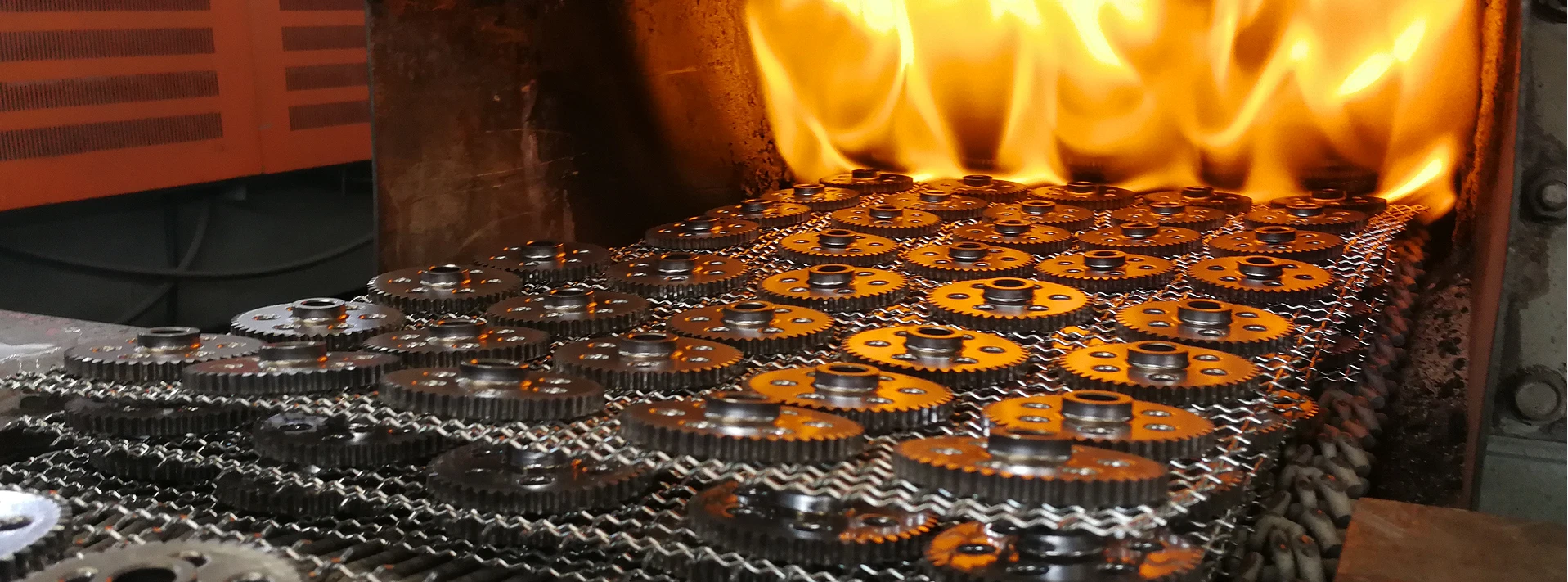
Powder-metallurgy bevel gears are produced from sintered metal powders, and the material grade directly governs mechanical strength, wear resistance and suitability for the operating environment.
| Property | Specification Range |
|---|---|
| Material designation | FC0208 (per MPIF 35, DIN 30910, JIS Z2550) |
| Density | 5.5 – 7.1 g/cm³ |
| Hardness | HRA 40 – 72 |
Higher density within the 5.5–7.1 g/cm³ band generally corresponds to higher mechanical strength and fatigue resistance. If your application involves high cyclic loading—such as in pump drives or power tools—request the higher-density end of the available range and confirm the sintering process with the supplier.
The FC0208 designation identifies a copper-steel sintered alloy widely referenced in MPIF 35, DIN 30910 and JIS Z2550, making it straightforward to cross-reference against your internal procurement standards.
Criterion 3 — Dimensional Standard and Drawing Compliance
The bevel gears are produced in conformance with buyer-supplied samples, buyer drawings, or recognised dimensional standards. Key checks before finalising your order:
- Module or diametral pitch: Confirm whether your drive system uses metric module (ISO/DIN) or diametral pitch (AGMA/British). Mixing standards causes gear interference and assembly failure.
- Pressure angle: Standard options are typically 14.5° or 20°; verify what your mating gear requires.
- Hand of spiral: For spiral bevel gears, specify right-hand or left-hand to match the rotational direction of your drive.
- Tooth count and pitch diameter: Provide these in the drawing to ensure the gear ratio is maintained.
- Bore, keyway and hub dimensions: Powder-metallurgy parts are near-net-shape; out-of-tolerance hub dimensions require a revised drawing before production begins.
Supplying a dimensioned drawing or a physical sample allows SHIJIAZHUANG JINGSHI NEW MATERIAL SCIENCE AND TECHNOLOGY CO.,LTD to confirm manufacturability and match the gear exactly to the mating component.
Criterion 4 — Application Environment and Load Profile
Powder-metallurgy sintered gears are widely used in gearboxes, reducers, mixers, blenders, pumps, oil pumps, gear pumps, machinery and power tools. When evaluating fit, consider:
- Operating speed: Higher pitch-line velocities favour spiral bevel gears for smoother, quieter operation.
- Torque and load cycles: High-torque or high-frequency cycling applications benefit from higher density and harder material grades (upper end of HRA 40–72).
- Noise constraints: Spiral bevel gears produce lower noise than straight bevel gears at equivalent speeds; this matters in consumer-facing equipment such as mixers or hand tools.
- Lubrication: Confirm whether the application uses oil-bath, grease or dry lubrication, since powder-metallurgy parts can be impregnated with lubricant at the sintering stage—check this requirement with the supplier.
- Operating temperature: Sintered iron-copper alloys have defined thermal limits; if the gear runs in elevated-temperature environments, confirm suitability before ordering.
Criterion 5 — OEM Customisation and Volume Considerations
These bevel gears are OEM products. The supply model is built around custom orders tied to buyer drawings, samples or standards. Practical points for procurement:
- Prototype vs. production runs: SHIJIAZHUANG JINGSHI NEW MATERIAL SCIENCE AND TECHNOLOGY CO.,LTD can arrange production schedules to match buyer requirements, making it feasible to start with a prototype batch before committing to full volume.
- Drawing accuracy: Because the part will be produced to match the drawing exactly, any tolerance stack or incorrect reference dimension in the drawing will be reflected in the parts. Review drawings carefully before submission.
- Surface finish and secondary operations: If post-sintering operations such as sizing, grinding or shot peening are needed for critical running surfaces, include them in the specification. The company operates grinding and shot-peening equipment.
- Marking and traceability: If your quality system requires part marking, fibre laser marking capability is available; include this in the enquiry.
Applicable Product
Customized High Precision Spiral Angular Straight Bevel Gears — powder-metallurgy OEM bevel gears manufactured to buyer drawings, buyer samples or Metric, British or AGMA standards. Material: FC0208 (MPIF 35 / DIN 30910 / JIS Z2550). Density: 5.5–7.1 g/cm³. Hardness: HRA 40–72. Suitable for gearboxes, reducers, mixers, blenders, pumps, oil pumps, gear pumps, power tools and general machinery drives where intersecting-shaft power transmission is required.
Available from SHIJIAZHUANG JINGSHI NEW MATERIAL SCIENCE AND TECHNOLOGY CO.,LTD. Contact the supplier directly with your drawing or sample for a specific quotation.
Quick Specification Checklist for Buyers
Before contacting the supplier, prepare the following information to accelerate the enquiry:
- Gear type required: straight bevel, spiral bevel or angular bevel
- Shaft intersection angle (90° or other)
- Dimensional standard: metric module (ISO/DIN), diametral pitch (AGMA) or British Standard
- Module or diametral pitch value
- Number of teeth and pressure angle
- Hand of spiral (for spiral bevel gears)
- Bore diameter, keyway dimensions and hub length
- Required density range or hardness class within FC0208 specification
- Application type (gearbox, pump, power tool, etc.) and operating speed
- Required quantity: prototype batch or production volume
- Secondary operations needed: sizing, grinding, shot peening, laser marking
- Applicable quality or traceability requirements
Having this list complete before submitting an enquiry to SHIJIAZHUANG JINGSHI NEW MATERIAL SCIENCE AND TECHNOLOGY CO.,LTD will reduce back-and-forth and shorten the path from enquiry to confirmed order.
THE PEOPLE

About the author
THE COMPANY
SHIJIAZHUANG JINGSHI NEW MATERIAL SCIENCE AND TECHNOLOGY CO.,LTD
Shijiazhuang JingShi New Material Science and Technology Co.,ltd was founded since 2014, located in Shijiazhuang, Hebei province,China.The company covers an area of over 10,000 square meters and has a total investment of over 30 million yuan. Passed the TS16949 Certificate. It is a comprehensive high-tech enterprise integrating research, development, production and sales of powder metallurgy OEM parts.…
About Us ↗Visit company website ↗YOUR NEXT STEP
Bring your brief. Start a useful conversation.
Use case, specification, quantity and delivery window: make the next conversation specific.