




QUESTIONS & ANSWERS
Gear Manufacturing by Powder Metallurgy: FAQ on Custom Planetary Gears — Specifications, Ordering & Support
This FAQ addresses the most common questions buyers, engineers, and procurement teams ask about gear manufacturing by powder metallurgy, with a focus on custom powder metallurgy planetary gears. Topics covered include the manufacturing process, materials, tolerances, surface treatments, heat treatment options, certifications, available gear types, customization workflow, applications, and common troubleshooting issues. All answers are based on confirmed product documentation from SHIJIAZHUANG JINGSHI NEW MATERIAL SCIENCE AND TECHNOLOGY CO.,LTD.

Gear Manufacturing by Powder Metallurgy: Frequently Asked Questions
Buyers and engineers evaluating gear manufacturing by powder metallurgy often have similar questions about how the process works, what specifications can be achieved, and how to start a custom order. The questions and answers below are organized around a single coherent topic cluster, drawing on confirmed product documentation.
1. What is gear manufacturing by powder metallurgy, and how does the process work?
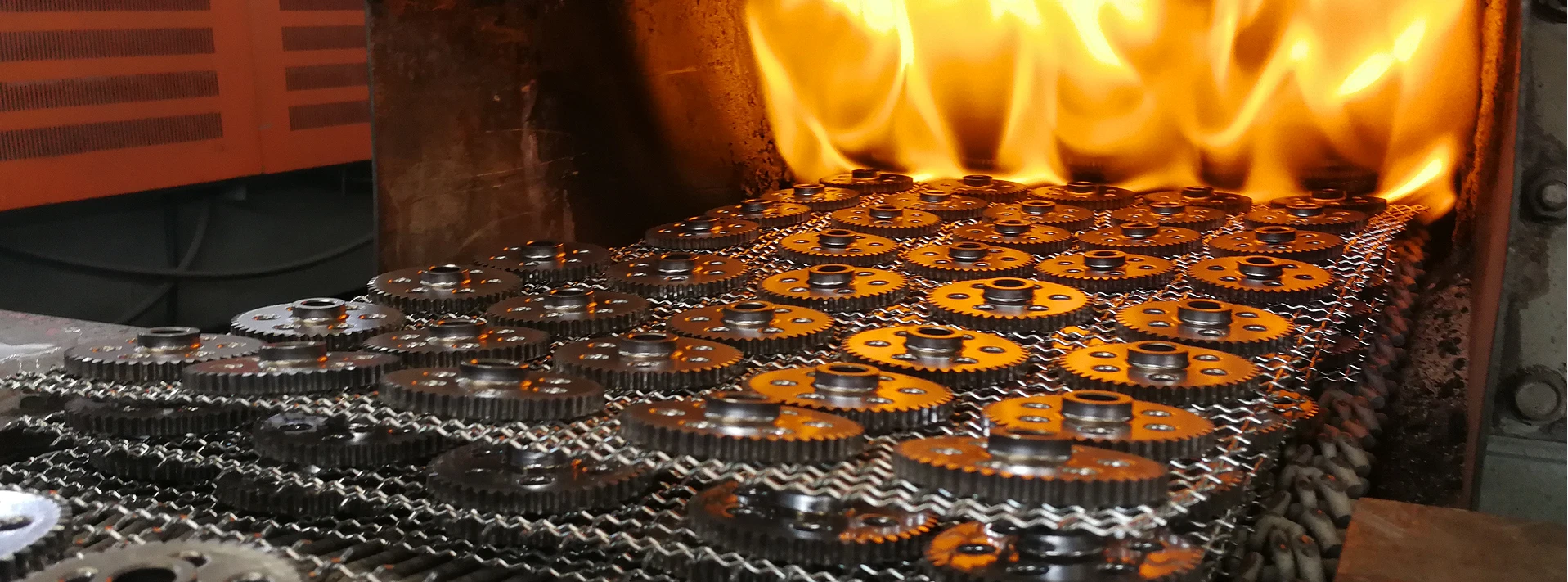
Gear manufacturing by powder metallurgy is a carefully controlled sequence that begins with selecting and blending metal powders, then compacting the blend in a precision die, sintering the green gear in a controlled-atmosphere furnace, and applying post-sintering treatments as required.
The full documented process flow is: Mixing → Mechanical Forming → Hydraulic Molding → Detection of Strength and Hardness → Packing and Shipping. An extended process flow also documented includes: Powder mixing → Forming → Sintering → Oil impregnation → Sizing → Ultrasonic Cleaning → Steam Oxidation → Oil impregnation → Final inspection → Packing.
During sintering, compacted powder particles bond metallurgically at temperatures below the melting point of the base metal, giving the gear its structural integrity and mechanical strength. Sintering atmosphere, temperature, and dwell time are regulated to achieve the target density and performance. Near-net-shape forming significantly reduces the need for secondary machining, improving material utilization and dimensional consistency.
2. What materials are available for powder metallurgy gears?
The base materials for powder metallurgy gears include:
- Iron powder and iron alloy powder (the primary option for planetary gears)
- Steel and stainless steel
- Copper (Cooper) and brass
- Nickel
- Alloy steel
Iron-based powders are often alloyed with elements such as copper, nickel, molybdenum, or carbon to enhance strength, wear resistance, and fatigue performance. Material selection depends on the intended application, load conditions, and operating environment—higher-alloy content suits high-torque industrial systems, while lighter-duty applications may prioritize cost efficiency.
3. What are the achievable tolerances and density ranges?
For powder metallurgy planetary gears and related products, the specification ranges are:
| Parameter | Specification |
|---|---|
| Tolerance (gears) | ±0.002 mm |
| Tolerance (general PM parts) | ±0.01 mm; also ISO 2768-m / H14, h14, ±IT14/2 |
| Density Range (Fe-based gears) | 6–7.2 g/cm³ |
| Density Range (general PM parts) | 6.0–7.9 g/cm³ |
| Hardness (general PM parts) | HRA 30–80 |
Higher-density gears generally offer improved load-bearing capacity and fatigue resistance; controlled porosity can be beneficial for self-lubrication.
4. What surface treatment and heat treatment options are available?
Surface treatments documented for powder metallurgy gears include: Blackening, Dacromet plating, Polishing, Sand blasting, Electroplating, Oil impregnation, and Tumbling/plating/steam treating.
Heat treatment options documented include: Ordinary Quenching, Carburizing, Nitriding (Ritriding), and High Frequency Quenching.
Oil impregnation is commonly used post-sintering to improve self-lubrication and reduce wear. The choice of surface and heat treatment depends on application load, corrosion exposure, and surface finish requirements.
5. What gear types and configurations can be manufactured?
The range of powder metallurgy OEM gear types includes: ring gears, large internal ring gears, inner ring gears, excavator ring/planetary/sun/swing gears, automotive ring gears, industrial ring gears, external ring gears, large ring gears, bull ring gears, large-diameter ring gears, special gears, transmission gears, gear wheels, worm gears, helical gears, spur gears, bevel gears, and planetary gears (including those for cement mixers).
For planetary gear sets specifically, documented applications cover automotive transmission systems, power tools, intelligent devices, and industrial robots.
6. What certifications apply to these powder metallurgy gears?
The products are certified to ISO 9001 and TS16949.
7. How does the customization process work? What information is needed to place an order?
Customization covers size, number of teeth, module, material, and surface treatment process to suit specific applications. To begin, customers are asked to provide drawings in CAD, 3D, or PDF format. Alternatively, a physical sample can be submitted for reverse engineering—the manufacturer will produce the drawing.
Documented lead times for mass production are 10–30 days depending on quantity, after receipt of a deposit. Customers should confirm current lead times and deposit terms directly.
8. In which industries and applications are powder metallurgy planetary gears used?
Documented application areas include:
- Automotive: transmission systems, vehicles
- Power tools and motors
- Intelligent devices and industrial robots
- Sport equipment and home appliances
- Motorcycles, textile machinery, and industrial sewing machines
- Hardware tools and engineering machinery
- Bicycles and electric bicycles (e-bikes)
- Excavators and heavy industrial equipment
9. What are common issues with powder metallurgy gears in service, and how can they be addressed?
Tooth wear: Often caused by improper lubrication, high contact stress, or gear misalignment. Powder metallurgy gears with oil-impregnated porosity provide self-lubrication, but high-speed or high-load applications may require supplementary lubrication. Inspecting lubrication levels and verifying gear alignment are the recommended first steps.
Tooth breakage or chipping: Typically results from shock loads, overload conditions, over-torquing, or sudden load spikes. Identifying the source of excessive load and ensuring correct application specifications is key.
Gear noise and vibration: Can indicate misalignment, uneven tooth contact, or manufacturing inconsistencies. Vibration analysis and inspection of the gear mesh can identify issues early; adjusting assembly tolerances or replacing worn components is recommended.
Surface defects (pitting, microcracking): May result from insufficient sintering or inadequate heat treatment. Non-destructive testing techniques such as ultrasonic or dye penetrant methods can detect defects before failure.
Environmental contamination: Dust, debris, or corrosive fluids can degrade performance. Proper sealing, routine cleaning, and protective coatings help mitigate these risks.
10. What appearance standards apply, and what defects are not acceptable?
Documented appearance requirements state: No crumbling, cracks, exfoliation, voids, metal pitting, or other defects. This applies to both gear products and general powder metallurgy parts. Rigorous dimensional inspection, material testing, and performance evaluations are applied as part of quality control.
For specifications, samples, or OEM enquiries related to gear manufacturing by powder metallurgy, contact SHIJIAZHUANG JINGSHI NEW MATERIAL SCIENCE AND TECHNOLOGY CO.,LTD.
THE PEOPLE

About the author
THE COMPANY
SHIJIAZHUANG JINGSHI NEW MATERIAL SCIENCE AND TECHNOLOGY CO.,LTD
Shijiazhuang JingShi New Material Science and Technology Co.,ltd was founded since 2014, located in Shijiazhuang, Hebei province,China.The company covers an area of over 10,000 square meters and has a total investment of over 30 million yuan. Passed the TS16949 Certificate. It is a comprehensive high-tech enterprise integrating research, development, production and sales of powder metallurgy OEM parts.…
About Us ↗Visit company website ↗YOUR NEXT STEP
Bring your brief. Start a useful conversation.
Use case, specification, quantity and delivery window: make the next conversation specific.