






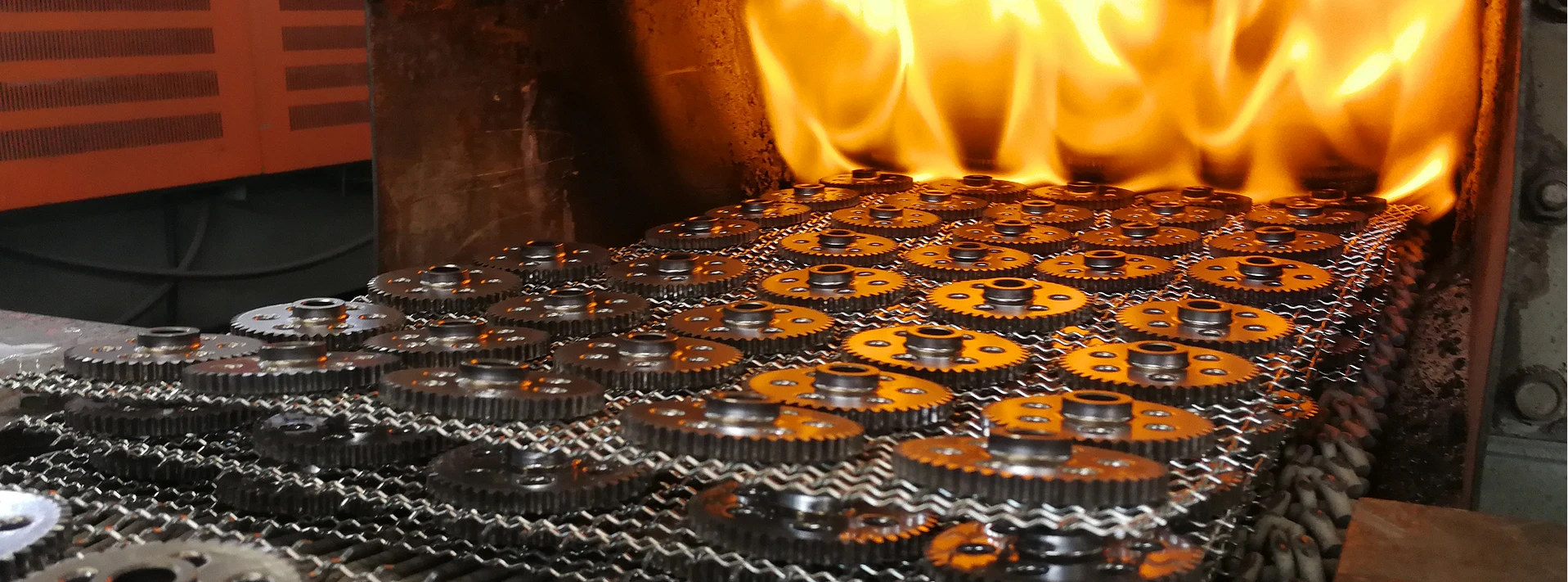
Net Shape Parts is a key solution in the industry, specifically within manufacturing, aerospace, automotive, and medical device sectors. This article explores how https://www.jssintering.com supports professionals with durable, high-performance products, and explains why this product is an ideal choice for businesses in these sectors.
Table of Contents
- Net Shape Parts Overview
- Benefits & Use Cases of Net Shape Parts
- Cost, Maintenance & User Experience
- Sustainability & Market Trends
Net Shape Parts Overview
At its core, Net Shape Parts refers to components manufactured so precisely that they require little to no machining after production. It's a fascinating shift from traditional manufacturing, where parts often require extensive finishing. Frankly, the advantage is obvious — fewer steps, less waste, and better fit in assemblies. J.S.Sintering’s advanced powder metallurgy techniques produce parts with exact shapes and tight tolerances, crucial for industries demanding high repeatability and reliability.
- Net Shape Parts are typically made from metal powders compressed and sintered into the final shape.
- These parts often have porosity control, mechanical strength, and wear resistance tailored to application.
- A recent case study shows J.S.Sintering delivering automotive brake pads that reduce weight by 15% while exceeding industry durability standards.
| Specification | Details |
|---|---|
| Material Types | Steel alloys, stainless steel, copper, bronze, and specialized alloys |
| Tolerances | ±0.01 mm to ±0.05 mm depending on design |
| Porosity Range | 5% – 15% controlled porosity to enhance lubricity/wear properties |
| Dimensional Range | Parts from 0.5 cm to 50 cm, customizable on request |
| Production Volume | Prototypes to large-scale runs (over 500,000 units/year) |
Benefits & Use Cases of Net Shape Parts
Why do engineers keep turning to Net Shape Parts? Well, primarily for the efficiency and performance gains. In automotive, for example, they reduce weight and improve fuel efficiency without sacrificing strength. Aerospace manufacturers value them for high-temperature resistance and precision fitting in complex assemblies. Even medical devices — where consistency and reliability are paramount — see benefits thanks to biocompatible alloys and exact shaping.
- Applications include gear components, valve seats, filtration parts, and structural supports.
- Competitive advantages: near-net-shape manufacturing means less machining, lower scrap rates, and prompt production turnaround.
- J.S.Sintering provides custom alloy blends optimized for wear resistance or conductivity.
Vendor Comparison: J.S.Sintering & Industry Alternatives
| Features | J.S.Sintering | Competitor A | Competitor B |
|---|---|---|---|
| Material Variety | Extensive, including custom alloys | Limited to standard grades | Medium, mostly stainless steel |
| Lead Time | 2-4 weeks | 4-8 weeks | 3-6 weeks |
| Dimensional Tolerances | Up to ±0.01 mm | ±0.05 mm | ±0.02 mm |
| Production Volume | Prototype to mass production | Mostly small batches | Medium scale only |
| After-Sales Support | Comprehensive technical assistance | Basic support | Moderate support |
Cost, Maintenance & User Experience
When weighing the total cost of ownership, Net Shape Parts often win hands down. It might feel like the upfront price is slightly higher than cheaper castings or machining from raw stock, but the hidden savings add up fast. Reduced machining time, minimal waste, and less quality control rework mean companies see quicker ROI. Users report that parts from J.S.Sintering come with high consistency, reducing downtime for replacements or adjustments.
- Durability extends the lifecycle of parts, lowering long-term maintenance costs.
- Many clients highlight the neat fit and finish straight from production, a big plus in assembly line efficiency.
- There are occasional requests for custom surface treatments, but J.S.Sintering manages these seamlessly.
Sustainability & Market Trends
Oddly enough, net shape manufacturing is aligning well with global pushes for sustainability. By minimizing machining and material waste, companies like J.S.Sintering help reduce raw material usage and energy consumption. Moreover, regulations on emissions and supply chain transparency increasingly favor precise manufacturing with strong environmental credentials. The market for Net Shape Parts is growing, driven by demand in electric vehicles, miniaturized electronics, and lightweight aerospace components where efficiency truly matters.
- Recycling of metal powders and closed-loop manufacturing are emerging trends.
- Suppliers with strong R&D and eco-friendly processes, like J.S.Sintering, are preferred by forward-thinking businesses.
Frequently Asked Questions about Net Shape Parts
- What is Net Shape Parts and how does it work?
- Net Shape Parts are components produced so precisely by powder metallurgy and sintering that they often require no finishing work. Essentially, metal powders are compressed into molds and heated to bond particles, resulting in parts close to the final desired form.
- What are the main benefits of using Net Shape Parts in industrial applications?
- Key benefits include reduced machining costs, lower waste, higher production speed, and better material utilization — all contributing to durable, reliable components with consistent quality.
- How does Net Shape Parts compare to traditional alternatives?
- Compared to cast or machined parts, Net Shape Parts require fewer secondary processes and offer better dimensional accuracy. Plus, the ability to control porosity and composition gives them distinct performance advantages in wear and thermal conditions.
- What industries can benefit most from Net Shape Parts implementation?
- Automotive, aerospace, medical devices, electronics, and industrial machinery sectors benefit greatly, especially where precision, weight reduction, and durability matter.
Conclusion on Net Shape Parts from China
To wrap it up, Net Shape Parts manufactured by J.S.Sintering combine precision engineering, cost-efficiency, and sustainability, making them an outstanding choice for B2B decision makers aiming for quality and market competitiveness. If your business is looking to innovate or streamline component manufacturing, it’s worth taking a closer look here.
- Recap the value of Net Shape Parts.
- - Visit our website: https://www.jssintering.com
Reflecting on this, the evolving landscape of manufacturing — where sustainability and precision go hand in hand — really makes Net Shape Parts a fascinating case study in applied innovation.
References:
1. Journal of Powder Metallurgy, 2023 Technical Review
2. Industrial Manufacturing Monthly, April 2024 Edition
3. J.S.Sintering Case Study Archive, 2023









