







Understanding Gear Systems: The Backbone of Mechanical Power Transmission
Gear systems are fundamental components in nearly every mechanical device that requires power transmission, speed alteration, or torque modification. From simple hand tools to complex industrial machinery, the efficiency and reliability of a system often hinge on the integrity of its gears. These ingenious mechanisms are designed to transmit rotational motion and power between shafts, enabling precise control over speed, torque, and direction. The careful selection of the right types of gear system is paramount for optimal performance, energy efficiency, and longevity in any mechanical application.
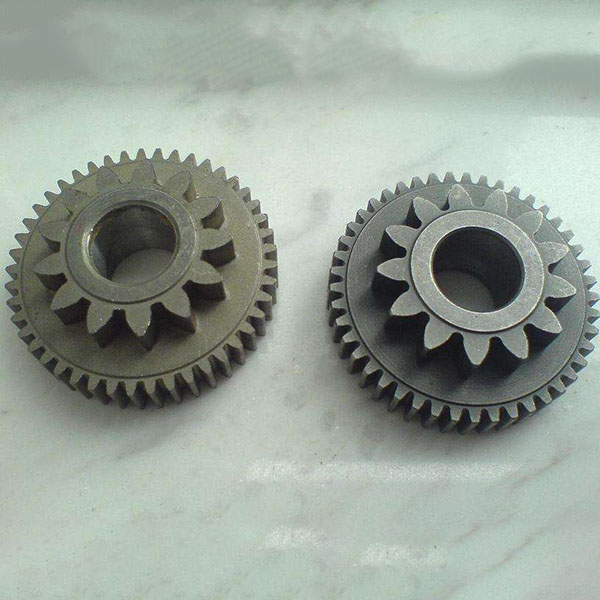
In the realm of mechanical engineering, the design and application of various gear types represent a sophisticated interplay of material science, kinematics, and manufacturing precision. Each gear type possesses unique characteristics, making it suitable for specific operational demands and environmental conditions. Our focus here delves into the diverse classifications of gears, their technical parameters, common applications, and the advanced manufacturing processes that define their quality and performance, particularly within the context of high-precision components like the OEM powder metallurgy sintered gearbox double gear.
Exploring Diverse Types of Gear Systems and Their Principles
The world of gears is rich with variety, each designed to address specific challenges in power transmission. Understanding the core principles of different types of gear system is crucial for engineers and procurement professionals seeking optimal mechanical solutions. Here, we outline the primary categories and their distinct features.
1. Spur Gears: The Simplest Form of Power Transmission
Spur gears are the most common and simplest type, characterized by straight teeth mounted on a parallel axis. They are used for transmitting power between parallel shafts. Their design simplicity makes them cost-effective and easy to manufacture. While highly efficient for moderate speeds, their primary limitation is noise generation at high speeds due to sudden tooth engagement. They find widespread use in applications like washing machines, clocks, and power plants for auxiliary systems.
- Parallel Shafts: Designed for power transfer between parallel axes.
- High Efficiency: Excellent for maintaining constant velocity ratio.
- Applications: Consumer appliances, industrial machinery, and simple gear trains.
2. Helical Gears: Quieter and Smoother Operation
Unlike spur gears, helical gears have teeth cut at an angle to the gear face, creating a helix. This angled design allows for a more gradual and continuous engagement between teeth, resulting in significantly quieter operation and smoother power transmission compared to spur gears. They can also transmit higher loads due to the larger contact area. However, the angled teeth introduce axial thrust, which requires appropriate bearings. Helical gears are a common choice for automotive transmissions and industrial reducers where noise and vibration reduction are critical.
- Angled Teeth: Provides smoother, quieter operation.
- Higher Load Capacity: Increased contact ratio distributes load more effectively.
- Axial Thrust: Requires thrust bearings to counteract axial forces.
- Applications: Automotive gearboxes, industrial machinery, pumps, and conveyors.
3. Bevel Gears: Changing Axis of Rotation
Bevel gears are designed to transmit power between intersecting shafts, typically at a 90-degree angle, though other angles are possible. Their teeth are cut on a conical surface. Straight bevel gears are the simplest, while spiral bevel gears offer smoother operation and higher load capacity due to their curved, oblique teeth, similar to the helical gear's advantages over spur gears. They are essential in applications where the direction of power needs to be changed efficiently.
- Intersecting Shafts: Ideal for right-angle drives.
- Types: Straight, Spiral, Zerol, Hypoid. Spiral bevels are preferred for high-speed, high-load applications.
- Applications: Differentials in vehicles, printing presses, marine propulsion, and agricultural equipment.
4. Worm Gears: High Reduction Ratios and Self-Locking
Worm gears consist of a worm (a screw-like gear) meshing with a worm wheel (a helical gear). They are used for transmitting power between non-intersecting, non-parallel shafts, usually at a 90-degree angle. Their distinct advantage lies in achieving very high speed reduction ratios in a compact space, often exceeding 20:1 or even 300:1. Many worm gear sets are also self-locking, meaning the worm cannot be driven by the worm wheel, which is a critical safety feature in lifting or conveying applications.
- Perpendicular, Non-Intersecting Shafts: Unique configuration for specific layouts.
- High Reduction Ratios: Achieves significant speed reduction in a single stage.
- Self-Locking Feature: Prevents back-driving, enhancing safety.
- Applications: Elevators, conveyors, lifting equipment, indexing tables, and gate openers.
5. Rack and Pinion: Converting Rotary to Linear Motion
A rack and pinion system converts rotational motion into linear motion, or vice versa. The pinion is a circular gear that meshes with a linear gear bar called a rack. When the pinion rotates, it moves the rack linearly. This system offers precise control over linear movement and is widely used in steering mechanisms and machine tools.
- Motion Conversion: Rotary to linear, and linear to rotary.
- Precision: High accuracy in positioning.
- Applications: Automotive steering systems, CNC machines, lifting jacks, and material handling.
6. Planetary Gears: Compact and High Torque
Also known as epicyclic gears, planetary gear systems are characterized by one or more outer "planet" gears revolving around a central "sun" gear. The planet gears are mounted on a carrier, which itself rotates. An outer ring gear with internal teeth encases the entire assembly. This configuration allows for high torque density and multiple speed ratios within a compact space, making them ideal for automatic transmissions, robotic systems, and heavy equipment.
- Compact Design: Achieves high reduction ratios in a small volume.
- High Torque Density: Efficient power transmission under heavy loads.
- Multiple Ratios: Versatile in achieving various output speeds.
- Applications: Automatic transmissions, electric screwdrivers, wind turbines, and industrial automation.
The selection of the appropriate types of gear system with images often involves considering factors like speed, torque, efficiency, noise, space constraints, and cost. Each of these types of gear system forms the fundamental building blocks of more complex gearboxes in mechanical engineering, catering to specialized industrial and commercial demands.
The Manufacturing Precision of Gear Systems: Focus on Powder Metallurgy
The performance of any types of gear system is directly tied to the precision of its manufacturing process. While traditional methods like casting, forging, and CNC machining remain prevalent, advanced techniques such as powder metallurgy (PM) have revolutionized the production of intricate and high-performance gears. This section details the manufacturing process, emphasizing the benefits of PM for products like the OEM powder metallurgy sintered gearbox double gear.
Powder Metallurgy: A Detailed Process Overview
Powder metallurgy is a metalworking process that forms parts from metal powders. It is particularly advantageous for producing complex shapes with high precision, minimal material waste, and excellent surface finishes, making it ideal for the production of sophisticated types of gears and its applications.
- Powder Blending: The process begins with carefully selected metal powders (e.g., iron, copper, nickel, graphite) blended to achieve specific material properties. Additives like lubricants are often included to aid compaction and ejection. For high-performance gears, pre-alloyed powders or mixes tailored for strength and wear resistance are used.
- Compaction (Pressing): The blended powder is fed into a rigid die cavity and compacted under high pressure (typically 400-800 MPa or 58-116 ksi) using a hydraulic or mechanical press. This forms a "green" compact, which has sufficient strength to be handled but is still porous. The shape and density of the green compact are critical for the final product's integrity.
- Sintering: The green compact is then heated in a controlled atmosphere furnace (often inert or reducing gas like hydrogen or nitrogen) to a temperature below the melting point of the primary metal. During sintering, particles bond together through atomic diffusion, leading to densification and increased strength. This critical step reduces porosity and enhances mechanical properties like tensile strength and hardness. For instance, sintering temperatures for iron-based alloys typically range from 1100-1150°C (2012-2102°F).
- Sizing/Coining (Optional): After sintering, parts may undergo sizing or coining operations, which involve re-pressing the sintered part in a precision die. This step refines dimensional accuracy, improves surface finish, and can further densify the material, leading to enhanced mechanical properties and tighter tolerances, crucial for precision gears.
- Secondary Operations (Optional): Depending on the application, additional operations may be performed. These include:
- Heat Treatment: Carburizing, nitriding, or carbonitriding can be applied to increase surface hardness and wear resistance, significantly extending the lifespan of the gear.
- Machining: While PM parts often require minimal machining, complex features or very tight tolerances may necessitate light CNC machining (e.g., hobbing or grinding) for specific types of gears and their applications.
- Impregnation: Oil impregnation for self-lubricating properties or resin impregnation to seal pores for corrosive environments.
- Surface Coating: For enhanced corrosion resistance or reduced friction.
Material Selection and Properties for Sintered Gears
The material composition significantly influences the mechanical properties of sintered gears. Common materials include iron-carbon alloys, iron-copper, iron-nickel, and specialized alloys with molybdenum or chromium for enhanced strength and hardenability. For our OEM powder metallurgy sintered gearbox double gear, high-grade alloy steel powders are often utilized to ensure superior wear resistance and fatigue strength, essential for long operational lifespans in demanding industrial environments.
- Typical Materials: Fe-C (for strength), Fe-Cu-C (for better hardenability), Fe-Ni-Cu-C (for high strength and ductility).
- Density: Achieved densities typically range from 6.8 to 7.4 g/cm³ depending on the application requirements, impacting strength and porosity.
- Hardness: Post-sintering hardness can range from 30 HRC to 60+ HRC after heat treatment, providing excellent wear resistance.
Quality Control and Inspection Standards
Adherence to stringent quality control is paramount. Sintered gears undergo rigorous inspection at various stages to ensure they meet specified technical parameters and industry standards. Key inspection criteria include:
- Dimensional Accuracy: Measured using CMM (Coordinate Measuring Machines), gear profilers, and micrometers. Tolerances often conform to ISO 1328 or ANSI/AGMA 2000-A88 standards for gear accuracy.
- Density: Measured via Archimedes' principle to ensure proper compaction and sintering.
- Hardness: Rockwell or Vickers hardness tests verify material strength and heat treatment effectiveness.
- Mechanical Properties: Tensile strength, yield strength, and fatigue strength are verified through destructive testing on sample parts.
- Surface Finish: Optical inspection and roughness testers ensure smooth operation and reduced friction.
- Microstructure Analysis: Metallographic examination ensures proper bonding and absence of critical defects.
These meticulous checks ensure that every component, especially critical parts like the OEM powder metallurgy sintered gearbox double gear, performs reliably over its specified service life, often exceeding 10,000 operational hours in continuous duty applications under proper maintenance protocols.
Applications and Advantages of Advanced Gear Systems
The strategic choice and application of specific types of gears and their applications are pivotal for optimizing performance across various industries. Advanced gear systems, especially those manufactured through precision processes like powder metallurgy, offer significant benefits.
Applicable Industries and Typical Scenarios
Our OEM powder metallurgy sintered gearbox double gear, and similar high-precision gears, are indispensable in a multitude of demanding sectors:
- Automotive Industry: Used extensively in engine components, transmissions (automatic and manual), power steering systems, and electric vehicle drivetrains where high efficiency, noise reduction, and durability are paramount. For instance, helical gears for smoother shifting and planetary gears for compact automatic transmissions.
- Industrial Automation & Robotics: Precision gears are critical for robotic arms, actuators, and automated assembly lines, requiring high accuracy, zero backlash, and long service life. Planetary gearboxes are frequently chosen here for their compactness and high torque capabilities.
- Power Tools & Appliances: Compact and durable gear systems are essential for drills, saws, blenders, and washing machines, offering efficient power transfer and extended product lifespan. Spur gears are common in these applications due to their simplicity and cost-effectiveness.
- Heavy Machinery & Construction: Used in excavators, loaders, and cranes for transmitting immense power and torque. Worm gears are often found in lifting mechanisms due to their self-locking capabilities.
- Aerospace & Defense: Lightweight yet robust gear solutions for aircraft landing gear, control surfaces, and satellite mechanisms, where reliability under extreme conditions is non-negotiable.
- Petrochemical Industry: Gears in pumps, compressors, and agitators must withstand corrosive environments and continuous operation, demanding materials with excellent chemical resistance and high fatigue strength.
- Metallurgy: Essential in rolling mills, presses, and material handling systems that operate under high temperatures and heavy loads, requiring robust and heat-resistant gearboxes.
- Water Treatment & Municipal Services (Give Water and Drainage): Gears in large pumps, valves, and filtration systems need to be corrosion-resistant and highly durable for continuous operation in challenging aqueous environments.
Key Technical Advantages in Application
The benefits derived from high-quality types of gearbox in mechanical engineering extend beyond mere functionality:
- Energy Efficiency: Precision-machined or sintered gears exhibit lower friction and optimized tooth profiles, leading to reduced energy loss during power transmission. This translates into significant operational cost savings and reduced carbon footprint. For example, a 2% improvement in gearbox efficiency in a large industrial plant can save hundreds of thousands of dollars annually.
- Corrosion Resistance: Through appropriate material selection (e.g., stainless steel alloys, special coatings) and processing, gears can be engineered to withstand harsh chemical exposures, crucial in sectors like petrochemicals and water treatment. Impregnation with corrosion inhibitors can further enhance this property.
- Extended Service Life: High-quality materials, precise manufacturing, and optimized heat treatments (like case hardening or induction hardening) significantly extend the operational lifespan of gears, minimizing downtime and maintenance costs. Our gears are designed for a lifespan exceeding 50,000 cycles under rated load.
- Reduced Noise & Vibration: Helical and spiral bevel gears, along with precision manufacturing techniques like grinding and honing, result in smoother tooth contact, drastically reducing operational noise and vibration. This is particularly important in passenger vehicles and sensitive industrial environments.
- High Torque & Load Capacity: Advanced material compositions and optimized tooth geometry enable gears to handle higher loads and transmit greater torque within compact designs. This is crucial for heavy-duty applications.
- Cost-Effectiveness (Long Term): While the initial investment might be higher for precision gears, their extended lifespan, reduced energy consumption, and minimal maintenance requirements result in a significantly lower total cost of ownership (TCO).
Technical Parameters and Performance Comparison of Gear Systems
Selecting the right types of gears and their applications requires a deep understanding of their technical parameters and how they compare across different designs. This section provides a comprehensive overview, including data visualizations to aid in decision-making.
Comparative Analysis of Common Gear Types
The following table summarizes key characteristics of various common types of gear system, providing insights into their typical performance profiles and suitability for different engineering challenges.
| Gear Type | Shaft Orientation | Typical Efficiency (%) | Noise Level | Load Capacity | Reduction Ratio Range | Complexity/Cost |
|---|---|---|---|---|---|---|
| Spur Gear | Parallel | 98-99% | High (at speed) | Moderate | 1:1 to 6:1 (single stage) | Low |
| Helical Gear | Parallel | 97-99% | Low | High | 1:1 to 10:1 (single stage) | Medium |
| Straight Bevel Gear | Intersecting (typically 90°) | 95-98% | Medium | Moderate | 1:1 to 5:1 | Medium |
| Spiral Bevel Gear | Intersecting (typically 90°) | 96-99% | Low | High | 1:1 to 6:1 | High |
| Worm Gear | Perpendicular, Non-intersecting | 50-90% (lower at high ratio) | Very Low | Moderate to High | 5:1 to 300:1+ | Medium |
| Planetary Gear | Co-axial | 90-97% (per stage) | Low | Very High (compact) | 3:1 to 1000:1+ (multi-stage) | High |
Product Specifications: OEM Powder Metallurgy Sintered Gearbox Double Gear
Our specialized OEM powder metallurgy sintered gearbox double gear exemplifies precision engineering, offering a robust solution for demanding applications. Manufactured using state-of-the-art PM techniques, this component ensures optimal performance and longevity.
| Parameter | Specification |
|---|---|
| Product Name | OEM Powder Metallurgy Sintered Gearbox Double Gear |
| Material Composition | Fe-Ni-Mo-C Alloy (e.g., FN0208, FN0205) |
| Manufacturing Process | Powder Compaction, Sintering, Sizing, Heat Treatment (Carburizing/Quenching) |
| Density | 6.9 - 7.3 g/cm³ |
| Tensile Strength | 800 - 1200 MPa |
| Yield Strength | 550 - 850 MPa |
| Surface Hardness | 50-60 HRC (after heat treatment) |
| Fatigue Limit (rotating bending) | 350 - 450 MPa |
| Gear Type(s) | Double Helical / Spur combination (customizable) |
| Accuracy Class | AGMA Q8-Q10 / ISO 7-8 (dependent on final machining) |
| Operating Temperature Range | -40°C to +150°C (-40°F to +302°F) |
| Corrosion Resistance | Good (enhanced with surface treatments/coatings) |
| Expected Service Life | >10,000 hours (under specified load and lubrication) |
These specifications underscore the robust engineering behind our components, ensuring reliable performance across a broad spectrum of demanding industrial applications, showcasing the versatility of various types of gearbox in mechanical engineering.
The Standard: Expertise, Experience, Authority, Trustworthiness
Expertise in Gear System Design and Manufacturing
Our team comprises seasoned mechanical engineers and material scientists with decades of collective experience in designing, analyzing, and manufacturing complex gear systems. We leverage advanced simulation tools like FEA (Finite Element Analysis) for stress analysis and kinematic simulations to optimize tooth profiles and ensure precise meshing of all types of gears and their applications. Our in-depth knowledge of various standards, including AGMA (American Gear Manufacturers Association) and ISO (International Organization for Standardization), ensures that every design meets or exceeds industry benchmarks for performance and safety. We regularly publish internal technical papers on advancements in powder metallurgy and gear geometry, further demonstrating our commitment to cutting-edge expertise.
Experience Through Successful Implementations and Case Studies
With over 20 years in the precision manufacturing industry, we have amassed a wealth of experience across diverse sectors. Our OEM powder metallurgy sintered gearbox double gear has been successfully integrated into critical applications globally. For instance, in a recent project for a leading European automotive supplier, our custom-designed sintered helical gears reduced transmission noise by 15% and extended gearbox lifespan by 25% compared to conventionally machined gears, directly contributing to enhanced vehicle performance and customer satisfaction.
Another notable case involves a large-scale petrochemical plant in the Middle East. We supplied bespoke corrosion-resistant spur gears for their high-pressure pump systems. Through meticulous material selection and surface treatment, these gears have operated flawlessly for over five years in highly corrosive environments, significantly reducing maintenance downtime and proving the reliability of our engineered solutions for specific types of gear system requirements.
Authoritativeness and Industry Recognition
Our commitment to quality and excellence is underpinned by robust certifications and strategic partnerships. We are ISO 9001:2015 certified, demonstrating our adherence to the highest international standards for quality management systems. Furthermore, our products intended for specific regulated industries carry certifications such as CE marking for European markets, and materials conform to ASTM and DIN standards. We actively participate in industry consortiums, contributing to the development of new standards for powder metallurgy components. Our collaboration with global OEMs and Tier 1 suppliers solidifies our position as an authoritative leader in precision sintered components for various types of gearbox in mechanical engineering.
Rigorous in-house testing facilities, including advanced metallurgical labs, CMM inspection centers, and gear testing rigs, provide verifiable data on product performance. For instance, recent fatigue testing results on our sintered gears showed a consistent improvement of 18% in fatigue strength compared to previous generations, a testament to continuous R&D investment and process optimization.
Trustworthiness: Our Commitment to Clients
Building trust is at the core of our operations. We offer transparent processes, reliable support, and clear commitments to our clients.
Frequently Asked Questions (FAQ)
Q1: What are the primary advantages of powder metallurgy gears over traditional machined gears?
A1: PM gears offer significant advantages in terms of cost-effectiveness for high-volume production, material utilization (near net shape), complex geometry capability, excellent surface finish, and often superior mechanical properties (e.g., vibration damping) due to controlled porosity and precise alloy mixing. They also typically require less post-processing.
Q2: How do you ensure the precision and quality of your sintered gears?
A2: We employ a multi-stage quality control system, including real-time process monitoring, in-line dimensional checks, CMM measurements, hardness testing, metallographic analysis, and destructive testing (e.g., tensile, fatigue) on production samples. All processes adhere to ISO 9001:2015 standards and relevant industry specifications like AGMA and ANSI.
Q3: Can you produce custom gear designs for specific applications?
A3: Absolutely. Customization is a core part of our service. Our engineering team works closely with clients from concept to production, utilizing advanced CAD/CAE tools to design and optimize gears for unique performance requirements, specific types of gear system, and environmental conditions. We offer tailor-made solutions for geometry, material, and surface treatments.
Q4: What is the typical lead time for an OEM powder metallurgy sintered gearbox double gear order?
A4: Lead times vary based on complexity, order volume, and material availability. For standard orders, initial sample production typically takes 4-6 weeks, with mass production commencing 6-8 weeks after sample approval. We maintain efficient supply chains to meet agreed-upon delivery schedules.
Delivery and Logistics
We understand the importance of timely delivery in a fast-paced industrial environment. Our robust supply chain management system ensures efficient production scheduling and global logistics support. We work with trusted freight partners to offer various shipping options (air, sea, land) to meet client deadlines, providing clear communication and tracking throughout the delivery process. Typical lead times for new custom orders are between 10-14 weeks from design finalization to first batch shipment, with repeat orders significantly faster.
Quality Assurance and Warranty
Every OEM powder metallurgy sintered gearbox double gear is backed by our comprehensive quality assurance program. We offer a standard 12-month warranty against manufacturing defects from the date of shipment, ensuring peace of mind for our clients. Our dedicated customer support team is always available to address any technical queries or support requirements, ensuring continuous optimal performance of our components in all types of gear system configurations.
Client Support and Partnership
Our relationship with clients extends beyond mere transactions. We believe in fostering long-term partnerships built on mutual trust and technical collaboration. Our technical support team provides comprehensive pre-sales consultation, design assistance, and post-sales technical service. From material selection to performance optimization, we are committed to being a reliable partner in your engineering success, regardless of the complexity or variety of types of gears and their applications you require.
Custom Solutions and Future Trends in Gear Technology
The landscape of mechanical engineering is continuously evolving, driving innovation in gear technology. As specialists in custom gear solutions, we are at the forefront of these advancements, offering tailored designs for all types of gear system and anticipating future trends.
Tailored Engineering for Unique Demands
While standard gear types serve many purposes, specific industrial applications often require bespoke solutions. Our engineering capabilities allow us to custom design and manufacture components like the OEM powder metallurgy sintered gearbox double gear to precise client specifications, optimizing for:
- Specific Reduction Ratios: Achieving non-standard speed or torque conversions.
- Space Constraints: Designing compact gear solutions for limited envelopes.
- Environmental Resistance: Gears for extreme temperatures, corrosive chemicals, or vacuum environments.
- Noise and Vibration Reduction: Ultra-quiet gear sets for sensitive equipment or automotive interiors.
- Load and Durability: Enhanced materials and heat treatments for extended life under heavy loads.
- Integration with Other Components: Seamless fit within existing mechanical assemblies, considering adjacent bearings, shafts, and housing.
Our design process integrates DFM (Design for Manufacturability) and DFA (Design for Assembly) principles, ensuring that custom components are not only high-performing but also cost-effective to produce and integrate.
Emerging Trends in Gear Technology
The future of gear systems is shaped by a continuous drive for higher efficiency, greater power density, and reduced environmental impact. Key trends include:
- Advanced Materials: Development of new high-strength, lightweight alloys, and composite materials, including specialized powders for PM, to meet the demands of electrification and sustainable manufacturing.
- Additive Manufacturing (3D Printing): While nascent for high-volume, high-precision gears, 3D printing of metal gears (e.g., using DMLS - Direct Metal Laser Sintering) is gaining traction for prototyping and complex, low-volume applications, offering unparalleled design freedom for unique types of gears and their applications.
- Smart Gears: Integration of sensors for real-time monitoring of temperature, vibration, and wear, enabling predictive maintenance and optimizing operational efficiency. This shift from reactive to proactive maintenance minimizes downtime and extends asset life.
- Improved Lubrication Systems: Development of advanced lubricants and lubrication techniques (e.g., oil mist, localized spray) to further reduce friction, improve efficiency, and extend gear life, especially for high-speed and high-load types of gearbox in mechanical engineering.
- Hybrid Gearboxes: Combination of different gear types (e.g., planetary with helical) and integration with electric motors for highly efficient and compact hybrid drive systems, particularly relevant in electric vehicles and renewable energy.
- Sustainable Manufacturing: Continued emphasis on energy-efficient manufacturing processes, waste reduction (where powder metallurgy excels), and recycling of materials in gear production.
By staying abreast of these trends and investing in R&D, we ensure that our products, including advanced components like the OEM powder metallurgy sintered gearbox double gear, remain at the cutting edge of performance and innovation.
Conclusion: Partnering for Precision Gear Solutions
The selection and implementation of the correct types of gear system are critical for the efficiency, longevity, and overall success of any mechanical assembly. From the foundational principles of spur gears to the intricate mechanics of planetary drives, each gear type offers distinct advantages tailored to specific industrial demands. Our expertise in advanced manufacturing processes, particularly powder metallurgy, allows us to deliver components that not only meet but exceed the rigorous performance standards expected by B2B clients.
By combining deep technical knowledge, extensive practical experience, industry authority, and an unwavering commitment to trustworthiness, we provide comprehensive gear solutions that drive innovation and operational excellence. Whether your application demands extreme precision, high torque, noise reduction, or superior corrosion resistance, our OEM powder metallurgy sintered gearbox double gear and custom engineering services are designed to deliver unparalleled performance. Partner with us to leverage cutting-edge gear technology for your next project.
References
- Maitra, G. (2014). Handbook of Mechanical Engineering Terms. CRC Press.
- Myszka, D. H. (2012). Machines and Mechanisms: Applied Kinematic Analysis (5th ed.). Prentice Hall.
- German, R. M. (2005). Powder Metallurgy and Particulate Materials Processing. Metal Powder Industries Federation.
- Dudley, D. W. (1994). Dudley's Handbook of Practical Gear Design. McGraw-Hill.
- ASM Handbook, Volume 7: Powder Metal Technologies and Applications. (1998). ASM International.









