







As industries move toward precision, sustainability, and efficiency, powder metallurgy parts are increasingly becoming the foundation of advanced mechanical systems. These components, made through the specialized process of powder metallurgy (PM), offer exceptional accuracy, strength, and performance with reduced material waste compared to traditional manufacturing methods.
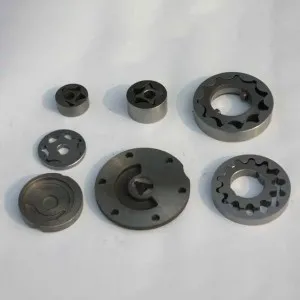
Powder metallurgy parts are created by compressing metal powders into specific shapes and sintering them at high temperatures to fuse the particles. This method allows for the creation of intricate geometries that are either impossible or cost-prohibitive to manufacture using casting or machining. The result is a dense, strong, and uniform part ideal for high-performance applications.
From automotive gears and bushings to surgical tools and electrical contacts, powder metallurgy parts are used in a wide array of sectors. Their high wear resistance and ability to perform under extreme conditions make them ideal for heavy-duty and high-precision environments. Furthermore, the ability to include different materials in a single compacted form opens the door to engineered solutions like gradient materials or friction-optimized surfaces.
One of the most significant advantages of powder metallurgy parts is their contribution to sustainable manufacturing. The process generates minimal scrap, consumes less energy, and enables near-net shape production—saving both time and resources. As technology advances, the applications of PM components are only set to grow, pushing boundaries in performance and design.
How a Leading Company PM Shapes the Future of Metal Component Manufacturing
Behind every successful application of powder metallurgy lies an innovative company PM that combines material science, precision engineering, and state-of-the-art manufacturing techniques. A forward-thinking company PM is not just a producer of parts; it is a partner in creating solutions for efficiency, durability, and scalability.
A top company PM invests heavily in R&D to tailor metal powders and process parameters for unique customer needs. By understanding the mechanical and chemical properties of different metal alloys, these companies can offer highly customized solutions across diverse industries—from automotive and aerospace to healthcare and consumer electronics.
What sets an advanced company PM apart is its capability to optimize every step of the powder metallurgy process. This includes powder selection, blending, compacting in powder metallurgy, sintering, sizing, machining, and secondary operations like impregnation, heat treatment, and surface finishing. With ISO-certified quality control and advanced testing laboratories, such companies guarantee precision and consistency in every part.
A reputable company PM also ensures full integration with client operations, offering co-development of parts, prototyping, and digital simulations. This level of partnership results in components that are both high-performing and cost-efficient. Whether you're looking to reduce weight in automotive systems or develop wear-resistant parts for industrial tools, the right company PM turns engineering challenges into competitive advantages.
Understanding the Science of Compacting in Powder Metallurgy
One of the most critical stages in the powder metallurgy process is compacting in powder metallurgy. This is where the transformation from loose powder to a shaped, semi-solid green part occurs. The success of this stage determines the structural integrity and precision of the final component.
Compacting in powder metallurgy involves pressing metal powders inside a die cavity using uniaxial or isostatic pressure. The goal is to densify the powder into a "green compact" with sufficient strength to be handled and sintered without breaking. Uniform density and minimal porosity are key indicators of a successful compaction process.
The pressure applied during compacting in powder metallurgy can range from a few tons to hundreds of tons depending on the material, part complexity, and desired final properties. Advanced compaction techniques may include warm compaction, which increases powder flow and density, or high-speed compaction for mass production.
Tool design also plays a vital role. Multi-level tooling and die sets allow for complex shapes and features to be formed directly during pressing, minimizing the need for secondary machining. Material flow, friction, and powder properties must all be carefully controlled to avoid defects like cracking, lamination, or density gradients.
Modern equipment used for compacting in powder metallurgy includes servo-controlled presses, CNC die systems, and real-time monitoring sensors that ensure quality and repeatability. This precision-engineered process lays the foundation for high-strength, high-performance powder metallurgy parts that meet the demanding standards of today’s industries.
Advantages of Choosing High-Performance Powder Metallurgy Parts over Traditional Components
When comparing manufacturing methods, high-performance powder metallurgy parts stand out for their unique combination of cost-efficiency, material flexibility, and design freedom. These advantages are leading more engineers and manufacturers to replace cast, forged, or machined components with PM alternatives.
One of the most appealing benefits of powder metallurgy parts is near-net shape capability. This significantly reduces the need for machining, lowering both material waste and processing costs. For high-volume production, such as in automotive or appliance manufacturing, this translates into major savings and improved throughput.
Additionally, the material properties of powder metallurgy parts can be fine-tuned through powder selection and processing parameters. Whether it’s increased wear resistance, magnetic permeability, corrosion resistance, or thermal conductivity, PM enables tailored solutions that would be complex or expensive to achieve using other methods.
Another key advantage is porosity control. Unlike cast parts that may suffer from unpredictable internal voids, powder metallurgy parts can be engineered with consistent, controlled porosity. This is valuable in applications such as oil-impregnated bearings or self-lubricating bushings.
Environmental impact is also significantly lower. Because compacting in powder metallurgy uses less energy and produces less scrap, PM is considered one of the most sustainable metal-forming methods. For companies aiming to meet ESG goals or reduce their carbon footprint, PM provides a practical pathway to greener manufacturing.
Whether the priority is mechanical performance, cost-efficiency, or sustainability, powder metallurgy parts offer a smart, modern solution that outperforms traditional manufacturing in a growing number of applications.
How a Strategic Partnership with a Proven Company PM Can Elevate Your Products
For manufacturers looking to innovate, streamline, and lead in their industries, forming a strategic partnership with a top company PM can be a game-changer. These companies bring decades of metallurgical expertise, advanced facilities, and a customer-centric approach that turns ideas into reality.
A strategic company PM partnership begins with deep collaboration. Clients are supported through every stage of development—from concept and design optimization to material selection and prototyping. The compacting in powder metallurgy process is tailored to meet specific dimensional, structural, and functional requirements.
What makes these partnerships effective is the agility of a company PM in responding to market demands. Need to reduce component weight? Improve energy efficiency? Meet regulatory compliance? A full-service PM company delivers not only the parts but also the expertise to help clients compete more effectively.
Moreover, many leading company PM suppliers offer value-added services such as inventory management, logistics support, and on-site engineering assistance. This level of integration ensures shorter development cycles, reduced risk, and lower total cost of ownership.
By choosing the right company PM, you're not just buying components—you're investing in performance, innovation, and long-term success. As the demand for complex, lightweight, and high-strength metal components grows, a trusted PM partner becomes a vital extension of your design and manufacturing team.
Powder metallurgy parts FAQs
What are the main benefits of using powder metallurgy parts?
Powder metallurgy parts offer several benefits including high material utilization, near-net shape capability, excellent dimensional accuracy, and minimal need for machining. They are ideal for producing complex geometries, multi-material components, and parts with tailored physical properties. Additionally, PM processes are eco-friendly and cost-effective for high-volume production.
How does a company PM ensure quality and consistency?
A reputable company PM uses advanced quality control systems, including statistical process controls, automated inspection tools, and in-house testing labs. From powder analysis to final inspection, every step is closely monitored. Many companies also hold ISO certifications and adhere to international standards for both material properties and environmental practices.
What happens during compacting in powder metallurgy?
Compacting in powder metallurgy involves pressing metal powders into a die under high pressure to form a solid "green" part. This process is crucial for defining the shape and density of the final component. Variables such as pressure, tooling, powder properties, and compaction method directly influence the quality of the finished part.
Are powder metallurgy parts suitable for structural applications?
Yes, many powder metallurgy parts are engineered for structural applications and can meet or exceed the performance of cast or machined components. High-density PM parts with proper alloy selection and sintering conditions are used in gears, levers, and connecting rods, particularly in automotive and industrial equipment.
Can I work with a company PM to develop custom components?
Absolutely. Most advanced company PM firms offer full development services including co-engineering, CAD support, simulation, prototyping, and small-to-large-scale production. They work closely with clients to understand requirements and deliver optimized, custom-designed PM components suited for specific applications.









