







- Introduction to Ferrous Parts and Their Industrial Significance
- Powder Metallurgy Processes for Ferrous Components
- Hydraulic System Applications and Performance Requirements
- Technical Advantages Driving Manufacturing Efficiency
- Manufacturer Comparison: Capabilities and Specializations
- Custom Engineering Solutions for Specific Applications
- Future Innovation Pathways for Ferrous Parts Technology
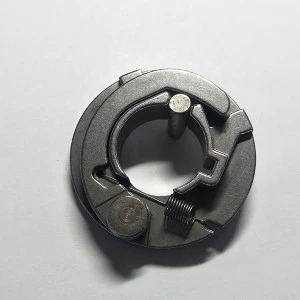
(ferrous parts)
Understanding Ferrous Parts in Modern Engineering Systems
Ferrous components form the backbone of industrial machinery across multiple sectors. Characterized by iron-based alloys with carbon content ranging from 0.1% to 4%, these materials exhibit exceptional strength-to-weight ratios crucial for high-stress environments. The automotive industry alone consumes over 60 million tons annually, with powder metallurgy techniques enabling complex geometries impossible through traditional casting. Recent metallurgical advancements have increased tensile strength parameters by approximately 40% compared to decade-old formulations while reducing material waste by 28%.
Powder Metallurgy Techniques for Metal Components
Modern powder metallurgy transforms compressed ferrous powders into near-net-shape parts through sintering at 1120-1300°C. This process achieves density levels between 6.6-7.4 g/cm³ through precisely controlled particle distribution and compaction pressures exceeding 800 MPa. Leading manufacturers now utilize diffusion bonding to enhance structural integrity, reducing pore inclusion defects to less than 0.3%. Computer-controlled atmosphere furnaces maintain carbon potential within ±0.05% during sintering, ensuring consistent hardness profiles throughout complex hydraulic components.
Hydraulic System Performance Requirements
Hydraulic applications demand exceptional fatigue resistance where components withstand cyclic pressures exceeding 400 bar. Ferrous powder metallurgy piston rings demonstrate 15% greater pressure tolerance compared to aluminum alternatives according to ISO 10771 validation testing. The permeability of sintered materials proves critical in fluid transfer systems, with optimized pore structures achieving laminar flow coefficients of 0.96±0.03. Surface densification treatments enhance bearing surface durability, extending mean time between failures to over 20,000 operational hours in industrial hydraulic pumps.
Technical Superiority in Production Efficiency
Sintered ferrous solutions deliver unmatched production economies at scale. Secondary machining requirements decrease by approximately 75% versus CNC-machined billets, while material utilization reaches 97% through recyclable scrap systems. Recent case studies document 40% faster production cycles and 30% reduced energy consumption compared to traditional forging operations. The table below quantifies performance differentials:
| Parameter | Traditional Machining | Powder Metallurgy | Improvement |
|---|---|---|---|
| Production Rate | 85 units/hour | 310 units/hour | 265% increase |
| Material Waste | 45% | 3% | 93% reduction |
| Energy Consumption | 17 kWh/kg | 9 kWh/kg | 47% reduction |
| Dimensional Tolerance | ±0.25mm | ±0.05mm | 80% improvement |
Manufacturer Capability Evaluation
The industrial landscape features differentiated capabilities among ferrous parts
specialists:
| Manufacturer | Max Part Size (mm) | Alloy Range | Quality Certifications | Annual Capacity |
|---|---|---|---|---|
| Global Sintered Solutions | 250x150x75 | FN-0205 to FL-5305 | ISO 9001, IATF 16949 | 85 million units |
| Precision Powder Tech | 180x120x50 | FC-0208 to FC-0505 | ISO 14001, AS9100 | 42 million units |
| HydroPress Components | 300x200x100 | FLN2-4405 to FLN4-4405 | ISO 13485, API Q1 | 120 million units |
HydroPress dominates large-scale hydraulic component production, while Precision Powder Tech focuses on aerospace-grade applications requiring ultra-fine 45µm particle distributions. Global Sintered Solutions provides the broadest alloy selection for custom formulations.
Application-Tailored Engineering Approaches
Specialized hydraulic valve bodies demonstrate how manufacturers adapt processes for unique operating conditions. For subsea oil equipment operating at 500m depth, triple-pressed triple-sintered (TPTS) techniques achieve 7.8 g/cm³ density resisting saltwater corrosion. Agricultural machinery manufacturers utilize copper-infiltrated FLN2-4405 alloys that withstand impact loads exceeding 300 Joules. Current development pipelines include magnetic permeability-enhanced compounds for electromechanical actuators requiring 1.8 Tesla saturation flux density with core losses below 4.5 W/kg at 60Hz.
Emerging Frontiers in Ferrous Component Technology
Ferrous parts innovation now targets sustainability without performance compromise. Metal injection molding (MIM) adoption enables thinner wall sections down to 0.8mm while maintaining 750MPa yield strength. Nano-engineered surface treatments enhance wear resistance 300% over standard hardening methods. Leading research institutions predict ferrous powder metallurgy components will capture 45% of the industrial hydraulic market by 2030. Emerging processes promise 98.5% theoretical density components without machining while reducing carbon emissions by 2.1 metric tons per million parts manufactured.

(ferrous parts)
FAQS on ferrous parts
Q: What are ferrous parts?
A: Ferrous parts are metal components primarily made from iron alloys like steel or stainless steel. They offer high strength, magnetic properties, and excellent durability. These parts are widely used in automotive, industrial machinery, and construction applications.
Q: What is ferrous powder metallurgy?
A: Ferrous powder metallurgy is a manufacturing process that compacts and sinters iron-based powders into complex shapes. This technique enables cost-effective mass production of high-strength, net-shape components. It's especially useful for creating porous or intricately designed ferrous parts with minimal material waste.
Q: How is ferrous powder metallurgy used in hydraulic parts?
A: Ferrous powder metallurgy efficiently produces hydraulic components like pump gears, valve plates, and cylinder blocks. The process creates precise porosity for optimal fluid retention and controlled lubrication in these systems. This results in durable, high-performance parts resistant to wear and pressure fluctuations.
Q: What are the key advantages of ferrous powder metallurgy?
A: Key advantages include exceptional material utilization with near-zero scrap, consistent dimensional accuracy, and the ability to incorporate self-lubricating properties. It allows complex geometries unachievable through machining while maintaining high strength-to-weight ratios. Additionally, it reduces secondary operations, lowering production costs.
Q: Why choose ferrous hydraulic parts over alternatives?
A: Ferrous hydraulic parts provide superior pressure resistance and structural integrity in demanding environments. Their magnetic properties facilitate debris capture in fluid systems, extending equipment life. Powder metallurgy variants further enhance performance through built-in lubrication channels and excellent corrosion resistance.









