






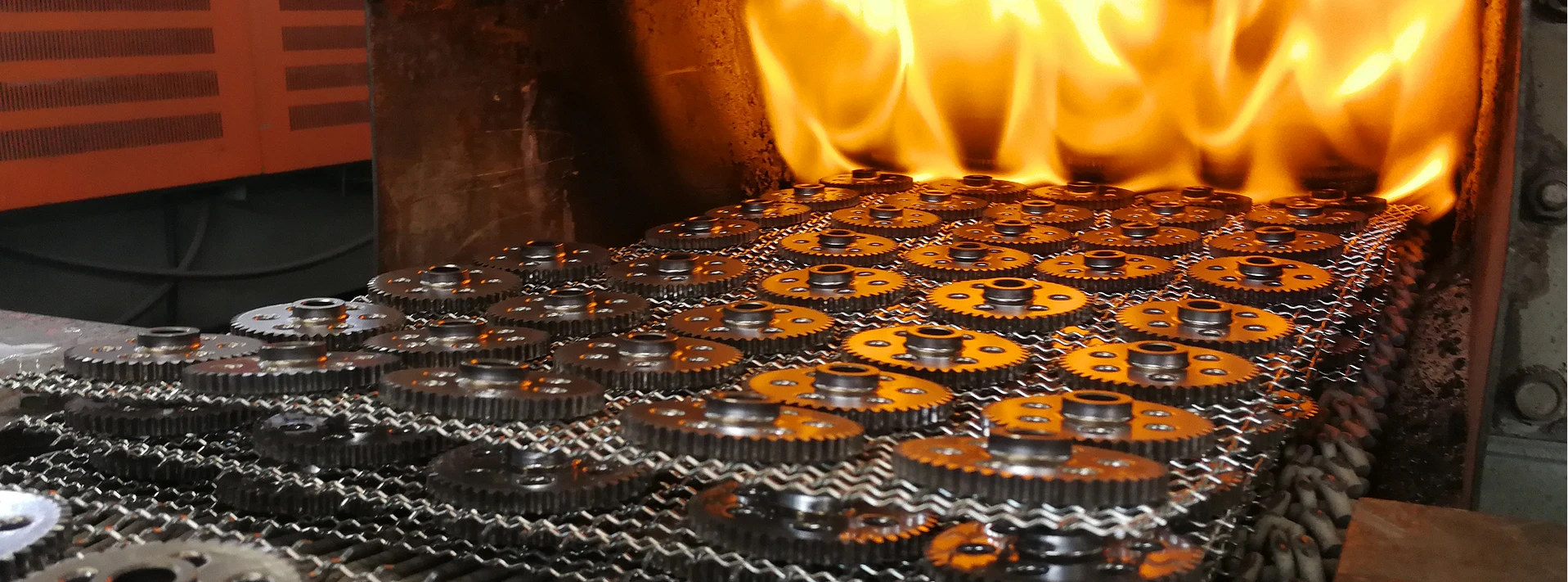
- Market growth and technological breakthroughs in ferrous powder metallurgy
- Engineering advantages over conventional manufacturing methods
- Performance comparison of leading ferrous powder metallurgy suppliers
- Advanced customization capabilities for complex applications
- Real-world applications across key industrial sectors
- Innovations shaping the powder metallurgy process sequence
- Future development trajectory and material advancements

(ferrous powder metallurgy)
The Enduring Significance of Ferrous Powder Metallurgy
Ferrous powder metallurgy has revolutionized component manufacturing since its commercialization in the 1940s. This technology accounts for approximately 70% of all powder metallurgy parts produced globally, with the automotive sector consuming nearly 80% of output. The process converts precisely formulated iron and alloy powders into near-net-shape components using controlled pressure and thermal cycles. As manufacturing demands evolve toward complex geometries, tighter tolerances (±0.05mm), and enhanced material properties, manufacturers increasingly leverage advanced sintering technologies like high-temperature vacuum furnaces reaching 1,250°C and newer techniques such as spark plasma sintering.
Material Innovation and Cost Efficiency
Modern ferrous powder formulations provide remarkable mechanical capabilities surpassing conventional steel machining. Diffusion-alloyed powders like Distaloy achieve tensile strengths exceeding 800 MPa while maintaining excellent machinability. Significant cost savings emerge from the process sequence: Material utilization reaches 97% versus 40-60% with subtractive machining, reducing production waste substantially. Energy consumption studies by PM industry associations confirm 40% lower energy expenditure than conventional processes. Components often require minimal secondary operations – 85% of automotive PM parts undergo no additional machining – making it the most economical solution for high-volume production exceeding 10,000 units.
Supplier Capability Benchmarking
| Supplier | Max Press Capacity (tons) | Density Achievable (g/cm³) | Critical Tolerance (±mm) | Material Options |
|---|---|---|---|---|
| ACME Powdered Metals | 1200 | 7.4 | 0.025 | FN-0208, FLN2-4405 |
| Global Sintered Solutions | 800 | 7.3 | 0.035 | FC-0205, FD-0405 |
| Precision PM Group | 1500 | 7.5 | 0.018 | FLC2-4608, FLN-4205 |
The competitive landscape reveals specialization trends. Larger suppliers increasingly integrate upstream powder production with proprietary atomization processes, enhancing quality control while reducing porosity to below 3%. Premium providers offer specialized treatments like steam oxidation for enhanced corrosion resistance exceeding 500 hours in salt spray tests, addressing historical limitations of sintered components in harsh environments. Production speed differentiators also emerge, with industry leaders manufacturing 35-60 complex parts per minute.
Application-Specific Engineering Solutions
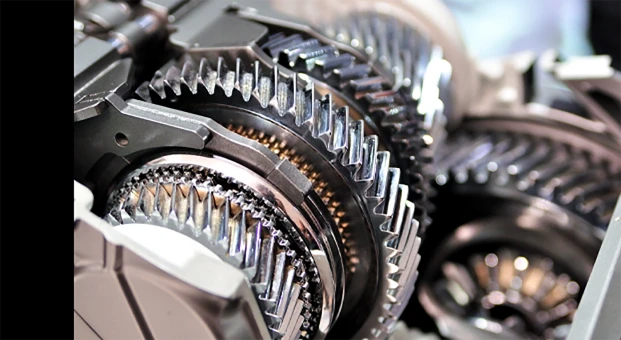
Manufacturers now deploy multi-stage compaction tooling to produce previously unachievable geometries. One transmission component exemplifies this: A helical gear with 15° tooth angle requires specialized compaction sequencing to achieve required densities exceeding 7.2 g/cm³ without distortion. Material scientists formulate custom ferrous powder blends for application-specific needs:
- Oil-impregnated bearings (18-22% porosity): Self-lubricating properties reduce friction coefficients below 0.06
- Soft magnetic cores (Fe-Si powder): Achieve magnetic flux densities of 1.6 Tesla at 10 kHz
- High-wear applications (MIM-modified steel): Surface hardness up to 62 HRC through precipitation hardening
Industry Implementation Case Studies
The commercial vehicle sector relies on ferrous powder metallurgy for turbocharger components that withstand continuous operation at 650°C. Volvo trucks transitioned from forged to PM vanes, reducing part weight by 30% while improving heat resistance. Industrial hydraulics companies employ PM valve plates achieving surface roughness values (Ra) below 0.8μm, critical for high-pressure hydraulic pumps exceeding 300 bar. Aerospace applications increasingly utilize advanced ferrous parts in auxiliary power units, where certified PM alloys demonstrate 10% higher fatigue strength at 400°C compared to conventional materials. This reliability improvement extends service intervals by 800-1,200 operating hours.
Process Sequence Enhancements
Modern ferrous powder metallurgy employs sequential optimization at each production stage. Powder blending now integrates lubricant pre-mixing stations ensuring coating uniformity. Recent press technology developments include CNC-controlled multi-motion compaction capable of producing components with 5:1 height-to-diameter ratios previously considered unmanufacturable. Sintering innovations like microwaves-assisted sintering reduce cycle times by 60% while improving inter-particle diffusion. For high-performance requirements, secondary processes gain precision through robotic surface grinding stations achieving cylindricity below 0.01mm. Quality assurance incorporates AI-powered vision systems that inspect 100% of parts at production rates over 15,000 units/hour.
Future Trajectory for Ferrous Powder Applications
Ferrous powder metallurgy stands poised to expand beyond its automotive dominance as material scientists develop enhanced powders. Current research targets nano-grained iron powders with 300% hardness improvements through cryomilling techniques. Industry forecasts suggest 8.5% annual growth through 2030, driven particularly by demand for electric motor components where PM soft magnetic composites reduce core losses by 45% at 60Hz compared to laminated steels. With surface engineering advancements enabling functional coatings and new process sequence integrations, ferrous powder metallurgy will increasingly address the most demanding technical requirements across aerospace, medical technology, and clean energy sectors.
(ferrous powder metallurgy)
FAQS on ferrous powder metallurgy
Q: What is ferrous powder metallurgy?
A: Ferrous powder metallurgy is a manufacturing process that produces iron-based components by compacting and sintering metal powders. It enables cost-effective mass production of complex-shaped parts. Common applications include gears, bearings, and automotive components.
Q: What are the advantages of ferrous parts made via powder metallurgy?
A: Ferrous powder metallurgy parts offer high dimensional accuracy, reduced material waste, and excellent strength-to-weight ratios. They also allow for controlled porosity, which is useful for self-lubricating components. This method is ideal for high-volume production.
Q: What are the key steps in the powder metallurgy process sequence?
A: The sequence includes powder blending, compaction in a die, sintering at high temperatures, and optional post-processing (e.g., machining, heat treatment). Each step ensures the final part meets required mechanical and dimensional properties. Process control is critical for consistency.
Q: How does sintering affect ferrous powder metallurgy parts?
A: Sintering bonds compressed metal powders by heating them below the melting point, enhancing strength and density. For ferrous parts, it improves hardness and wear resistance. Atmosphere control during sintering prevents oxidation and ensures optimal properties.
Q: What industries commonly use ferrous powder metallurgy parts?
A: Automotive, aerospace, and industrial machinery sectors rely heavily on these parts for components like engine sprockets and hydraulic valves. Their affordability and performance in high-stress environments drive adoption. Customization options further expand their applicability.









