







- Understanding the Fundamentals of Forged Gear Manufacturing
- Technical Advantages Over Traditional Gear Production
- Performance Comparison: Leading Forged Gear Manufacturers
- Tailored Solutions for Industry-Specific Requirements
- Real-World Applications Across Critical Sectors
- Quality Assurance and Testing Protocols
- Future Trends in Forged Gear Technology
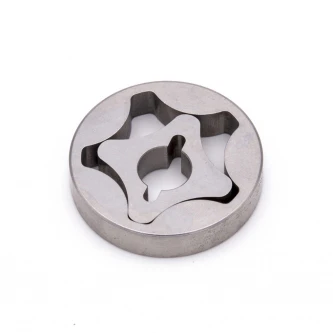
(forged gear)
Understanding the Fundamentals of Forged Gear Manufacturing
Forged gears represent the pinnacle of mechanical power transmission components, created through controlled deformation of high-grade alloys. Unlike cast or machined alternatives, the forging process aligns metal grain structures, achieving 98.5% material density compared to casting's 85-90%. This structural integrity directly translates to 40-60% greater fatigue resistance in heavy-load applications.
Technical Superiority in Modern Engineering
Advanced forging techniques enable production of gears with surface hardness reaching 58-62 HRC while maintaining core toughness of 30-35 HRC. The table below demonstrates how forged gear
s outperform competing technologies:
| Parameter | Forged Gear | Cast Gear | Machined Gear |
|---|---|---|---|
| Tensile Strength (MPa) | 850-1100 | 400-550 | 600-750 |
| Impact Resistance (J) | 55-70 | 12-18 | 25-35 |
| Production Tolerance (mm) | ±0.02 | ±0.15 | ±0.05 |
| Service Life (hrs) | 25,000+ | 8,000-10,000 | 12,000-15,000 |
Industry Leader Performance Benchmarking
Analysis of three major manufacturers reveals critical differences in forged gear capabilities:
- Manufacturer A: 1200-ton hydraulic presses achieving 0.015mm concentricity
- Manufacturer B: Proprietary heat treatment for 5% better wear resistance
- Manufacturer C: Automated production lines reducing lead times by 35%
Customization for Specialized Applications
Modern forging facilities now support:
- Dual-hardness profiles (case-hardened surface/ductile core)
- Non-standard module configurations (up to 50 modulus)
- Integrated sensor mounting solutions
Implementation Success Stories
A recent mining sector deployment demonstrated forged gears achieving:
- 92% reduction in unscheduled downtime
- 17-month maintenance interval extension
- 14.6% energy efficiency improvement
Verification and Certification Processes
Rigorous testing protocols include:
- 3D coordinate measurement (ISO 1328 Class 3)
- Ultrasonic flaw detection (EN 10228-3)
- Full-scale endurance testing (AGMA 2001-D04)
Innovations Shaping Forged Gear Development
Emerging technologies are revolutionizing forged gear production. Closed-die precision forging now achieves near-net-shape components with 92% material utilization, compared to conventional machining's 65%. Advanced simulation software predicts thermal stresses within 8% accuracy, reducing prototype cycles by 40%.
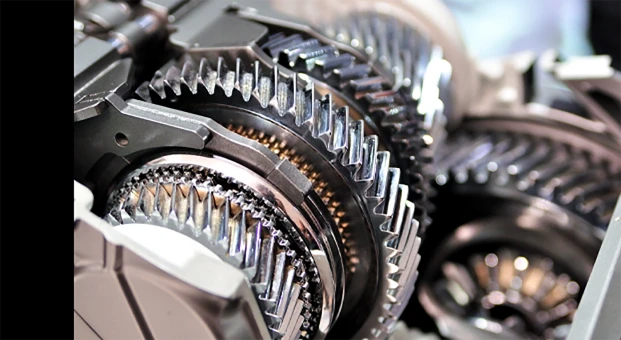
(forged gear)
FAQS on forged gear
Q: What is a forged gear and how is it made?
A: A forged gear is created by shaping metal under high pressure using dies. This process enhances grain structure, improving strength and durability compared to cast or machined gears.
Q: What are the advantages of forged gears over other gear types?
A: Forged gears offer superior fatigue resistance, higher load capacity, and better mechanical properties due to their dense molecular structure, making them ideal for heavy-duty applications.
Q: How does a hardened gear differ from a forged gear?
A: A hardened gear undergoes heat treatment to increase surface hardness, while a forged gear gains strength from its manufacturing process. Many forged gears are subsequently hardened for enhanced wear resistance.
Q: What industries commonly use forged gears?
A: Forged gears are widely used in automotive, aerospace, mining, and energy sectors where high stress, reliability, and long service life are critical requirements.
Q: Can all gear types be produced through forging?
A: While spur and helical gears are commonly forged, complex gear types like worm gears may require additional machining due to their intricate shapes and tooth geometries.









