






Gear And Types is a key solution in the manufacturing industry, specifically within General equipment manufacturing industry and Manufacturing of gears and transmission components. This article explores how SHIJIAZHUANG JINGSHI NEW MATERIAL SCIENCE AND TECHNOLOGY CO.,LTD supports professionals with durable, high-performance products, and explains why this product is an ideal choice for businesses in these sectors.
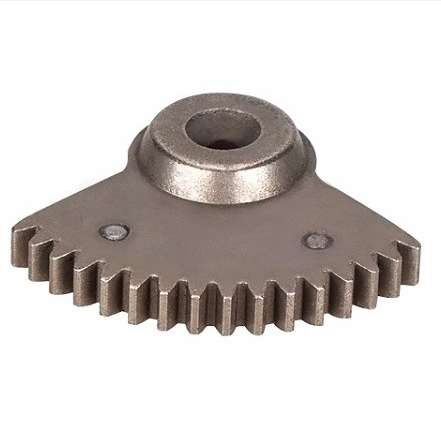
Table of Contents
- Gear And Types Overview
- Benefits & Use Cases of Gear And Types in Manufacturing of gears and transmission components
- Cost, Maintenance & User Experience
- Sustainability & Market Trends in manufacturing
- Conclusion on Gear And Types from SHIJIAZHUANG JINGSHI NEW MATERIAL SCIENCE AND TECHNOLOGY CO.,LTD
Gear And Types Overview
In industrial power transmission, Gear And Types encompasses the full range of gear forms and drive architectures that convert motor power into controlled motion and torque. Common gear and types of gear include spur, helical, bevel, worm, internal, rack-and-pinion, planetary sets, and sector gears—each suited to particular gear drive types and duty cycles. Sector gears, such as the sintered customized sector gear from SHIJIAZHUANG JINGSHI NEW MATERIAL SCIENCE AND TECHNOLOGY CO.,LTD, are optimized for partial-rotation mechanisms where compact packaging, repeatable accuracy, and cost efficiency matter.
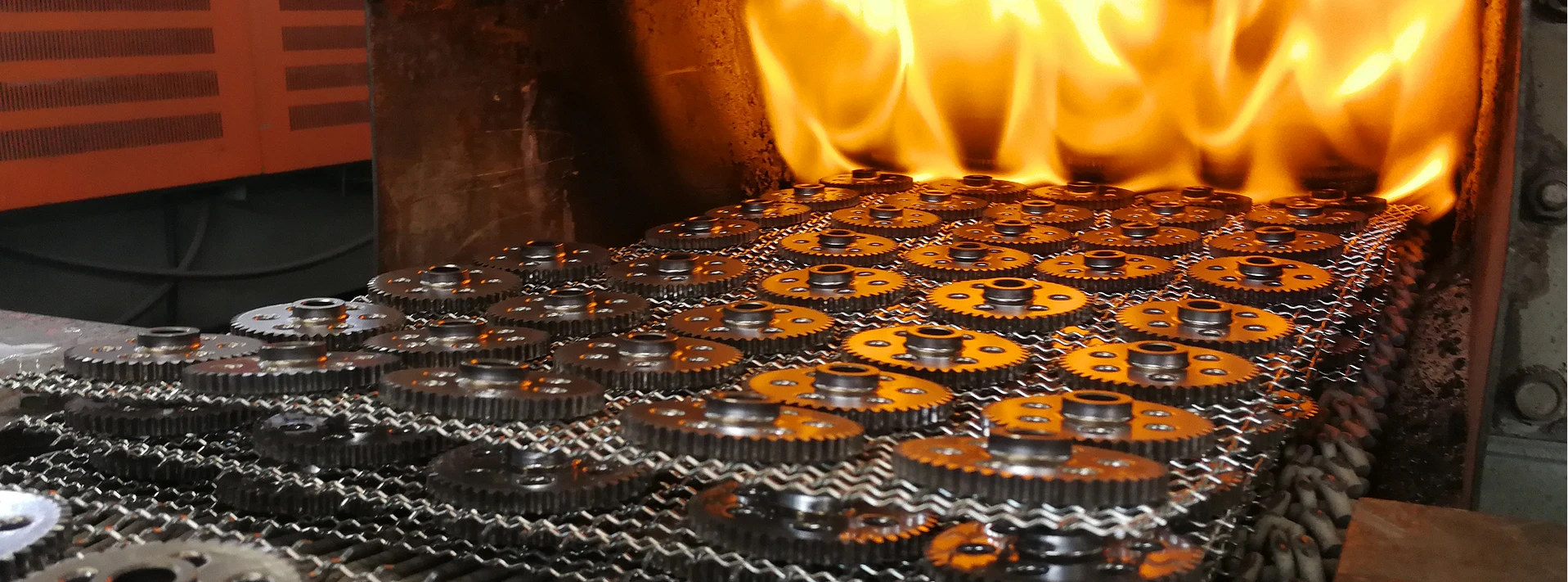
Technically, powder metallurgy (PM) lets engineers achieve near-net-shape teeth and integrated hubs, bores, and keyways with minimal machining. The process typically includes precision powder compaction, sintering in controlled atmospheres, and secondary operations (sizing, machining of datums, heat treatment, tooth densification, or finishing when needed). This route supports a wide spectrum of gear mechanism types—from quiet, high-precision actuators to robust, torque-dense transmissions—while enabling features aligned with different gear shaft types (solid, hollow, splined, or stepped shafts).
SHIJIAZHUANG JINGSHI NEW MATERIAL SCIENCE AND TECHNOLOGY CO.,LTD (JSSintering) is a dependable manufacturer partnering with OEMs and Tier suppliers to translate functional requirements into manufacturable PM gear designs. With application engineering support and rigorous process controls, JSSintering helps B2B decision makers hit targets for performance, cost, and timing—backed by stable quality for long-term production programs.
Benefits & Use Cases of Gear And Types in Manufacturing of gears and transmission components
In Manufacturing of gears and transmission components, the right Gear And Types choice directly impacts NVH, efficiency, and lifecycle cost. Sector gears are frequently applied in actuators, valve controls, steering modules, industrial automation axes, and smart-home devices where limited rotation is required. For broader gear drive types, spur and helical gears suit parallel-shaft reducers; bevel and worm serve right-angle drives; planetary trains concentrate high reduction in compact envelopes; and racks convert rotation to linear motion—each mapping to specific load, speed, and backlash constraints.
Compared with fully machined alternatives, sintered gears deliver strong competitive advantages: near-net-shape geometry cuts machining time; material utilization improves yield; inherent damping in PM matrices can enhance noise behavior; and optional porosity control supports oil impregnation for smoother running. Complex hubs, bosses, and spline interfaces can be co-formed, reducing part count and simplifying assembly across many gear mechanism types. The ability to tailor features for varied gear shaft types (keyed, spline, hollow, or stepped) further streamlines integration into mechatronic systems and compact gearboxes.
JSSintering brings sector-specific expertise—materials selection for wear and toughness, optimized sintering profiles, and robust secondary operations like sizing and heat treatment. From prototype loops to SOP ramp-up, the team collaborates on tolerances, tooth profile optimization, and DfM to ensure the selected gear and types of gear achieve performance targets at scale.
Cost, Maintenance & User Experience
Total cost of ownership with PM gears balances tooling investment against lower piece-price and reduced machining—especially compelling from mid to high volumes. By integrating multiple features in a single compaction, assembly steps and fixture time are reduced. Consistent tooth geometry and repeatable density help stabilize torque transmission, extend service life, and protect ROI. For many programs, the economics of Gear And Types manufactured via sintering translate into attractive payback periods when compared with multi-step wrought machining routes.
Maintenance is straightforward: select proper lubrication regimes, maintain alignment, and protect against contamination. PM’s microstructure can retain lubricants, aiding wear performance and smooth motion over time. When higher surface hardness is required, case-hardening or surface densification strategies can be applied to improve pitting and scuffing resistance. Users in the General equipment manufacturing industry report stable quality, reliable supply, and quieter operation in actuators and compact reducers—key user experience criteria for modern automated equipment and motion systems.
Sustainability & Market Trends in manufacturing
Sustainability is shaping specification choices across gear and types of gear. Powder metallurgy is inherently resource-efficient: near-net-shape processing minimizes scrap, supports high material utilization, and reduces energy versus extensive subtractive machining. Many PM alloys can incorporate recycled feedstocks, and controlled-atmosphere sintering helps meet modern environmental expectations. Compliance with evolving regulations (e.g., material restrictions and responsible sourcing) and a focus on long-life, low-maintenance products align PM gears with corporate ESG goals.
Market trends point to compact, high-torque, low-noise transmissions for electrification, robotics, and smart factories. Demand is growing for precision helical forms, optimized profile modifications, and integrated components that simplify assemblies. Digital engineering—from DfM simulation to process monitoring—improves launch quality and repeatability. SHIJIAZHUANG JINGSHI NEW MATERIAL SCIENCE AND TECHNOLOGY CO.,LTD positions customers ahead of the curve by pairing materials R&D with efficient sintering, careful secondary operations, and continuous improvement practices—delivering Gear And Types solutions ready for next-generation automation, mobility, and industrial equipment.
Conclusion on Gear And Types from SHIJIAZHUANG JINGSHI NEW MATERIAL SCIENCE AND TECHNOLOGY CO.,LTD
For B2B decision makers, Gear And Types—especially sintered sector gears—offers a proven path to precise motion, lower cost, and dependable durability in the Manufacturing of gears and transmission components. By combining near-net-shape efficiency with robust materials and finishing options, JSSintering helps teams optimize performance, assembly, and lifecycle economics. SHIJIAZHUANG JINGSHI NEW MATERIAL SCIENCE AND TECHNOLOGY CO.,LTD is a trusted partner for engineered gears that meet today’s manufacturing challenges. Contact us: email: jspmtech@163.com. Visit our website: https://www.jssintering.com









