







- Introduction: Understanding Gear Manufacturing Companies
- The Growing Demand: Data-Driven Market Insights
- Technical Innovations Driving the Sector
- Comparing Leading Gear Manufacturing Companies
- Customization Capabilities for Specialized Applications
- Applications Across Major Industries
- Future-Proofing Through Technical Partnerships
(gear manufacturing companies)
Understanding Gear Manufacturing Companies: Precision at Scale
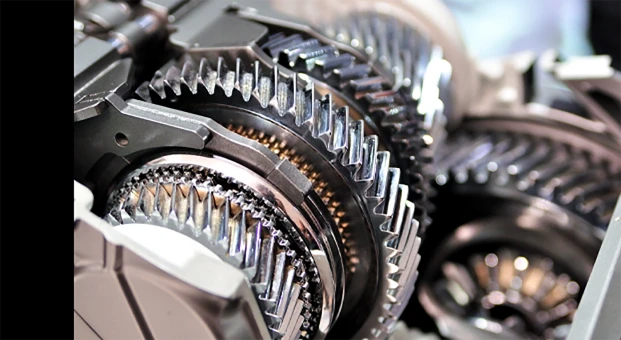
Gear manufacturing companies form the backbone of mechanical transmission systems across global industries. Organizations specializing in this sector provide critical components enabling motion transfer in equipment ranging from automotive transmissions to aerospace actuators. These firms leverage cutting-edge technologies like multi-axis CNC machining and powder metallurgy to deliver geometrically complex parts with micron-level accuracy. As industrial automation accelerates, demand grows for specialized providers capable of handling diverse requirements including micro gear manufacturing for miniature devices and high-strength components through powder metallurgy processes.
The Growing Demand: Data-Driven Market Insights
The global gear manufacturing industry demonstrates robust expansion, projected to reach $265 billion by 2028 (CAGR 6.1%). This growth stems from increased automation adoption and electric vehicle production, which requires 37% more precision gears than traditional automotive systems. Micro gear manufacturing specifically shows 12.3% annual growth due to expanding needs in medical devices and robotics. Manufacturers invested over $2.8 billion in production technology last year alone, primarily directed toward high-pressure sintering systems that enhance material density in powder metallurgy processes. Quality metrics reveal that industry leaders maintain defect rates below 0.8% for automotive-grade gears, while achieving surface finishes under 0.4μm Ra for critical aerospace applications.
Technical Innovations Driving the Sector
Modern gear production relies on several advanced manufacturing methodologies:
- Powder Metallurgy Advancements: Latest sintering techniques achieve 99.2% theoretical density, creating parts with 1200+ MPa tensile strength that withstand extreme operational stresses.
- Micro-Gear Fabrication: Ultra-precision machining centers can produce gears measuring 0.15mm diameter with AGMA Class 10 tolerances.
- Additive Manufacturing Integration Metal 3D printing enables complex internal cooling channels unattainable through conventional methods.
- AI-Powered Quality Systems: Real-time vibration analysis during hobbing operations reduces setup time by 55% while maintaining ±0.002mm dimensional consistency.
Such innovations significantly decrease energy consumption during production—powder metallurgy requires 39% less power than equivalent machining processes according to recent Department of Energy benchmarks.
Comparing Leading Gear Manufacturing Companies
| Manufacturer | Core Specialty | Min. Module | Materials | Annual Volume Capacity | Lead Times (Days) |
|---|---|---|---|---|---|
| Precision Gearing Solutions | Micro Gear Manufacturing | 0.05 | Stainless, Alloy Steel | 5M units | 7-10 |
| Metallurgy Dynamics | Gear Manufacturing by Powder Metallurgy | 0.2 | Custom Sintered Alloys | 800T | 14 |
| GearTech Industries | Large-Scale Production | 0.3 | Carbon Steel, Brass | 22M units | 5-7 |
Customization Capabilities for Specialized Applications
Top gear manufacturing companies
maintain comprehensive customization services to address specific industry requirements:
Medical Device Solutions: Bio-compatible gears manufactured to ISO 13485 standards with electropolishing and laser marking capabilities. Recent development projects include MRI-compatible titanium gear assemblies that maintain dimensional stability within 5μm under strong magnetic fields.
Aerospace Components: Lightweighting strategies through proprietary powder metallurgy formulations that achieve 18% weight reduction versus machined alternatives without compromising fatigue strength. Surface enhancements like diamond-like carbon coatings extend service life by 400% in high-RPM applications.
Leading providers maintain prototyping divisions capable of delivering functional samples in 72 hours using synchronized CAD/CAM workflows, significantly accelerating product development cycles.
Applications Across Major Industries
Precision gears enable critical functionality across diverse sectors:
- Automotive: Transmission systems utilizing PM gears reducing NVH levels by 8dB versus conventional components.
- Robotics
Micro planetary gearsets with integrated sensors detecting torque variations within 0.1N·m precision. - Renewable Energy: Main bearing gearboxes rated for 150MW turbines operating with 99.94% efficiency during continuous service.
- Defense Systems: Mission-critical gearboxes passing MIL-STD-810H standards including 30G shock resistance and salt fog exposure testing.
The medical field particularly benefits from micro gear manufacturing advancements, enabling precise fluid dispensing in automated diagnostic equipment and miniature actuators for surgical robotics operating within 20-micron tolerance bands.
Future-Proofing Through Technical Partnerships
Forward-thinking gear manufacturing companies establish collaborative innovation frameworks to address emerging industry challenges. Progressive organizations invest 9.3% of annual revenue in R&D partnerships with material science laboratories and university research programs. These initiatives focus on areas such as self-lubricating gear designs through nano-impregnation techniques that eliminate scheduled maintenance for sealed components. Quality-focused manufacturers implement Industry 4.0 ecosystems where production intelligence flows directly into customer ERP systems, providing real-time component traceability and predictive delivery scheduling. Such partnerships will prove crucial as electromechanical systems evolve toward more compact, efficient architectures requiring specialized micro gear manufacturing and advanced powder metallurgy solutions.
(gear manufacturing companies)
FAQS on gear manufacturing companies
Q: What factors should be considered when selecting gear manufacturing companies?
A: Key factors include expertise in specific gear types (like micro gear manufacturing), production capacity, quality certifications, and experience with advanced methods such as gear manufacturing by powder metallurgy.Q: How does micro gear manufacturing differ from standard gear production?
A: Micro gear manufacturing focuses on producing gears with diameters under 1mm, requiring precision tools and specialized techniques like powder metallurgy to ensure accuracy and durability in compact applications.Q: What industries benefit most from gear manufacturing by powder metallurgy?
A: Automotive, aerospace, and medical industries often use powder metallurgy gears due to their cost-effectiveness, complex shape capabilities, and high material efficiency for mass production.Q: Can gear manufacturing companies handle both prototyping and large-scale production?
A: Many companies offer end-to-end services, leveraging technologies like micro gear machining for prototypes and powder metallurgy for high-volume batches, ensuring consistency across scales.Q: What are the environmental benefits of gear manufacturing by powder metallurgy?
A: Powder metallurgy minimizes material waste, reduces energy consumption compared to traditional methods, and allows recycling of metal powders, making it a sustainable choice for gear production.-
01Apr . 16, 2026

-
02Apr . 09, 2026

-
03Apr . 07, 2026


Shijiazhuang JingShi New Material Science and Technology Co., Ltd was founded since 2014, located in Shijiazhuang, Hebei province, China. The company covers an area of over 10,000 square meters and has


PRODUCTS

CONTACT US
Address:TIANSHAN INTERNATIONAL MANUFACTURING INDUSTRY PARK NO.57, YUANSHI, SHIJIAZHUANG CITY, HEBEI PROVINCE, CHINA
Address:TIANSHAN INTERNATIONAL MANUFACTURING INDUSTRY PARK NO.57, YUANSHI, SHIJIAZHUANG CITY, HEBEI PROVINCE, CHINA
Copyright © 2026 SHIJIAZHUANG JINGSHI NEW MATERIAL SCIENCE AND TECHNOLOGY CO.,LTD All Rights Reserved. Sitemap | Privacy Policy | Top Blog | Global ServiceCopyright © 2026 SHIJIAZHUANG JINGSHI NEW MATERIAL SCIENCE AND TECHNOLOGY CO.,LTD All Rights Reserved. Sitemap | Privacy Policy | Top Blog | Global Service



