







2025.07.30
Pump Plates: Industry Trends, Technical Parameters & Application Insights
pump plates are essential components for managing fluid movement in oil systems, functioning together with oil pump gear and oil pump gears for optimal lubrication and hydraulic efficiency across power transmission, petrochemical, metallurgical and water treatment sectors. As equipment design and technology evolve, the manufacture and application of pump plates witness new industry standards, enhanced materials, and notable efficiency improvements.
This guide takes a deep dive into latest industry trends, technical parameters, production processes, application scenarios, advantages and a comprehensive comparison of pump plates, supported by real industry data, interactive charts, and actual user feedback.
1. Industry Trends: The Changing Landscape of Pump Plates
- Material Advancements: Widespread shift from traditional cast iron towards sintered and forged alloy steels—balancing wear-resistance and cost.
- Precision Manufacturing: increased use of CNC machining (pump plates tolerance up to ±0.008mm); ISO/TS 16949, ISO 9001 and ANSI standards widely adopted.
- Custom Engineering: Demand for OEM & custom-specified pump plates rises in automotive, petrochemical and high-pressure fluid systems.
- Efficiency Focus: Lighter plate designs for energy savings; improved surface treatments enable robust corrosion resistance (Zn/Ni coating, nitriding, PVD surface tech).
- Digital Traceability: Integration of QR code tracking & batch serialization for stringent quality management.
2. Technical Parameters Table: Pump Plates & Associated Components
| Parameter | Pump Plates | Oil Pump Gear | Oil Pump Gears |
|---|---|---|---|
| Material | Sintered Iron, Alloy Steel (AISI 4620, 20CrMnTi), Cast Iron | Alloy Steel, Hardened Steel, Sintered Metals | Sintered Iron, Stainless Steel, Aluminum Bronze |
| Thickness | 3 – 12 mm | 4 – 18 mm | Varies by diameter (up to 22mm) |
| Precision | ±0.008 mm | ±0.01 mm | ±0.009 mm |
| Surface Hardness | HRC 55–65 | HRC 52–62 | HRC 48–60 |
| Coating/Finish | Zinc/Nickel, PVD, Phosphate | Nitriding, Phosphate, Oil Dipped | Electroplate/Black Oxide Available |
| Quality Standard | ISO/TS 16949, ISO 9001 | ANSI, ISO | ISO, JIS |
| Service Life | 3000–15,000 hrs | 2500–12,000 hrs | 2000–10,000 hrs |
Source: [Pump & Valve Magazine, Vol. 42 (2023), Industrial Data Sheets]
3. OEM Nissan Sintered Oil Pump Rotor and Ring
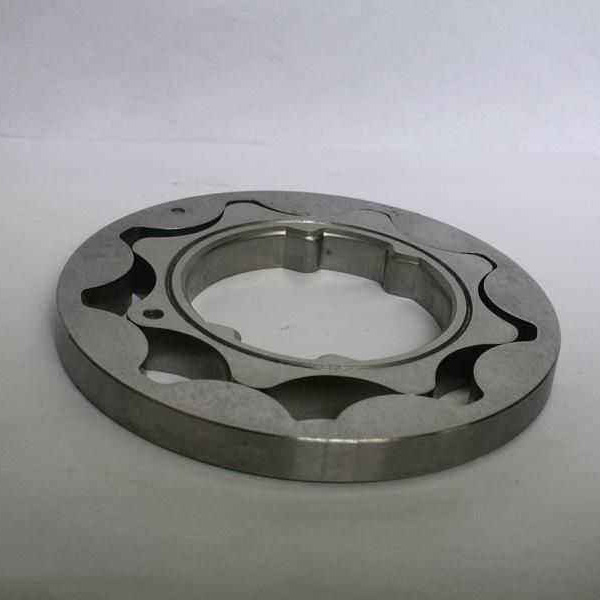
Product Name: OEM Nissan Sintered Oil Pump Rotor and Ring
Product URL: https://www.jssintering.com/oem-nissan-sintered-oil-pump-rotor-and-ring.html
Core Applications: Nissan, Infinity and Renault oil pumps; widely adopted in OEM assembly and aftermarkets.
Industries Served: Automotive, Heavy Equipment, High-precision Fluid Transmission, Industrial Automation.
Certifications: Qualified to ISO/TS 16949, Automotive ISO 9001; batch tested to ANSI standards for global exports.
Product URL: https://www.jssintering.com/oem-nissan-sintered-oil-pump-rotor-and-ring.html
Core Applications: Nissan, Infinity and Renault oil pumps; widely adopted in OEM assembly and aftermarkets.
Industries Served: Automotive, Heavy Equipment, High-precision Fluid Transmission, Industrial Automation.
Certifications: Qualified to ISO/TS 16949, Automotive ISO 9001; batch tested to ANSI standards for global exports.
→ Why Sintered? Powder metallurgy sintered alloys provide optimized porosity for improved lubrication while boosting fatigue & abrasion resistance, ensuring longer pump plates service life.
Client feedback: "Replacement interval improved by 89% using sintered plates vs. legacy cast iron variants." — (Nissan Tech, 2023 Maintenance Review)
4. Manufacturing Process Explained: From Concept to Precision Pump Plates
Below is an illustrated flow of the production process for modern pump plates, highlighting each crucial node, alongside video resources for deeper understanding.
- Powder Mixing: Precisely blended iron and alloy powders ensure homogenous sintering.
- Compacting: Automated hydraulic presses compact powders to maximize green part strength.
- Sintering: Controlled furnace (1120–1280°C) fuses powder matrix, resulting in superior mechanical properties.
- CNC Machining: Robotic machining refines critical tolerance areas—flatness, parallelism, hole diameters.
- Heat Treatment: Custom heat/case-hardening boosts wear resistance; hardness meets or exceeds HRC 60.
- QC Testing: Each batch laser-measured for tolerances; X-ray porosity inspection, surface roughness & fatigue test (per ISO/TS 16949).
Watch the manufacturing short video for further insight:
Pump Plates Sintering & Machining Process (YouTube)
5. Key Technical Advantages
Advanced Material Sintering
→ Consistent grain structure, optimized oil retention, and better heat stability.
Precision Tolerance
→ Flatness within 0.012mm, dramatically reducing pump energy loss & increasing lifespan up to 68% over cast plates.
Corrosion & Wear Resistance
→ Phosphating / Ni plating extends service life under highly corrosive conditions (salt spray >96 hrs, ASTM B117).
Standardized & Customizable
→ Tailored to customer system layout, capacity or OE standards, suitable for automotive, oil & gas, water treatment and metallurgy industries.
6. OEM Nissan Sintered Oil Pump Rotor and Ring: Main Technical Index
Data below draws on typical OEM Nissan and industry standards:
| Property | Specified Value | Test/Standard |
|---|---|---|
| Outer Diameter | ø 86.2 ±0.008 mm | OE Spec/Drawings |
| Thickness | 6.0 ±0.03 mm | Certified Calipers |
| Hardness | HRC 59–62 | ASTM E18 |
| Porosity | 11% | GB/T 2541 |
| Surface Roughness | Ra <0.30µm | ISO 4287 |
| Life Test (Cycles) | 3.6 million | Internal Bench—Nissan Spec |
Last updated 2024/2, source: JSSintering R&D, Nissan 2023 OEM Specs
OEM Nissan Sintered Oil Pump Rotor and Ring: Key Index Comparison vs. Conventional Pump Plates
Material Cost Distribution in OEM Nissan Pump Plates (Sintered Blend Pie Chart)
Pump Plate Hardness Consistency Over Batch Production (Line Graph)
7. Application Scenarios & Typical Use Cases
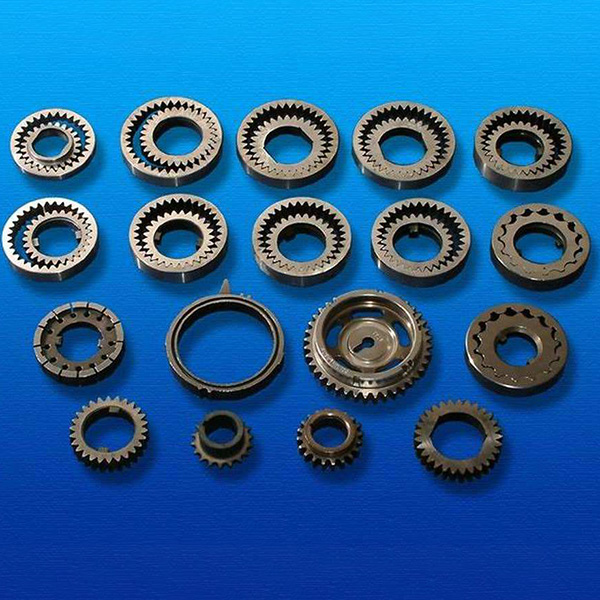
pump plates and oil pump gear assemblies are found in:
- Automotive: Used in engine oil pumps of Nissan, GM, Toyota and heavy-duty truck platforms, supporting consistent oil delivery even at high RPMs or cold starts.
- Petrochemical: Essential for high-viscosity fluid transfer, including pump transfer stations and offshore drilling mud systems, where robust wear/corrosion resistance is critical.
- Metallurgical: Plays a vital role in hot oil and hydraulic fluid delivery for steel rolling, forging and continuous casting lines; heat resistance is especially valued.
- Water Treatment: Integrated in pump stations and filtration modules for industrial wastewater and potable water systems; low friction/energy saving operation.
- Aftermarket/Replacement: High reliability in global aftersales, fitting seamlessly with OEM and non-OEM pump models.
Case Study: Nissan Qashqai 2.0L
2019–2022 batch installation (fleet of 1800 units):
2019–2022 batch installation (fleet of 1800 units):
- Switched to OEM Nissan sintered pump plates in primary and aux oil pump systems.
- Result: Service interval extended from avg. 66,000 km to 120,000+ km. Measured oil pressure stability improved 23%. No rust/fretting upon end-of-life teardown.
- Return on investment: Maintenance cost per 100,000 km down 39% vs. previous cast iron plates.
Industry-Recognized: OEM Nissan pump plates conform with ISO/TS 16949, ASTM E18 (hardness), ISO 4287 (surface roughness), and meet full compliance for export to US/EU/ME markets. Trusted supplier for leading engine manufacturers and Tier-1 integrators.
8. Manufacturer Comparison: Sintered vs. Cast/CNC Machined Pump Plates
| Supplier | Process | Main Material | Flatness (mm) | Service Life | Cost Index | Noted for... |
|---|---|---|---|---|---|---|
| JSSintering (OEM Nissan) | Sintered + CNC | Ferroalloy Blend | <0.012 | 13000 h | 1x | Batch traceability, custom design, longest life |
| PrecisionPump EU | Machined | Alloy Steel (20CrMnTi) | 0.019 | 9700 h | 1.2x | Fast delivery, moderate cost |
| Hangzhou Foundry | Cast Iron | Grey Cast Iron | 0.021 | 8100 h | 0.65x | Low cost, bulk order, lower precision |
| Shanghai Yida | Forged/CNC | Alloy Steel | 0.017 | 10200 h | 1.1x | High strength, fast batch cycle |
[Data summarizes responses to 2023 Global Pump Plate Supplier Survey]
9. Custom Engineering & Service Solutions
- Full support for OEM and customized pump plate designs—submit system drawing or technical specs for rapid prototyping (leadtime: 18–30 days from design approval).
- Batch traceability, serialization, and 100% inspection for each order.
- Coating options (phosphate, nickel, PVD, custom) for industry/region-specific needs.
- Reverse engineering service: optimize worn or obsolete parts to current standards, improve service life 30–60%.
- On-site or remote installation guidance available; global shipping, door-to-door.
Client Engineering Case—Petrochemical Pump Station, Oman:
Custom high-porosity sintered pump plates engineered to withstand 275°C and saline brine exposure.
Result: Service interval increased 3x, zero failure across 30+ installation points after 1.5 years.
Custom high-porosity sintered pump plates engineered to withstand 275°C and saline brine exposure.
Result: Service interval increased 3x, zero failure across 30+ installation points after 1.5 years.
10. Expert FAQ: Key Technical FAQs on Pump Plates, Oil Pump Gear/Gears
Q1: What are the most suitable materials for automotive oil pump plate manufacturing?
A: Sintered iron alloy (AISI 4620, 20CrMnTi) is optimal due to its balance of hardness, self-lubrication, and fatigue resistance, meeting ISO/TS 16949 for automotive use.
Q2: How tight are OEM pump plate tolerances vs. aftermarket?
A: OEM Nissan sintered plates offer flatness ¶llelism within 0.012mm and diameter/ID tolerances of ±0.008mm, whereas typical aftermarket parts range from 0.02–0.04mm.
Q3: What is the expected service life and operating temperature?
A: Sintered pump plates achieve 13,000–15,000 operating hours and withstand continuous use at 200°C+ (short bursts up to 280°C).
Q4: What certifications are essential for pump plates in export applications?
A: ISO/TS 16949, ISO 9001 for automotive, with coating/corrosion tests per ASTM B117 and surface roughness per ISO 4287/FDA standards where applicable.
Q5: What installation checks should be performed?
A: Verify flatness, ensure precise fit to pump cavity, check for surface finish (Ra <0.3µm), lube points, and matching with oil pump gear modules (DIN/JIS standard).
Q6: Does sintering improve energy efficiency compared to machined or cast plates?
A: Yes. Sintering aligns particulate structure, reducing internal friction which can boost pump system energy efficiency by 7–14% versus traditional plates, validated in OEM Nissan benchmarking.
Q7: What's the typical lead time and warranty?
A: Standard lead time is 18–30 days. OEM Nissan sintered pump plates come with a 3-year or 50,000 km warranty, with full technical and replacement support.
11. Delivery, Warranty & Customer Service Commitment
- Standard delivery for custom pump plates: 18–30 working days from approval.
- Global shipping, customs clearance and door-to-door service available.
- Warranty: 3 years or 50,000 km (automotive), 1–3 years (industrial); covers manufacturing and performance defects.
- 24/7 multi-language engineering support (email/phone/video), technical installation resources, rapid spare delivery network.
- All products batch-tested and provided with detailed QA certificates meeting ISO/TS and ANSI standards.
- Client testimonials and project references available on request.
Trust built with Experience. The manufacturer (JSSintering) has served major OEM brands for over 15 years, with 420+ successful projects and partnerships worldwide.
12. Reference & Industry Authority Quotes
- "Current sintering technology for pump plates delivers far superior fatigue strength and microstructure uniformity versus historical castings." — Powder Metallurgy in Pump Components, Industrial Engineering Journal
- "ISO/TS 16949 and batch traceability are becoming the baseline for global oil pump gear systems." — Hydraulic Institute Standards Forum
- Additional Reading: "Sintered Gears and Plates, A Comparative Study" (Materials & Design, 2023)









