







OEM Sintered Structural Parts: Practical Notes from the Shop Floor
If you work in drivetrains, small mechanisms, or compact actuators, chances are you’ve handled a sintered structural part without even noticing. To be honest, that’s the point—quietly delivering strength, precision, and cost control. Lately, demand is climbing in EVs, power tools, and smart home gear. Why? Near‑net shape, minimal scrap, and stable repeatability. And yes, sustainability is having its say too.
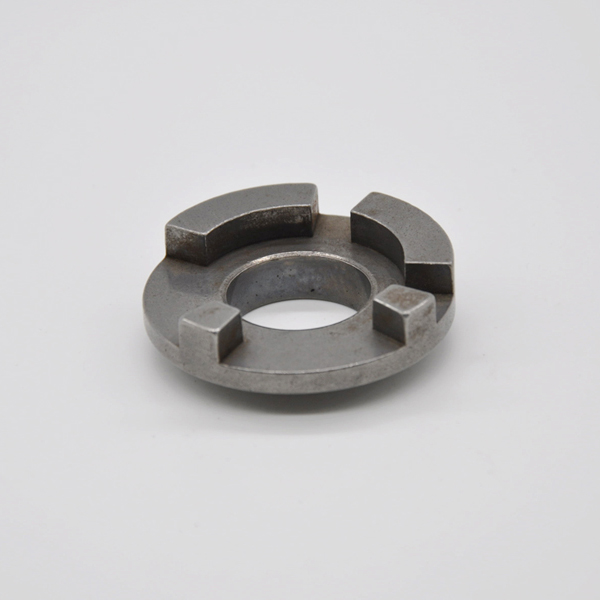
What’s trending right now
- EV platforms and E‑bike drives are shifting small gears and carriers to sintered structural part formats for weight and cost.
- Designers are consolidating multi‑piece housings into single PM bodies—fewer SKUs, fewer fixtures.
- Greener math: powder metallurgy often yields lower material waste than CNC or casting.
Product snapshot (real-world spec window)
Source: TIANSHAN INTERNATIONAL MANUFACTURING INDUSTRY PARK NO.57, YUANSHI, SHIJIAZHUANG CITY, HEBEI PROVINCE, CHINA.
| Materials | Iron & iron‑alloy powders, Stainless steel, Copper/bronze, Alloy steel |
| Density | ≈6.0–7.9 g/cm³ (post‑sizing/steam treatment may shift slightly) |
| Hardness | HRA 30–80 (ASTM E18, Rockwell A; actual depends on alloy + quench) |
| Accuracy | ±0.01 mm on key features after sizing/coin; holes and bores per MPIF 35 |
| Finishes | High‑frequency quenching, oil impregnation, tumbling, plating, steam treating |
| Standards | DIN, JIS, ASTM, GB; design/material grades per MPIF Standard 35 and ISO 5755 |
Process flow (how the sausage is made)
- Powder selection: alloyed Fe, SS, or Cu/Fe mixes; lube blended (ASTM B243 terminology).
- Compaction: rigid die press; green strength checked; critical edges protected to avoid burrs.
- Sintering: controlled atmosphere belt furnace; temp/time tuned for density and microstructure.
- Secondary ops: sizing/coin, infiltration, machining where needed, steam treatment, quench.
- Testing: density (ASTM B962), hardness (ASTM E18), TRS (ASTM B528), dimensional audit (CMM).
- Service life: many power‑transmission parts run 300k–1M cycles in bench tests—application dependent.
Where they shine
- Automotive: seat adjusters, VVT components, pump gears.
- Industrial: gearbox carriers, sprockets, locking pawls.
- Consumer/power tools: hammer mechanisms, hubs, pulleys.
- Smart devices: compact actuators needing quiet torque from a sintered structural part.
Vendor snapshot (informal comparison)
| Vendor | Typical Strength/Density | Lead Time | Notes |
|---|---|---|---|
| JS Sintering (Hebei) | TRS ≈ 350–800 MPa, 6.8–7.6 g/cm³ | Tooling 3–5 wks; SOP 2–3 wks | Strong PM focus; automotive workflows; cost‑efficient at volume |
| Generic CNC shop | Solid wrought properties | Fast for protos | High material waste; great for low‑qty iterations |
| MIM supplier | High density, fine detail | Longer for tooling | Best for tiny, intricate shapes; cost rises with size |
| Investment casting | Cast‑level strength | Moderate | Good for complex cavities; finish machining likely |
Customization and real projects
- Design for PM: add generous radii, keep uniform wall sections, use flats over deep slots—your sintered structural part will thank you.
- Case: automotive seat‑adjuster pawl—moved from stamping + heat treat to PM + steam treat, cutting unit cost ≈18% and noise by ~2 dB.
- Case: power‑tool gear—oil‑impregnated PM gear hit 750k load cycles; customer noted “zero visible pitting” in teardown.
Quality, testing, and certifications
Common frameworks include ISO 9001 and IATF 16949; materials cross‑referenced to MPIF Standard 35 and ISO 5755. Typical lot data shows density 7.25±0.05 g/cm³ (ASTM B962), hardness HRA 62±2 (ASTM E18), and TRS 620±30 MPa (ASTM B528). For traceability, Cpk≥1.33 is the common target on critical bores of a sintered structural part.
If you’re weighing PM vs CNC or MIM, honestly, let volume, feature complexity, and mechanical targets drive the call. When the geometry fits, PM is a quiet cost killer.
References
- MPIF Standard 35: Materials Standards for PM Structural Parts.
- ASTM B962: Standard Test Methods for Density of Compacted or Sintered PM Materials using Archimedes.
- ASTM E18: Standard Test Methods for Rockwell Hardness.
- ASTM B528: Transverse Rupture Strength of PM Materials.
- ISO 5755: Sintered metal materials — Specifications; IATF 16949 & ISO 9001 for QMS.









