







- Understanding powder metal manufacturing fundamentals
- Technical advantages over traditional metal fabrication
- Comparative analysis of leading global manufacturers
- Customization capabilities for complex applications
- Implementation scenarios across major industries
- Emerging innovations in sintering technology
- Strategic selection criteria for optimal performance

(powder metal components)
The Engineered Excellence of Powder Metal Components
Powder metallurgy transforms specialized metal powders into precision components through compaction and sintering processes. This manufacturing approach enables production of sintered metal components with complex geometries that would be cost-prohibitive or technically impossible with conventional machining. Leading manufacturers typically maintain dimensional tolerances within ±0.1% across production batches, with density control between 85-99% of theoretical values depending on application requirements.
Contemporary powdered metal components serve as critical elements in sectors demanding strict performance specifications and material consistency. The automotive sector alone consumes approximately 3.2 billion powdered metal parts annually according to Metal Powder Industries Federation reports, underscoring the method's industrial significance. Production rates for standard components can reach 1,000 parts per minute on high-capacity presses, with new binder jetting technologies accelerating prototyping cycles by 60-75% compared to traditional methods.
Technical Superiority Over Conventional Manufacturing
Powder metal fabrication delivers distinctive advantages impossible to replicate through subtractive methods. The inherent porosity management allows for self-lubricating properties in bronze and iron compositions, extending service life in rotating assemblies by 40-65% compared to machined alternatives. Material utilization reaches 97% efficiency versus 50-60% with CNC machining, significantly reducing waste streams and energy consumption per component.
Metallurgical properties are enhanced through controlled porosity structures that absorb vibrations more effectively than solid metals. Testing confirms fatigue strength improvements of 25-40% in automotive connecting rods and transmission components manufactured via powder metallurgy. Special alloy combinations—including copper-infiltrated steels and unique magnetic composites—exhibit permeability characteristics impossible to achieve through conventional casting techniques.
Manufacturer Capability Comparison
| Producer | Max Part Size (mm) | Density Range (g/cm³) | Tolerance Standards | Secondary Operations |
|---|---|---|---|---|
| GKN Sinter Metals | 250 × 150 | 6.8 - 7.4 | ISO 2768-f | Machining, coating, assembly |
| Sumitomo Electric | 300 × 200 | 7.0 - 7.6 | JIS B 0405 | Heat treatment, impregnation |
| Höganäs AB | 220 × 180 | 6.6 - 7.8 | ISO 286-2 | Grinding, plating |
| Federal-Mogul | 270 × 150 | 7.1 - 7.4 | ASME Y14.5 | Deburring, surface finishing |
Industry leaders demonstrate distinctive specialization patterns, with Japanese manufacturers typically leading in precision small components below 50 grams, while European suppliers specialize in complex structural parts exceeding 500 grams. Annual production volumes range between 250 million to 1 billion parts among major suppliers, with quality metrics showing scrap rates typically below 0.05% on validated production lines.
Customization Solutions for Specialized Applications
Advanced compacting presses enable single-operation production of multi-level powdered metal components with axial variations up to 8:1—significantly reducing secondary processing costs compared to cast alternatives. Modern tooling systems accommodate undercuts, reverse angles, and cross-drilled features directly during compaction, eliminating up to 83% of subsequent machining operations according to production case studies.
Material scientists develop application-specific formulations including copper-free alternatives for electrical applications and novel diffusion-alloyed steels achieving 200,000 psi tensile strength. Surface densification processes create localized hardness zones exceeding 65 HRC on gear teeth while maintaining ductile cores—optimizing performance in power transmission assemblies requiring both surface durability and impact resistance.
Industry-Specific Implementation Scenarios
Aerospace suppliers increasingly specify powder metal components
for hydraulic systems due to their consistent performance across temperature extremes from -65°C to +480°C. Valve bodies produced using hot isostatic pressing demonstrate pressure ratings exceeding 6,500 psi—35% higher than traditional cast equivalents with significantly improved fatigue characteristics under cyclic loading conditions.
Medical technology manufacturers leverage powder metallurgy for surgical tool components requiring complex contours for ergonomic handling. Cobalt-chrome alloys processed through metal injection molding enable features as fine as 0.15mm wall thickness with biocompatible surface finishes meeting ASTM F75 standards. Automated optical sorting systems ensure defect detection resolution of 15 microns for quality-critical applications.
Technological Frontiers in Powder Metallurgy
Emerging field-assisted sintering techniques like Spark Plasma Sintering achieve production cycles approximately 75% faster than conventional sintering—enabling nano-structured materials with grain sizes below 100nm. Researchers report these advanced powder metal components demonstrate 40% higher hardness and superior high-temperature stability compared to traditionally processed equivalents when testing cutting tools at machining centers.
Industry 4.0 integration brings real-time monitoring with networked sensors providing density verification during compaction at 300 millisecond intervals. Machine learning algorithms predict tool wear with 92% accuracy by analyzing pressure curves and vibration signatures—preemptively adjusting process parameters to maintain dimensional stability without interrupting production cycles.
Implementing Optimal Sintered Metal Solutions
Selecting powder metal components requires comprehensive evaluation of functional requirements and production economics. While initial tooling costs typically range between $15,000-$80,000, per-part savings accelerate ROI beyond 25,000 units annually in many transmission component applications. Design engineers should leverage the material consolidation capabilities of powdered metal processes to integrate multiple features into unified components—reducing assemblies by 2-5 discrete parts across pneumatic and hydraulic systems.
Manufacturing partners conduct Design for Manufacturability analyses using sophisticated simulation software predicting dimensional changes throughout sintering cycles. These digital models typically optimize component geometry with 98.7% accuracy before tooling production—ensuring first-article success rates above 94%. Strategic evaluation of powder specifications, compaction methods, and secondary processes yields sintered metal components precisely meeting operational requirements without compromising cost efficiency.
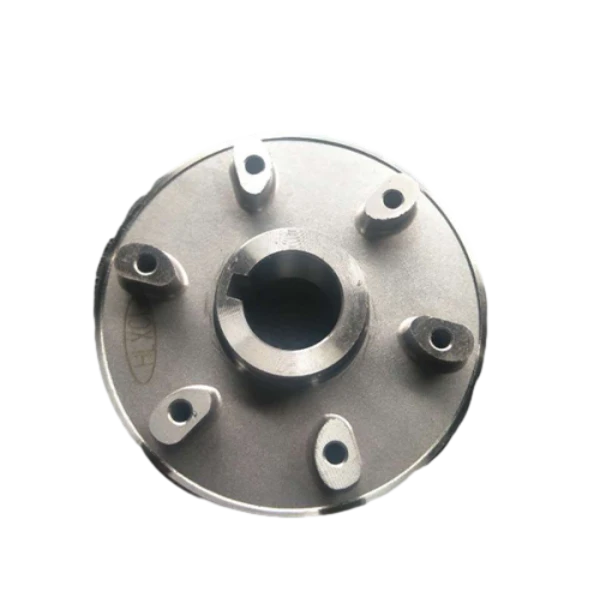
(powder metal components)
FAQS on powder metal components
Q: What industries use powder metal components?
A: Powder metal components serve automotive, aerospace, medical devices, industrial machinery, and consumer electronics. These industries value their consistent quality and material efficiency for high-volume production.
Q: Why choose powdered metal components over castings?
A: Powdered metal components offer superior dimensional accuracy, minimal material waste, and complex geometries unattainable with casting. Their sintered density also enhances mechanical properties like strength and wear resistance.
Q: How are sintered metal components manufactured?
A: Sintered metal components are formed by compacting metal powder in dies under high pressure, then heating ("sintering") below melting point to bond particles. This process yields near-net-shape parts with controlled porosity and material properties.
Q: What materials can powder metal components utilize?
A: Common materials include iron, steel, stainless steel, copper, aluminum, and exotic alloys. Material blends can be customized to achieve specific traits like magnetism, corrosion resistance, or high-temperature performance.
Q: How do powder metal components reduce costs?
A: The near-net-shape production minimizes machining and material waste. High-volume manufacturing with minimal energy use further lowers costs while maintaining consistent part quality across large batches.









