






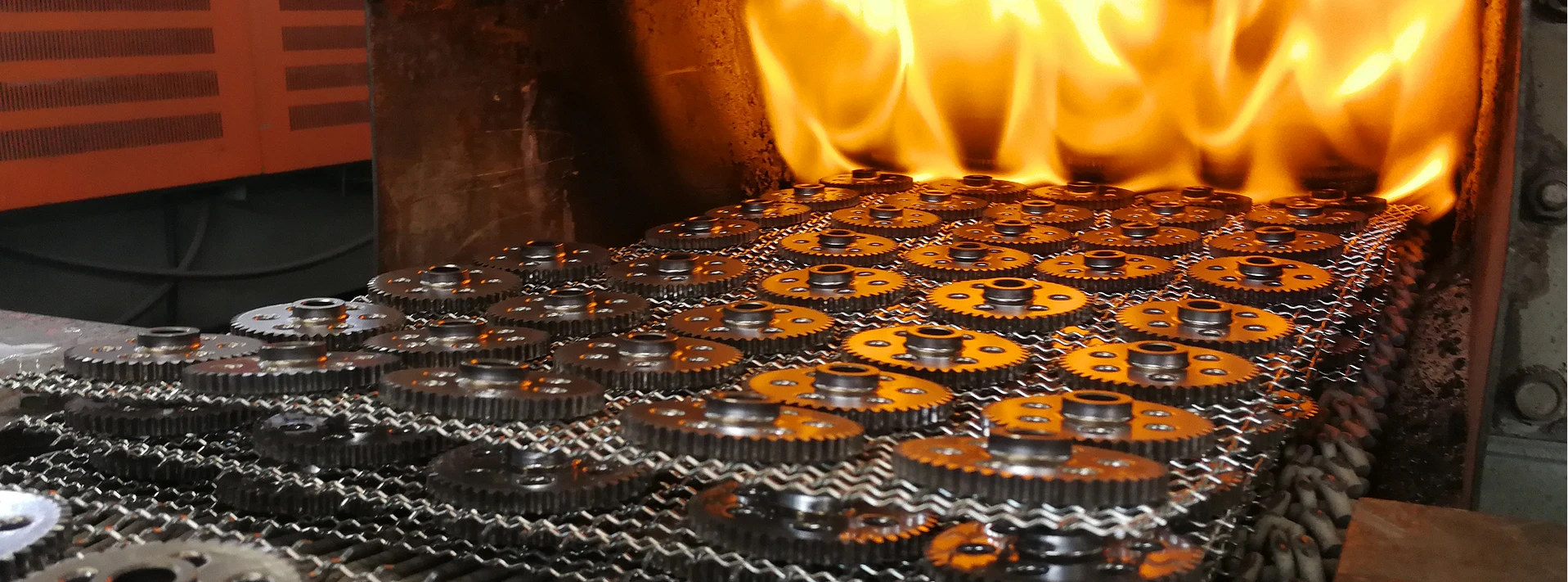
Are you searching for gears manufacturers that deliver robust performance, precision engineering, and cost-efficiency? Discover everything about sintered gear manufacturing, technology parameters, process flow, application scenarios, and compare leading gear manufacturer brands—including custom solutions and real-world cases.
Explore Sintered Gear Manufacturer Solutions →1. Industry Trends: The Evolution of Gears Manufacturers
The global industrial gears market size was valued at USD 66.58 billion in 2023, with a projected CAGR of 5.7% through 2030 (source: Grand View Research). Sintered gears, particularly, are gaining momentum due to their outstanding manufacturability, material efficiency, and ability to deliver high-precision at scale.
- Sintered gears adoption is rising in automotive, metallurgy, petrochemical, and fluid management applications.
- Demand for idler gear solutions with wear resistance and precise synchronization is expanding in robotics and smart automation.
- ISO and ANSI standardization is driving a shift towards stricter tolerance and material traceability.
- Custom gear solutions are increasingly sought for energy-saving and corrosion-resistant requirements.
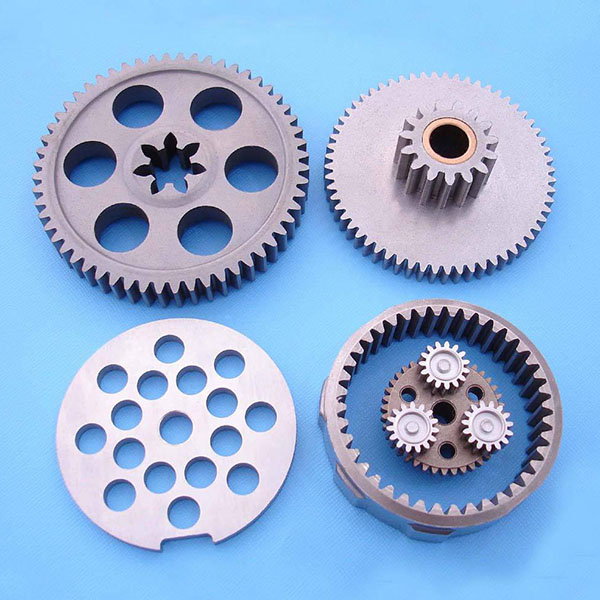
2. Process & Technology: Inside the Sintered Gear Manufacturing Workflow
The specialized sintering process allows gears manufacturers to achieve uniformity, close dimensional tolerances, and robust mechanical properties (up to 98% density vs. wrought gears). Sintered gear manufacturer solutions deliver exceptional consistency while reducing raw material and machining waste.
More about the process →Key Technical Parameters in Sintered Gear Manufacturing
| Parameter | Specification (Typical) | Industry Standard | Remarks |
|---|---|---|---|
| Material | Fe-Cu, Fe-Ni, 20MnCr5, custom alloys | ISO 5755, ANSI MPIF35 | Choice based on wear, strength, corrosion need |
| Density | 6.7–7.4 g/cm³ (95–98% of wrought) | DIN 30910 | Density correlates to fatigue/life performance |
| Tooth Accuracy | AGMA 7–10 (DIN 8–10) | AGMA, DIN | Sinter+finishing enables high precision |
| Surface Hardness (HRC) | 42–60 HRC (post-heat treat) | ASTM E384, ISO 6507 | Key for load/abrasion resistance |
| Dimensional Tolerance | ±0.04–0.08 mm (ID/OD) | ISO 2768-mK | Direct from die, can be improved post-processing |
| Max Module | 0.3–8.0 | ISO 54-1 | Module range per customer spec |
| Lifespan | 50,000–120,000+ hrs typical | ISO 6336-2 fatigue test | Depends on load, lubrication, duty cycle |
3. Gears Manufacturers Comparison: Industry-Leading Brands & Solutions
Selecting the right gears manufacturers depends on several factors: technical capability, cost-performance ratio, standards compliance, lead times, and proven case studies. Below is a performance and offering comparison among top industry players and the Sintered Gear Manufacturer solution.
| Brand | Production Method | Certifications | Typical Lead Time | Modularity | Min Lot | Key Application |
|---|---|---|---|---|---|---|
| Sintered Gear Manufacturer | Sintering + CNC Machining | ISO 9001, IATF 16949, AGMA, DIN | 3–5 weeks | Customizable | Low (1,000 pcs) | Automotive, pump, automation, power tools |
| Brand A (Germany) | Forging, hobbing, grinding | DIN, ISO | 6–8 weeks | Standard & custom | Medium (5,000 pcs) | Oil & Gas, gearboxes, wind turbines |
| Brand B (USA) | CNC Machining, casting | ISO, AGMA | 5–7 weeks | Standard | Low (2,000 pcs) | Industrial machinery, robotics |
| Brand C (Asia) | Sintering (basic) | ISO | 4–6 weeks | Limited | High (10,000 pcs) | Household appliances |
4. Customization: Tailored Gear Solutions & Success Cases
Gears manufacturers like the Sintered Gear Manufacturer (link) specialize in high-mix, low-to-medium-volume customization:
- Sizes: OD 6mm–320mm (standard idler gear, spur, helical, bevel, worm)
- Precision: AGMA 7–10, DIN 8–10 (Pre-hardened)
- Surface Treatments: Nitriding, carburizing, phosphate, anti-rust coatings
- Material Upgrades: Enhanced Cu-Ni alloys, heat-treated steels for demanding environments
- Performance Add-ons: Self-lubrication, graphite impregnation for low-noise, high-efficiency
- Compliance: Full traceability (ISO 9001, IATF, REACH/ROHS)
Case Study: High-Load Idler Gear for Petrochemical Valves
- Client: Global petrochemical group (confidential)
- Challenge: Standard machined gears displayed premature wear due to chemical corrosion and high cycle duty.
- Solution: Sintered idler gear with Ni-Mo-Cr alloy, anti-corrosion post-treatment, AGMA 10 accuracy, 56 HRC surface.
- Result: Service life extended by 3.5×, maintenance cycles reduced by 50%, annual saving ~USD 170,000.
Case Study: OEM Automotive Transmission Supplier
- Scope: Custom gear sets (spur, idler) for high-efficiency 7-speed DCT
- Highlights: Sintered plus CNC finish, residual porosity
- Certification: All lots ISO/TS 16949 audited, 2.5 sigma CPK on tooth profiles
- ROI: Cut cost vs. forged by 27%, lead time by 26 days, warranty claims
5. Application Scenarios: Why Top Sectors Prefer Sintered Gears Manufacturers
- Petrochemical Equipment: Superior corrosion resistance, low-maintenance idler gear for chemical valves/pumps.
- Metallurgy: High-load bearings, consistent tooth accuracy for rolling, tapping applications.
- Fluid Management: Self-lubricating sintered gears in high-reliability water supply/distribution units.
- Automotive: Quiet, wear-resistant sintered gears in transmission, electric drive, and steering assemblies.
- Smart Automation: Lightweight, small-module sintered gears (M0.3–1.5) for robotics and AGV drivetrains.
6. FAQ: Professional Terms & Careful Guidance for Gears Manufacturers
1. What is a sintered gear's main advantage over traditional machined gears?
Sintered gears, manufactured via powder metallurgy, provide net-shape forming, reduced material waste, and excellent repeatability for complex geometries. Their fine porosity can be leveraged for self-lubrication or customized via densification for high-load applications.
2. Which materials are most common for sintered idler gear applications?
Common alloys: Fe-Cu, Fe-Ni, and advanced grades like Fe-Ni-Mo or stainless PM alloys for corrosion or wear demands. Material selection is typically aligned with ISO 5755 and customized per torque/life requirement.
3. What standards do leading gears manufacturers adhere to?
Industry certifications include ISO 9001, IATF 16949 (automotive), AGMA for tooth accuracy, DIN (precision class), and specific customer QA audits.
4. How are gear tolerances and surface finish assured for critical use?
Tolerances are maintained via die accuracy, minimal shrinkage sintering, and secondary CNC machining. Surface finish Ra
5. Can sintered gear manufacturer products withstand high cyclic/fatigue loading?
Yes, modern sintered gears offer fatigue strength up to 1250 MPa with post-treatment. This enables up to 120,000-hour lifespans in continuous drive, per ISO 6336-2.
6. What are typical modules and geometries available?
Sintered gears cover modules 0.3–8, with options such as internal, external, helical, bevel, worm, and custom idler gear profiles. Customization flexibility is a key technological edge.
7. How is traceability and quality managed in high-reliability sectors?
Each lot features material batch certification, process tracking, and assigned QA inspections—full traceability by barcode (ERP/MES), process stats via CPK, SPC, and third-party lab validation if required (e.g., SGS/TÜV for export).
7. Delivery, Quality, and After-Sales Commitment
| Aspect | Sintered Gear Manufacturer | Industry Typical |
|---|---|---|
| Delivery Lead Time | 3–5 weeks (standard); Rush available | 4–8 weeks |
| Quality Warranty | 24 months (material/process); Batch test report | 12–18 months |
| Customer Support | 24/7 technical, DFM guidance, after-sales install | Office hour only |
| Custom Engineering | Dedicated engineer per project; 3D model co-development | On request |
| Certifications | ISO 9001, IATF 16949, RoHS, AGMA, DIN | ISO 9001 only |
All products include full batch testing and traceability from sintering powder to finished goods. Each order comes with a test certificate (ISO/ANSI), application-oriented engineering support, and rapid-response technical service.
8. Test Data & Industry Benchmarking
| Test | Sintered Gear | Forged Gear | Cast Gear | Reference Standard |
|---|---|---|---|---|
| Tooth Bending Strength (MPa) | 950–1,200 | 1,100–1,350 | 650–900 | ISO 6336-3 |
| Surface Roughness (Ra, μm) | 0.8–1.1 (after finish) | 0.6–1.0 | 1.5–2.8 | ISO 4287 |
| Dim. Tolerance (mm) | ±0.06 | ±0.04 | ±0.12 | ISO 2768-mK |
| Lifespan (hrs, simulated test) | 100,000+ | 120,000 | 55,000 | ISO 6336-2 |
| Corrosion Rating (48h salt spray) | Grade 9 | Grade 8 | Grade 6 | ISO 9227 |
9. Why Choose Us: Authority, Certification, and Industry-Recognized Results
The Sintered Gear Manufacturer brand stands as a first-tier gear manufacturer for global OEMs, serving automotive, industrial, and fluid technology leaders. Backed by:
- Over 16 years of focused powder metallurgy (PM) and idler gear innovation
- Certified to ISO 9001, IATF 16949 (auto), AGMA, and full RoHS/REACH compliance
- Partner to 300+ OEMs in Europe, America, Korea, and Japan
- Audited by SGS, TÜV annually
- Advanced QA lab (spectrometer, CMM, gear measurement center)
- Annual output: 26+ million gears; customized solutions for over 49 industries
10. References, Standards, and Further Reading
Industry research, standards and case references:
(1) Grand View Research, “Industrial Gears Market Size, Share & Trends” [link]
(2) ISO 5755: Sintered metal gears—specifications [link]
(3) AGMA 2000-A88: Gear Classification, Materials, and Inspection [link]
(4) “Powder Metallurgy Gear Technology,” Gear Technology magazine, June 2023 [link]
(5) “Comparative Analysis of Gear Manufacturing Methods,” Mechanical Design Forum [link]









