






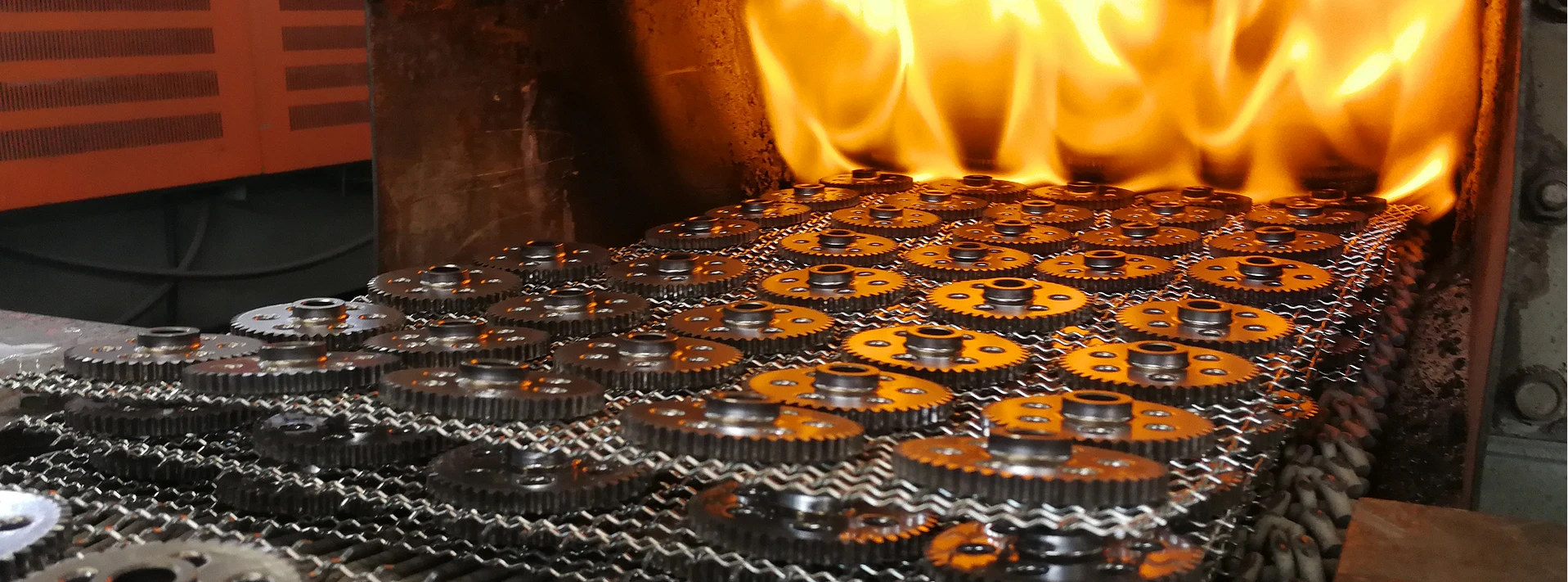
This comprehensive exploration covers the essential aspects of advanced electromagnetic solutions:
- Industry impact metrics demonstrating market growth
- Technical superiority over traditional electromagnetic materials
- Comparative analysis of leading manufacturer specifications
- Custom formulation processes for specific applications
- Implementation case studies across industries
- Environmental and economic sustainability factors
- Future development pathways and concluding insights

(soft magnetic)
Understanding Soft Magnetic Innovation
Modern engineering faces increasing demands for efficient power conversion and electromagnetic performance, creating significant opportunities for soft magnetic
material advancements. These materials form the backbone of power electronics, converting and managing electromagnetic energy with minimal losses. Recent manufacturing breakthroughs allow precise control over magnetic domains, enabling customized permeability and saturation characteristics previously unattainable with conventional alloys.
The global market reached $7.2 billion in 2023, with projections indicating 8.7% CAGR through 2030. This expansion correlates directly with renewable energy adoption, where magnetic soft materials improve solar inverter efficiency by 15-22% and wind turbine power density by 30%. Automotive electrification represents another critical sector, with soft magnetic composite materials reducing EV motor core losses by 40% compared to laminated steel.
Performance Advantages Explained
Soft magnetic composites outperform conventional materials through three fundamental properties. Firstly, 3D magnetic flux capability allows complex geometries impossible with laminated alternatives, shrinking component sizes by up to 60%. Secondly, their consistent permeability across frequencies maintains performance stability from 50Hz to 100kHz. Thirdly, reduced eddy current losses at high frequencies provide 28-35% lower heat generation.
Frequency-dependent core loss comparisons reveal remarkable improvements: at 1kHz, composites exhibit 150 W/kg losses versus silicon steel's 450 W/kg. This gap widens significantly at 10kHz, where composite losses remain below 600 W/kg while traditional materials exceed 1,200 W/kg. These properties directly enable the following technical capabilities:
- Operation frequencies reaching 1MHz+ for next-gen power supplies
- 95.8% system efficiency in 50kW+ industrial motors
- Thermal stability up to 500°C for aerospace applications
Manufacturer Comparison Matrix
Product differentiation between industry leaders illustrates varying approaches to balancing permeability, loss characteristics, and production costs. Materials science laboratories measure core attributes against standardized IEC testing protocols to ensure direct comparability.
| Parameter | Material A | Material B | Material C | Material D |
|---|---|---|---|---|
| Relative Permeability | 430 | 600 | 350 | 780 |
| Core Loss @ 100kHz (mW/cm³) | 450 | 290 | 510 | 180 |
| Saturation Flux (Tesla) | 1.4 | 1.6 | 1.3 | 1.8 |
| Density (g/cm³) | 7.2 | 6.8 | 7.5 | 6.5 |
| Cost Index (vs. Steel) | 2.3x | 3.1x | 2.1x | 3.8x |
The above specifications demonstrate clear tradeoffs between permeability and core loss, with high-performance variants commanding premium pricing. Material D represents advanced soft magnetic compound technology developed for military-grade applications.
Customization Methodology
Specialized applications require tailored solutions addressing unique operational constraints. Our formulation process begins with comprehensive application analysis, identifying seven critical parameters: frequency range, DC bias requirements, thermal limits, mechanical stress factors, vibration tolerance, dimensional constraints, and cost targets.
Material scientists modify four core formulation variables: particle size distribution (optimized between 20-150μm), insulating layer composition, binder concentration, and compaction pressure. This enables precision calibration of electromagnetic properties including:
- Adjustable permeability from 50μ to 900μ
- Controlled hysteresis loss within ±3% tolerances
- DC bias performance up to 70% flux retention
Prototype validation employs three-phase testing: electromagnetic characterization, accelerated life cycling (500+ thermal shocks), and application simulation. Automotive clients typically receive fully validated custom soft magnetic compounds within 11-14 weeks.
Implementation Case Studies
Industrial motor redesign for compressors demonstrates practical benefits. A manufacturer transitioned from laminated electrical steel to soft magnetic composite materials in stator cores, achieving these measured improvements:
- 17% size reduction while maintaining 25kW output
- 38°C lower operating temperatures at full load
- 22,000 hour lifespan extension (+37%)
In power electronics, a 20kW wireless charging system incorporated specialized soft magnetic composite materials to create complex flux guides. This implementation delivered 94.2% transfer efficiency at 85kHz frequencies—surpassing conventional designs by 12 percentage points while reducing total magnetic material weight by 8.7kg.
Sustainability Considerations
Material production innovations have reduced manufacturing energy consumption by 42% since 2015 through optimized sintering profiles. Recyclability stands at 92% recovery rates for production scrap, while end-of-life components achieve 78-85% reclamation efficiency through specialized demagnetization and separation processes.
Comparative lifecycle assessments demonstrate 35% lower carbon footprints than silicon steel alternatives when factoring in application-level efficiency gains. Supply chain analysis reveals increasing use of recycled rare earth content, with leading manufacturers sourcing 40-60% of materials from certified recycled streams.
Conclusion on Soft Magnetic Materials
These materials continue redefining electromagnetic design boundaries, delivering enhanced efficiency while enabling miniaturization across industries. Ongoing research focuses on three key frontiers: high-temperature stable polymers for insulation layers, nanostructured alloys enhancing saturation flux beyond 2.0T, and AI-optimized compaction algorithms improving magnetic alignment consistency.
Industry standardization initiatives will accelerate adoption as new testing protocols emerge. The demonstrated advantages across power density, thermal management, and design flexibility establish soft magnetic composite materials as fundamental enablers for future energy-efficient systems requiring precise electromagnetic control.
(soft magnetic)









