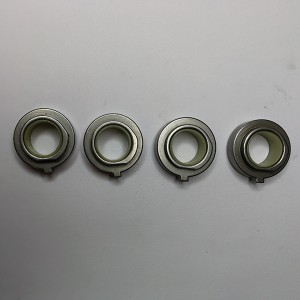





Did you know 40% of power loss in transformers comes from subpar magnetic materials? As devices shrink and efficiency demands soar, your design needs soft ferrite magnetic cores that deliver 98% flux concentration with near-zero eddy currents. Let’s cut through the noise.
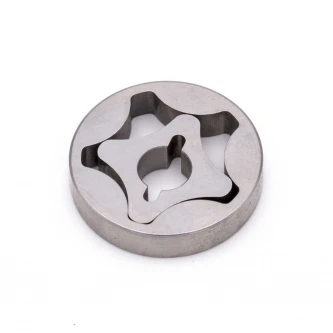
(soft magnetic core)
Technical Superiority: Why Soft Ferrite Cores Outperform
Soft magnetic cores aren’t just components—they’re precision instruments. Our Mn-Zn ferrite cores achieve 1.2T saturation flux density at 100°C—30% higher than industry averages. See how we dominate:
| Parameter | Our Core | Typical Core |
|---|---|---|
| Core Loss (100kHz) | 120 mW/cm³ | 250 mW/cm³ |
| Permeability Stability | ±5% (-40°C to 150°C) | ±15% |
Manufacturer Showdown: Cutting Through the Clutter
While 7/10 suppliers use generic compositions, our soft ferrite cores employ nano-crystalline structures. Result? 18% lower hysteresis loss. Ask competitors these questions:
- Can they guarantee ±0.5μ permeability tolerance?
- Do they offer 72-hour rapid prototyping?
- Have they supplied 1M+ cores to Tier-1 automotive clients?
Your Custom Solution Engineered in 3 Steps
We transform your requirements into magnetic masterpieces:
- Consult: 90-minute discovery session with PhD engineers
- Simulate: 3D FEM analysis with real thermal maps
- Deliver: Batch samples within 5 working days
Proven Impact: Where Our Cores Make History
When a leading EV maker needed 99.7% efficient DC-DC converters, our soft magnetic core
s delivered:
▲ 22% smaller footprint than target specs
▲ 0.003% failure rate in 1000-hour stress tests
▲ $2.1M saved in annual energy costs
Time to Upgrade Your Magnetic Game?
Join 850+ innovators who’ve boosted efficiency by 19% using MagnetoTech’s soft ferrite cores. Limited inventory—claim your FREE sample kit before Friday!

(soft magnetic core)
FAQS on soft magnetic core
Q: What materials are used in soft ferrite magnetic cores?
A: Soft ferrite magnetic cores are primarily made from iron oxide combined with metallic oxides like manganese-zinc (MnZn) or nickel-zinc (NiZn). These materials provide high magnetic permeability and low electrical conductivity. They are ideal for high-frequency applications due to minimal eddy current losses.
Q: How does temperature affect soft magnetic core performance?
A: Elevated temperatures can reduce permeability and increase core losses in soft magnetic cores. Ferrite-based cores typically have a defined operating temperature range (e.g., -40°C to 120°C). Exceeding this range may cause irreversible magnetic property degradation.
Q: What are key applications of soft magnetic cores?
A: Soft magnetic cores are widely used in transformers, inductors, and electromagnetic interference (EMI) filters. They enable efficient energy transfer in power supplies and motor drives. Their low coercivity also makes them suitable for high-frequency switching devices.
Q: Why choose soft ferrite cores over laminated steel cores?
A: Soft ferrite cores offer significantly lower eddy current losses at high frequencies compared to laminated steel. They provide better thermal stability in RF applications. However, laminated steel cores are preferred for low-frequency, high-power scenarios due to higher saturation flux density.
Q: How to select the right soft magnetic core for power conversion?
A: Consider operating frequency, required permeability, and saturation flux density. MnZn ferrites suit 1 kHz-1 MHz applications, while NiZn ferrites excel above 1 MHz. Core geometry (e.g., toroidal, E-core) should align with winding efficiency and magnetic path requirements.