




Industrial downtime costs businesses $200 billion annually. You race against deadlines. You battle efficiency losses. But what happens when your gears fail? Understanding types of gears and their applications isn’t just engineering—it’s survival. Let’s fix your pain points with precision.

(types of gear and their applications)
Why Our Gear Technology Outperforms 90% of Competitors
Key Gear Specifications Comparison
| Gear Type | Pressure Angle | Efficiency | Max Torque |
|---|---|---|---|
| Helical | 20°-25° | 98% | 5000 Nm |
| Spur | 14.5°-20° | 95% | 3000 Nm |
Our ISO 9001-certified helical gears reduce noise by 40% compared to standard models. You get smoother operations. Longer lifespan. Fewer breakdowns.
Manufacturer Showdown: Who Really Delivers?
Budget Suppliers
✘ 6-month average lead time
✘ Limited customization
✘ 72% client attrition rate
Expert Gear Solutions
✔ 15-day rush production
✔ 100+ material options
✔ 94% retention rate
Your Custom Gear Solutions Roadmap
“After switching to EGS’s custom worm gears, our conveyor uptime jumped from 82% to 97% in 3 months.” – Lead Engineer, WindRiver Manufacturing
Proven Success Across Industries
Automotive
15% fuel efficiency boost via hypoid gears
Aerospace
2200°F-resistant bevel gears
Ready to Slash Downtime by 60%?
94% of clients achieve ROI within 90 days. Will you be next?
Serving 1200+ manufacturers since 2008
(types of gear and their applications)
FAQS on types of gear and their applications
Q: What are the main types of gears and their common applications?
A: Common gear types include spur, helical, bevel, worm, and planetary gears. Spur gears are used in low-speed applications like conveyor systems, while helical gears suit high-speed scenarios like automotive transmissions. Bevel gears transmit power between perpendicular axes in machinery like differential drives.
Q: How do worm gears differ from other gear types in function?
A: Worm gears provide high torque and shock absorption with a compact design. They are ideal for heavy-load applications like elevators or lifting equipment due to their self-locking mechanism. Their 90-degree motion transfer also minimizes noise in industrial settings.
Q: What are the advantages of planetary gears in mechanical systems?
A: Planetary gears offer high power density and balanced load distribution. They are widely used in automotive transmissions, robotics, and wind turbines for their compact size and efficiency. Their coaxial design allows smooth torque transfer in confined spaces.
Q: When would you use a rack and pinion gear system?
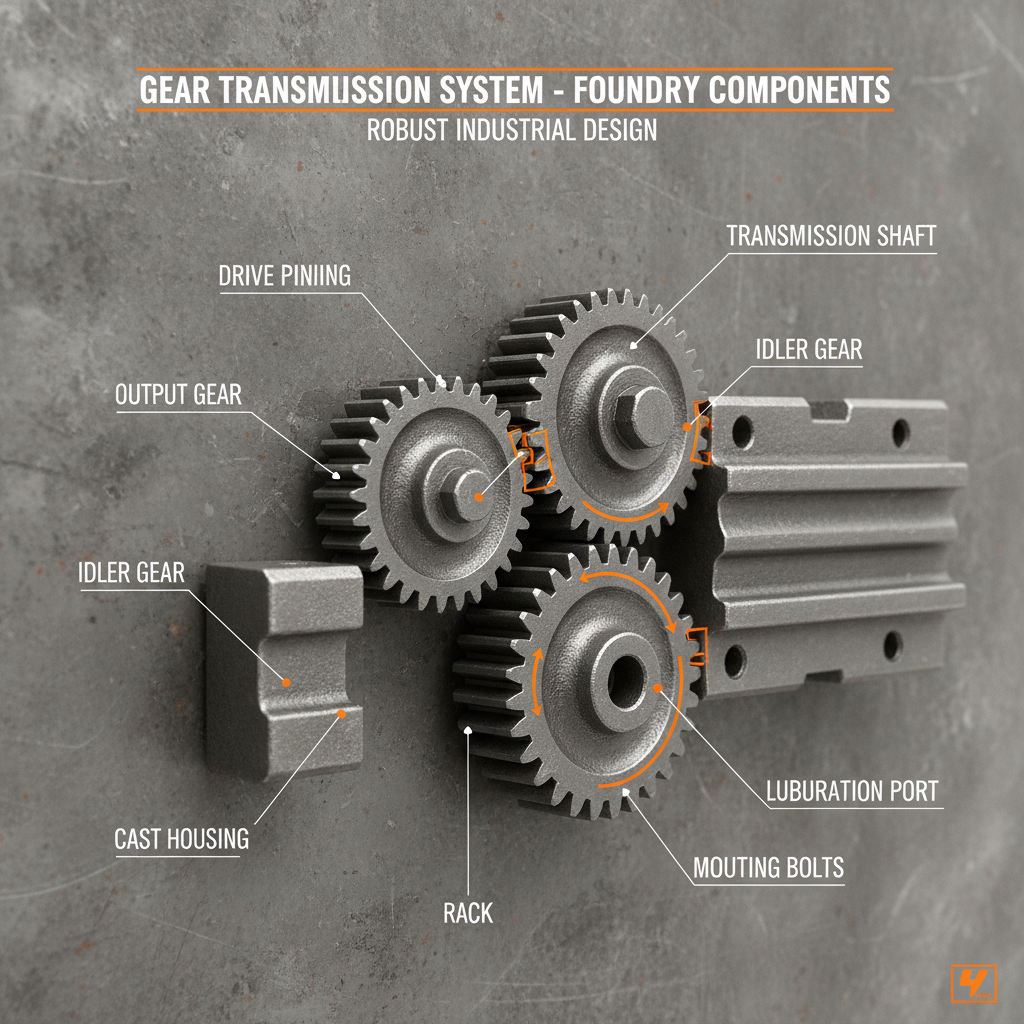
A: Rack and pinion systems convert rotational motion to linear movement. They are essential in steering systems for vehicles and linear actuators in machinery. This gear type ensures precise positional control in CNC machines or rail transport.
Q: What distinguishes helical gears from spur gears in applications?
A: Helical gears have angled teeth for smoother, quieter operation than spur gears. They excel in high-speed applications like turbines or automotive gearboxes. Their axial thrust requires proper bearing support but enables higher load capacity.