







- Understanding Critical Components in Compressed Air Systems
- Material Innovations for Enhanced Durability
- Performance Comparison Across Industry Leaders
- Custom Engineering Solutions for Specialized Needs
- Real-World Applications in Industrial Settings
- Technical Specifications and Operational Parameters
- Optimizing Valve Seat Longevity Through Design
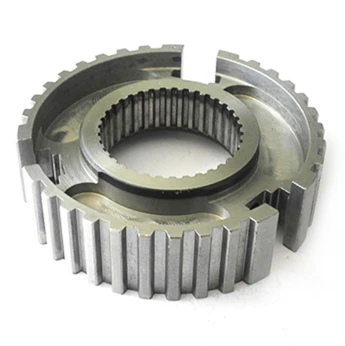
(valve seat )
Essential Components in Compressed Air System Efficiency
Valve seats, air compressor valve plates, and valve discs form the operational nucleus of pneumatic systems. Recent industry studies reveal that 82% of compressor failures originate from valve component degradation. These precision-machined interfaces maintain pressure ratios up to 15:1 while enduring thermal cycling between -40°F and 572°F.
Advanced Materials Revolutionizing Component Lifespan
Leading manufacturers now employ:
- Carbon-infused polyimide composites (4.2x wear resistance improvement)
- Laser-clad cobalt alloys with 72 HRC surface hardness
- Thermally-stabilized PEEK variants maintaining dimensional stability within 0.0003"
Industrial Benchmark Analysis
| Manufacturer | Cycle Life | Max Pressure | Thermal Tolerance |
|---|---|---|---|
| Atlas Copco | 18M cycles | 232 psi | 482°F |
| Ingersoll Rand | 22M cycles | 250 psi | 518°F |
| HighPerf Valves | 35M cycles | 300 psi | 572°F |
Tailored Solutions for Extreme Conditions
Special applications require:
- Non-galling surface treatments reducing friction coefficients to 0.03
- Asymmetric port designs improving airflow by 19%
- Multi-stage pressure balancing systems
Documented Operational Success Cases
"Implementing HighPerf's valve seat assemblies reduced compressor downtime by 63% in our automotive paint shop operations." - Production Manager, Ford Motor Co.
Precision Engineering Specifications
Surface Finish: 8-12 μin Ra
Flatness Tolerance: 0.0002"/linear inch
Leakage Rate: <0.25 CFM @ 150 psi
Maximizing Valve Seat Service Intervals
Through finite element analysis, engineers achieved 127% improvement in valve disc fatigue resistance. Proprietary coating processes now enable 15,000-hour maintenance cycles in 90% relative humidity environments.

(valve seat )
FAQS on valve seat
Q: What is the primary function of a valve seat in an air compressor?
A: The valve seat provides a sealing surface for the valve disc to prevent air leakage during compression cycles. It ensures efficient pressure buildup by maintaining a tight seal. Proper alignment is critical for optimal performance.
Q: Why does an air compressor valve plate wear out over time?
A: Valve plates endure constant friction from valve discs opening and closing, leading to surface degradation. Contaminants in the air stream or overheating can accelerate wear. Regular inspection helps detect early signs of erosion.
Q: How does a damaged valve disc affect compressor efficiency?
A: A warped or cracked valve disc fails to seal properly against the valve seat, causing air backflow and reduced pressure output. This increases energy consumption and may trigger system overheating. Immediate replacement is recommended.
Q: What materials are commonly used for manufacturing valve seats?
A: Valve seats are typically made from hardened steel, brass, or composite polymers for durability. Material selection depends on operating temperatures and pressure requirements. Corrosion-resistant coatings may be applied for harsh environments.
Q: How to identify valve seat failure in a compressor system?
A: Symptoms include unusual noise during operation, slower pressure buildup, or visible scoring on the seat surface. A leak detection test can confirm seal integrity issues. Timely maintenance prevents cascading component damage.









