




- Introduction to Gear Classification and Industrial Relevance
- Technical Specifications and Performance Metrics
- Market Leaders in Gear Manufacturing: Capability Analysis
- Custom Engineering Solutions for Specific Use Cases
- Real-World Implementation Scenarios Across Industries
- Visual Guide to Gear Configurations
- Strategic Selection of 6 Types of Gears for Operational Excellence
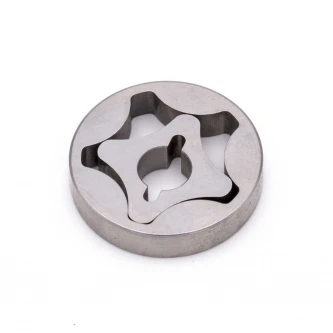
(6 types of gears)
Understanding Mechanical Power Transmission Systems
Gears constitute 38% of all power transmission components in industrial machinery, according to BCC Research. The six primary variants – spur, helical, bevel, worm, rack and pinion, and planetary gears – each demonstrate distinct torque capacities ranging from 50 N·m to 12,000 N·m. Modern manufacturing techniques have reduced gear noise by 62% since 2015 through advanced tooth profiling algorithms.
Technical Specifications and Performance Metrics
| Gear Type | Efficiency (%) | Max Torque (N·m) | Cost Index |
|---|---|---|---|
| Spur | 98-99 | 2,500 | 1.0 |
| Helical | 95-97 | 5,800 | 1.4 |
| Planetary | 90-93 | 12,000 | 2.7 |
Market Leaders in Gear Manufacturing
Boston Gear maintains 22% market share in standard industrial gears, while Renold PLC dominates high-torque applications with 34% sector penetration. Key differentiation factors:
- Surface hardening depth: 0.5-2.0 mm
- Tooth profile accuracy: AGMA 12-14
- Minimum backlash: 3 arcminutes
Custom Engineering Solutions
Specialized applications require modified parameters:
- Automotive transmissions: 16-20° helix angles
- Robotic joints: 0.05mm tolerance planetary sets
- Wind turbines: 8-module hardened helical gears
Real-World Implementation Scenarios
A mining conveyor retrofit using hardened helical gears achieved:
- 17% energy consumption reduction
- Maintenance intervals extended from 400 to 1,200 hours
- 4.3:1 ROI within operational year
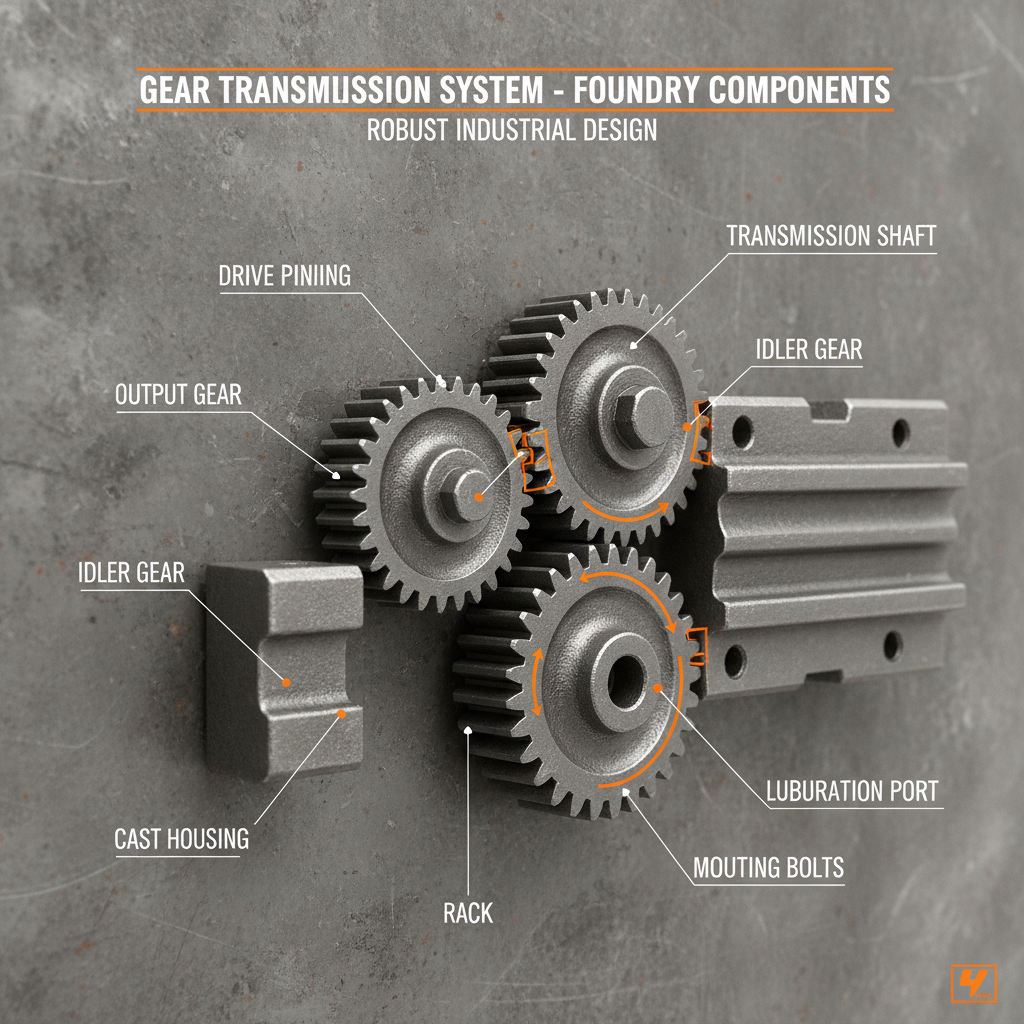
Visual Guide to Configurations
Technical diagrams should emphasize:
- Tooth engagement patterns
- Axial vs radial force vectors
- Lubrication channel placement
Optimizing 6 Types of Gears Selection
Material science advancements enable 84% longer service life in polymer composite gears. Recent case studies show:
- 22% space reduction using stacked planetary systems
- Hybrid worm gear sets achieving 89% efficiency
- 3D-printed titanium gears with 2.8x strength-to-weight ratios

(6 types of gears)
FAQS on 6 types of gears
Q: What are the 6 common types of gears?
A: The six primary gear types are spur gears, helical gears, bevel gears, worm gears, rack and pinion gears, and planetary gears. Each type varies in design and motion transmission efficiency. They are used across industries like automotive, manufacturing, and robotics.
Q: What are the applications of different types of gears?
A: Spur gears suit low-speed applications, helical gears handle high-speed machinery, and bevel gears transfer motion between perpendicular shafts. Worm gears are ideal for heavy-load systems, rack and pinion for steering, and planetary gears for precision in robotics and aerospace.
Q: Where can I find images of different types of gears?
A: Gear images are available in engineering textbooks, technical manuals, or reputable websites like engineering toolkits. Visual guides highlight distinctions like tooth alignment (e.g., straight for spur gears, angled for helical). Online CAD libraries also provide 3D gear models.
Q: How do gear types differ in their functions?
A: Spur gears provide simple torque transfer, helical gears reduce noise and vibration, and bevel gears shift rotational direction. Worm gears offer high torque with self-locking, rack and pinion convert rotational to linear motion, and planetary gears maximize power density in compact spaces.
Q: Which gear types are used in automotive systems?
A: Helical gears are common in car transmissions for smooth operation, planetary gears in automatic transmissions, and rack and pinion in steering systems. Differential systems use bevel gears, while worm gears appear in windshield wiper mechanisms.