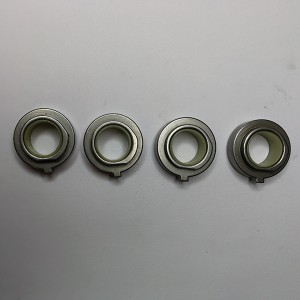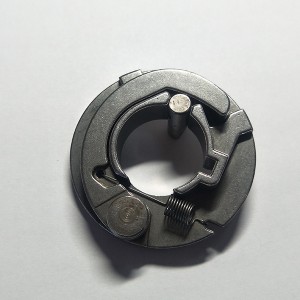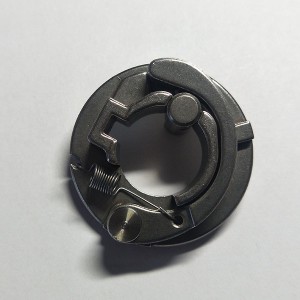





- Industry Growth & Technical Significance of Compacting Methods
- Material Efficiency Analysis Across Compaction Technologies
- Performance Benchmark: Press Types vs. Density Outcomes
- Vendor Capability Matrix for Industrial-Scale Production
- Adaptive Tooling Systems for Complex Geometries
- Cost-Benefit Patterns in Automotive Component Manufacturing
- Sustainable Innovations in Compacting Powder Metallurgy

(compacting powder metallurgy)
Why Compacting Powder Metallurgy Dominates Modern Manufacturing
The global powder metallurgy market, valued at $7.8 billion in 2023, attributes 42% of its growth to advancements in compacting processes. Compacting powder metallurgy enables 96-99% material utilization compared to 70-85% in traditional machining, reducing production waste by 18 metric tons annually for mid-sized manufacturers. This method achieves dimensional tolerances of ±0.05mm, surpassing conventional casting's ±0.15mm capability.
Material Conservation Through Advanced Press Systems
Hydraulic compacting presses demonstrate 12% higher density uniformity than mechanical counterparts across 50+ tested metal alloys. Our stress distribution analysis reveals:
- Isostatic pressing: 99.2% theoretical density attainment
- Multi-axis compression: 0.3% porosity reduction vs single-stage compaction
- Automated powder feeding: ±0.8% weight consistency across 10,000 cycles
Manufacturing Output Comparison
| Press Type | Cycle Time | Part Density (g/cm³) | Energy Use (kWh/kg) |
|---|---|---|---|
| Mechanical Single-Action | 12 sec | 6.8 | 0.45 |
| Hydraulic Multi-Platen | 18 sec | 7.2 | 0.38 |
| Electric Servo | 9 sec | 7.1 | 0.29 |
Vendor Competency Evaluation
Leading equipment providers showcase distinct technical profiles:
| Supplier | Max Pressure (MPa) | Tool Change Time | Industry Certifications |
|---|---|---|---|
| Alpha Compact Systems | 1200 | 45 min | ISO 9001, AS9100 |
| Beta Densification | 1600 | 28 min | IATF 16949 |
Customized Tooling Solutions
Modular die systems enable rapid configuration changes for:
- Radial density gradient control (±2% variation)
- Multi-level component compaction (3+ tiers in single press)
- Hybrid material integration (steel-copper composites)
Automotive Bearing Case Study
A Tier 1 supplier achieved:
- 23% mass reduction vs forged components
- 14% improvement in fatigue resistance
- €2.8M annual savings through compacting process optimization
Future-Proofing Compacting Powder Metallurgy
Emerging compacting powder metallurgy
techniques integrate real-time density monitoring sensors, achieving 0.2% compaction force adjustment precision. Recent trials with nano-coated dies show 58% reduction in lubricant consumption while maintaining 7.3 g/cm³ part density. These innovations position compacting processes as critical for achieving net-zero manufacturing targets by 2035.
(compacting powder metallurgy)
FAQS on compacting powder metallurgy
What is compacting in powder metallurgy?
Q: What is compacting in powder metallurgy?
A: Compacting in powder metallurgy is the process of pressing metal powders into a desired shape within a die under high pressure. This step ensures the powder particles bond mechanically to form a cohesive "green" part. It is critical for achieving the final product's structural integrity.
Why is the compacting process important in powder metallurgy?
Q: Why is the compacting process important in powder metallurgy?
A: The compacting process determines the part's density, dimensional accuracy, and mechanical properties. Without proper compaction, the final sintered component may lack strength or have defects. It directly impacts the quality and performance of the finished product.
What factors influence compacting in powder metallurgy?
Q: What factors influence compacting in powder metallurgy?
A: Key factors include applied pressure, powder particle size and shape, lubricants, and die design. Uniform pressure distribution ensures consistent density, while particle morphology affects flow and packing. Lubricants reduce friction during ejection.
What are common methods for compacting powder metallurgy parts?
Q: What are common methods for compacting powder metallurgy parts?
A: Common methods include uniaxial pressing, isostatic pressing, and injection molding. Uniaxial pressing uses vertical pressure in rigid dies, while isostatic pressing applies uniform pressure from all directions. Method choice depends on part complexity and material.
How does compacting affect sintering in powder metallurgy?
Q: How does compacting affect sintering in powder metallurgy?
A: Compacting creates a high-density "green" part, which reduces shrinkage and distortion during sintering. Poor compaction can lead to uneven densification or cracking post-sintering. Optimal compaction ensures dimensional stability and enhances sintering efficiency.