







Sintered Pinion Gear: A Small Part That Quietly Shapes Big Products
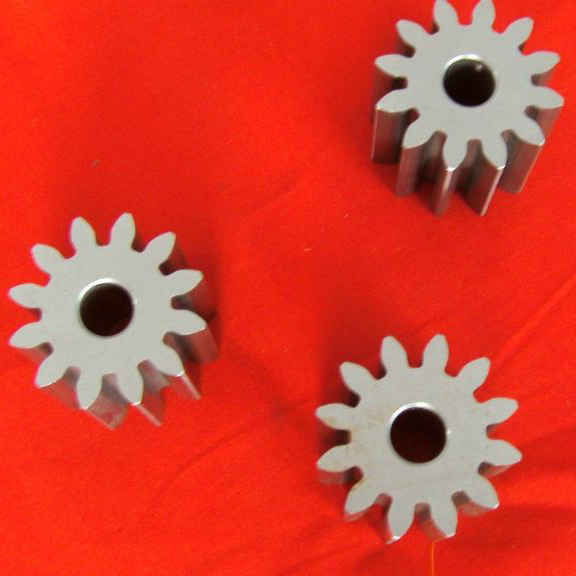
If you’ve ever wondered why some gadgets hum pleasantly while others whine, it often comes down to the gear at the heart of the drive. The custom gear behind that smooth feel is usually a compact, meticulously engineered pinion—born from powder metallurgy and a lot of real-world iteration.
What’s Special Here
This Sintered Pinion Gear is produced in TIANSHAN INTERNATIONAL MANUFACTURING INDUSTRY PARK NO.57, YUANSHI, SHIJIAZHUANG CITY, HEBEI PROVINCE, CHINA. In toys, HVAC motors, and small appliances, it’s the quiet workhorse. Powder metallurgy (PM) lets you get near-net-shape teeth, repeatable hardness, and a friendly cost-per-tooth—honestly the trifecta for high-volume drives.
Product Specifications (Core Data)
| Technology | Powder Metallurgy (PM) |
| Material Standard | MPIF 35, DIN 30910, JIS Z2550 |
| Density | 6.2 – 7.1 g/cm³ (typical PM range) |
| Macro Hardness | 40 – 80 HRA (ASTM E18) |
| Tensile Strength | ≈1650 MPa (real-world use may vary) |
| Yield Strength (0.2%) | ≈1270 MPa |
| Surface Treatment | Quenching, Polishing; optional sizing/impregnation |
| Size | Customized; mini pinion friendly (module ≈0.3–1.5) |
| Typical Tolerances | IT7–IT10 (after sizing), per ISO 1328 for gear accuracy |
Process Flow (How It’s Built)
Materials: iron-based alloy powders (often Fe-Cu-Ni or Fe-Mo blends) balanced for strength and wear.
Methods: compaction → sintering → sizing → optional carburizing/quenching → polishing/deburr → oil impregnation (for lubrication).
Testing: density per MPIF 42; hardness via ASTM E18 (Rockwell); gear quality to ISO 1328; design verification per ISO 6336/AGMA 2001; dimensional checks on CMM.
Service life: thousands of hours in low-to-medium load drives (duty-cycle dependent, environment matters).
Where It Works (and Why)
- Children’s toys: low noise, consistent torque, budget-sensitive volumes.
- Air-conditioning motors and small fans: quieter mesh, oil-retaining porosity helps.
- Printers, vending, micro-actuators: tight repeatability, compact footprints.
- Light e-mobility auxiliaries: weight and cost savings add up.
Advantages? Near-net-shape teeth reduce machining waste; porosity can hold lubricant; heat treatment gives tough teeth; and the per-part cost is, frankly, hard to beat at volume.
Vendor/Process Comparison (Quick Reality Check)
| Vendor/Process | Strengths | Trade-offs | Typical Use |
|---|---|---|---|
| Powder Metallurgy (this pinion) | High volume, cost-effective, consistent, quiet mesh | Porosity not ideal for extreme torque without design tweaks | Toys, HVAC motors, small appliances |
| CNC Machined Steel | Highest precision/strength potential | Higher cost per part; longer cycle times | Performance prototypes, low volumes |
| Plastic Injection Gear | Ultra-quiet, very light, corrosion-proof | Lower heat/torque limits; tooling cost | Consumer devices, office equipment |
Real-World Notes (From the Field)
- Toy OEM case: swapping to custom gear PM pinions cut audible whine by ≈3–4 dBA and reduced returns—“parents noticed,” the buyer told me, half-surprised.
- HVAC startup: a redesigned custom gear with slightly higher density and post-sinter sizing improved torque capacity ≈12% while holding cost flat.
Many customers say the stability run-to-run is the real win. And yes, sustainability matters: PM typically wastes less material than machining, which is a quiet budget line that adds up.
Compliance, QC, and Buying Tips
Ask for data packs: material certs (per MPIF 35), hardness charts (ASTM E18), gear inspection against ISO 1328, and design checks via ISO 6336/AGMA. Leading PM houses often maintain ISO 9001 or IATF 16949—verify current certificates. Also, confirm production origin (here: Hebei, China) and PPAP level if automotive-adjacent.
Author’s aside: the biggest misses I see? Overlooking lubrication strategy and underestimating tooth profile finishing. Address those early and your custom gear project gets a lot easier.
Citations
- MPIF Standard 35: Materials Standards for PM Structural Parts.
- ISO 6336: Calculation of load capacity of spur and helical gears.
- AGMA 2001-D04: Fundamental Rating Factors and Calculation Methods for Involute Spur and Helical Gear Teeth.
- ASTM E18: Standard Test Methods for Rockwell Hardness of Metallic Materials.
- DIN 30910 / JIS Z2550: PM materials and testing frameworks (regional standards).









