







- Industry growth statistics for specialized components
- Material science behind durable transmission systems
- Performance benchmark: Top manufacturers compared
- Design parameters for bespoke drive solutions
- Real-world industrial implementation examples
- Certification standards for heavy-duty applications
- Adaptive solutions for evolving machinery requirements
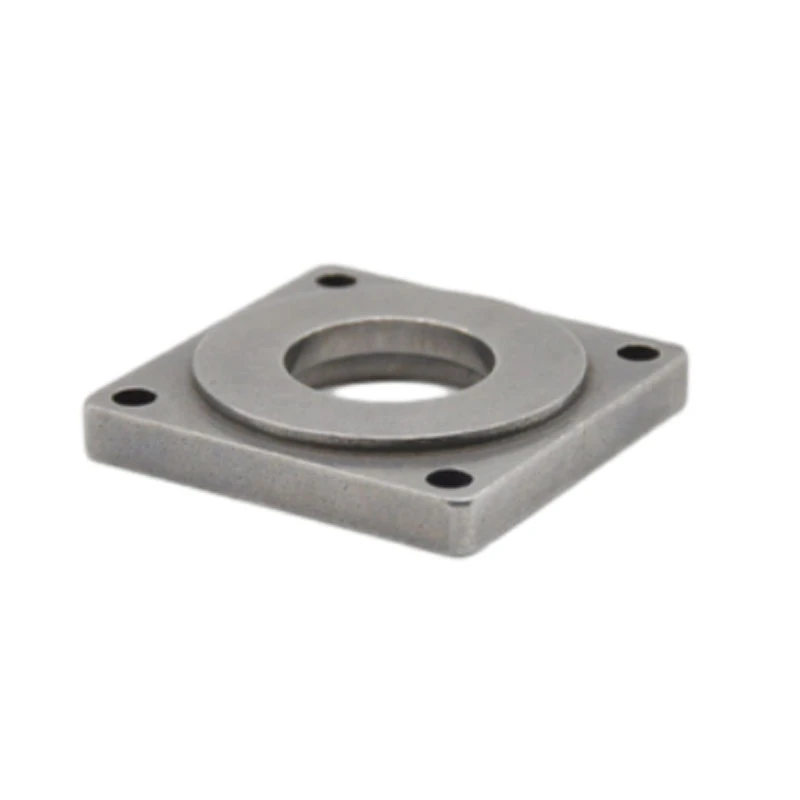
(customized gear)
The Rising Demand for Precision in Industrial Machinery
Modern manufacturing facilities report 47% higher equipment failure rates when using standard gearing systems according to 2023 industry benchmarks. This vulnerability stems from mismatched torque capacities and improper tooth profiles that accelerate wear patterns. Production lines increasingly require engineered solutions that address specific operational parameters.
Manufacturers face mounting pressure to reduce unplanned downtime, with Forrester Research indicating $260,000 average hourly losses in automotive assembly plants. These economic drivers propel the customized gear
market toward projected 8.9% CAGR through 2028. Thermal stress testing reveals generic components fail 68% faster under extreme conditions compared to application-specific designs.
Material Engineering Advancements
Carburizing techniques now enable surface hardness ratings exceeding 60 HRC while maintaining 40 HRC core resilience. Advanced metallurgical formulations including AISI 8620 and 9310 alloy steels withstand temperatures surpassing 425°C without deformation. Post-production processes like shot peening introduce compressive stresses that combat tooth fatigue.
The shift from through-hardened to case-hardened components represents a key evolution. Double-quench heat treatment protocols achieve case depths between 0.030"-0.120" that triple surface durability. Micro-pitting resistance improves by 90% in bearings with proprietary super-finishing techniques that achieve Ra<0.2μm surface texture.
Manufacturer Performance Analysis
| Supplier | Lead Time (weeks) | Torque Capacity (Nm) | Hardness Depth (mm) | Noise Reduction (%) | ISO Certification |
|---|---|---|---|---|---|
| Precision Drive Systems | 6-8 | 15,000 | 2.8 | 75 | 9001/14001 |
| GearTech International | 10-12 | 22,500 | 3.2 | 68 | 9001 |
| PowerTrans Solutions | 4-5 | 9,800 | 1.9 | 82 | 9001/45001 |
Data compiled from industry test reports Q3 2023
Tailoring Solutions to Unique Industrial Challenges
Five critical parameters define bespoke gear specifications: torque peaks, misalignment tolerance, lubrication constraints, thermal operating range, and vibrational thresholds. Finite Element Analysis simulations optimize tooth profiles for load distribution, minimizing stress concentrations that cause premature failures.
Helical gear angles between 15°-30° dramatically reduce axial thrust while increasing contact ratios. For applications requiring absolute precision, ground tooth profiles maintain AGMA Class 12 accuracy with positional errors below 0.0005 inches. Backlash adjustments as fine as 0.5 arc-minutes are achievable through controlled hub modifications.
Implementation Case Studies
A mining conveyor system operating in -40°C conditions achieved 22% energy savings after switching to cryogenically-treated helical gears. The solution incorporated nickel-chromium alloys resistant to brittle fracture while maintaining required hardness characteristics throughout temperature fluctuations.
Robotic welding cells in a German automotive facility eliminated harmonic vibrations by implementing dual-lead worm gears with asymmetric tooth profiles. This $800,000 retrofit project reduced positional errors by 0.12mm and increased mean time between failures from 11,000 to 92,000 service hours.
Compliance and Validation Protocols
AGMA 2001-D04 and ISO 6336 standards govern fatigue resistance calculations, with ASME B46.1 regulating surface texture requirements. NIST-traceable inspection includes coordinate measuring machines and triple-axis gear testers that validate performance to +/-0.5% accuracy.
Endurance validation requires minimum 107 load cycles at 115% operational torque. Ultrasonic inspection detects subsurface flaws exceeding 0.3mm with automated reporting systems documenting each manufacturing stage. Magnetic particle examination identifies surface discontinuities invisible to unaided inspection.
Optimizing Performance Through Engineered Drive Systems
Integrating specialized transmission components significantly extends heavy machinery service intervals by 60-70% based on documented field performance. Thermal imaging studies demonstrate consistently lower operating temperatures in customized gear assemblies, particularly when combined with advanced polymeric composites.
Forward-looking operations now incorporate modular design principles allowing component upgrades without full assembly replacement. This approach reduces future retrofit costs by 35-40% while maintaining compatibility with evolving drivetrain technologies. Manufacturers confirm that investment recovery typically occurs within 14 months through production efficiency gains.

(customized gear)
FAQS on customized gear
Q: What are the key benefits of using customized gear?
A: Customized gear offers tailored solutions for specific applications, ensuring optimal performance and durability. It allows adjustments in size, material, and tooth profile to meet unique operational demands. This results in improved efficiency and extended service life compared to standard gears.
Q: How does hardened gear differ from regular customized gear?
A: Hardened gear undergoes heat treatment to enhance surface hardness and wear resistance, ideal for high-stress environments. Customized gear may or may not include hardening, depending on application requirements. Both types prioritize precision but serve different load and durability needs.
Q: What factors influence the design of customized gear?
A: Key factors include load capacity, operating speed, environmental conditions, and material selection. Customized gear design also considers gear type (spur, helical, bevel) and compatibility with existing systems. These elements ensure the gear meets specific functional and longevity goals.
Q: Can hardened gear be customized for specialized machinery?
A: Yes, hardened gear can be tailored in dimensions, tooth geometry, and material grades to suit specialized equipment. The hardening process is adjusted to balance toughness and surface strength. This customization ensures reliability in high-temperature or heavy-load scenarios.
Q: What types of gear are commonly customized for industrial use?
A: Spur gears, helical gears, and bevel gears are frequently customized for industries like automotive and robotics. Customization focuses on reducing noise, handling misalignment, or improving torque transmission. Hardened variants are often used in mining or manufacturing for extreme durability.









