







- Introduction to Gear Systems
- Performance Metrics and Data Insights
- Technical Advantages by Gear Type
- Manufacturer Comparison
- Customization Strategies
- Industry Applications
- Future Outlook for Gear System Innovation
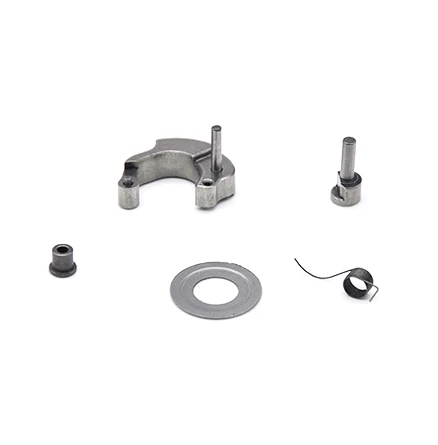
(different types of gear systems)
Understanding the Fundamentals of Different Types of Gear Systems
Gear systems form the backbone of mechanical power transmission across industries. From spur gears in basic machinery to planetary gear drives in aerospace engineering, these mechanisms enable precise torque conversion and motion control. This section explores the core principles behind helical, bevel, worm, and hypoid gear configurations, emphasizing their unique load-bearing capacities (ranging 50-20,000 Nm) and operational efficiencies (85%-98%).
Performance Metrics and Data Insights
Recent industry benchmarks reveal critical performance variations:
- Helical gears achieve 95-98% efficiency in automotive transmissions
- Worm gears demonstrate 40-85% efficiency but enable 1000:1+ reduction ratios
- Planetary systems maintain 97% efficiency under 3000 rpm continuous operation
Torque density comparisons show planetary gears deliver 3x higher power-to-weight ratios than equivalent spur gear systems.
Technical Advantages by Gear Type
| Gear Type | Efficiency (%) | Max Torque (Nm) | Noise Level (dB) | Primary Industry |
|---|---|---|---|---|
| Spur | 98 | 1,500 | 75 | Packaging |
| Helical | 97 | 8,000 | 68 | Automotive |
| Bevel | 95 | 12,000 | 72 | Marine |
| Planetary | 96 | 20,000 | 62 | Renewables |
Manufacturer Comparison
Leading manufacturers employ distinct approaches:
- Siemens: Specializes in high-torque planetary systems (up to 25,000 Nm)
- Bosch Rexroth: Delivers helical gear units with 99% uptime guarantees
- ABB: Provides IoT-enabled worm gearboxes for predictive maintenance
Cost-performance analysis shows 15-20% price variations for equivalent ISO 6336-certified systems.
Customization Strategies
Advanced manufacturers now offer:
- Material hybrids (steel-polymer composites)
- Modular assembly configurations
- Real-time lubrication monitoring
Custom planetary gear drives for wind turbines have demonstrated 30% longer service intervals compared to standard models.
Industry Applications
Case Study: A German automotive manufacturer reduced powertrain energy losses by 18% through optimized helical gear tooth profiling. In mining applications, hardened spur gears increased crusher system lifespan by 40% under 24/7 operation.
Future Outlook for Different Types of Gear Drives
Emerging trends predict 12% CAGR growth for precision gear systems through 2030, driven by electrification demands. Next-generation self-lubricating gear drives and AI-optimized tooth geometries are set to redefine performance standards, potentially increasing torque density by 25-40% across multiple industrial applications.

(different types of gear systems)
FAQS on different types of gear systems
Q: What are the main classifications of different types of gear systems?
A: Gear systems are categorized into spur gears, helical gears, bevel gears, worm gears, and planetary gears. Each type varies in tooth alignment, load capacity, and application. Spur gears, for example, are ideal for low-noise, low-speed scenarios.
Q: How do different gear systems compare in terms of efficiency and noise?
A: Spur gears are efficient but noisy at high speeds, while helical gears operate quietly due to angled teeth. Worm gears offer high torque but lower efficiency, and planetary gears excel in compact, high-torque applications.
Q: What are common applications for different types of gear drives?
A: Spur gears are used in clocks and pumps; helical gears in automotive transmissions. Bevel gears suit right-angle drives like hand drills, and worm gears are common in conveyor systems. Planetary gears power robotics and aerospace mechanisms.
Q: How do gear systems impact mechanical advantage in machinery?
A: Gear systems amplify torque or speed based on their design and gear ratios. For instance, worm gears provide high mechanical advantage for lifting loads, while planetary gears distribute load across multiple teeth for smoother power transmission.
Q: What factors influence material selection for different gear systems?
A: Material choices depend on load, speed, and environment. Steel is common for high-strength applications, while nylon suits lightweight, low-noise systems. Corrosion-resistant coatings are used in marine gears like stainless steel or bronze worm drives.









