







A Practically Honest Look at Gear And Types for Modern Sector Gears
After twenty-odd plant visits and more conference coffee than I’d admit, here’s the candid take: powder metallurgy (PM) sector gears quietly took over a lot of the “small but critical” motion tasks. Automotive seat recliners, compact actuators, consumer appliances—anywhere you need repeatable torque without boutique pricing.
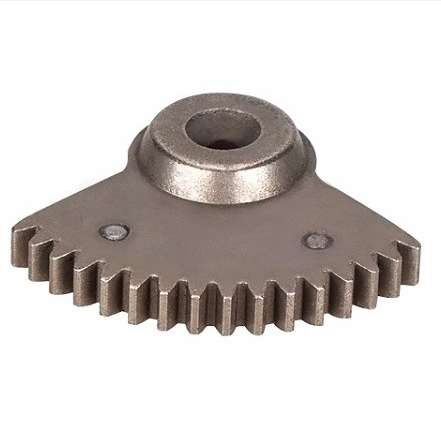
Our reference point here is the Sintered customized sector gear made in TIANSHAN INTERNATIONAL MANUFACTURING INDUSTRY PARK NO.57, YUANSHI, SHIJIAZHUANG CITY, HEBEI PROVINCE, CHINA. It’s the sort of part buyers shortlist when they want volume reliability with tight control over materials and surface treatment.
Industry Trends and Why PM Sector Gears Are Trending Up
Three currents drive demand: lightweighting (yes, still), cost-per-function pressure, and quieter mechanisms. PM lets engineers tune density and uniformity, then harden where it matters. Surprisingly, PM often outlives expectations in mid-load duty cycles, provided lubrication and alignment are dialed in.
Core Specifications (typical, application-dependent)
| Parameter | Value | Notes |
|---|---|---|
| Technology | Powder Metallurgy (PM) | Near-net shape, low scrap |
| Material standards | MPIF 35, DIN 30910, JIS Z2550 | Fe-based sintered steels |
| Density | 6.2–7.1 g/cm³ | Higher density ≈ higher strength |
| Macro hardness | 45–80 HRA | ASTM E18 testing |
| Tensile / Yield | ≈1650 MPa / ≈1270 MPa | Per MPIF test methods |
| Surface treatment | Quenching, Polishing | Optional steam/impregnation |
| Accuracy | ≈ISO 1328 Grade 8–10 | Real-world use may vary |
| Service life | 10,000–50,000 h | Load/lube/speed dependent |
Process Flow, Materials, and Testing
- Materials: Fe-based mixes per MPIF 35 (e.g., diffusion-alloyed Ni/Mo grades) tailored for torque and wear.
- Methods: Press compaction → Sintering (≈1120–1150°C, protective atmosphere) → Sizing → Quench & temper → Polishing/deburr.
- Testing: Density (MPIF 42), Hardness (ASTM E18), Tensile/Yield (MPIF 10), Gear accuracy (ISO 1328), strength calcs (ISO 6336/AGMA).
- Verification: 100% visual, SPC on critical dimensions; optional NVH checks for actuator programs.
Application Scenarios and Advantages
You’ll see these in seat recliners, window/roof actuators, appliance drives, light industrial valves, small robotics. Advantages? Cost-per-tooth is hard to beat; mechanical properties are consistent; and the geometry freedom helps when you need a tough little sector with odd stops or hubs. To be honest, many customers say the “silent running” surprised them after polishing.
Vendor Comparison (buy-side quick view)
| Vendor | Strengths | Lead Time | MOQ |
|---|---|---|---|
| JSSintering (sector gear) | Custom density/geometry, quench-polish, OEM PM focus | ≈4–8 weeks after tooling | Around 3k–10k pcs |
| Competitor A (general PM) | Broad catalog, fair tooling rates | 6–10 weeks | Often higher for custom |
| Competitor B (CNC machined) | Low MOQ, tight tolerances | 2–4 weeks | Very low, but cost ↑/pc |
Notes: indicative only; programs and capacity shift.
Customization Options
- Tooth form: involute sector, asymmetric teeth, special stops.
- Module/DP: small-mod sectors (≈0.5–3.5 mod) common; larger on request.
- Hubs/bores: splined, D-bore, keyed; secondary machining as needed.
- Treatments: localized hardening, steam, oil impregnation for wear resistance.
Case Notes (from the field)
Automotive recliner: a Tier‑1 swapped a machined sector for PM, cut piece cost ≈23% and measured −2 dB(A) in actuation noise after polishing and sizing. Industrial actuator: densified teeth + quench allowed higher stall torque without chipping; warranty returns dropped “noticeably,” as the engineer cautiously put it.
If you’re mapping Gear And Types to application risk, PM sectors sit in the “cost-optimized with robust bones” quadrant. Pair them with decent lubrication and a sensible duty cycle and they’re workhorses.
Certifications and Compliance
Material conformance to MPIF 35/DIN 30910/JIS Z2550. Typical quality systems in this category include ISO 9001 and IATF 16949 (confirm availability during RFQ). Test methods align with MPIF and ASTM standards below.
Manufacturing origin: TIANSHAN INTERNATIONAL MANUFACTURING INDUSTRY PARK NO.57, YUANSHI, SHIJIAZHUANG CITY, HEBEI PROVINCE, CHINA.
Authoritative references
- MPIF Standard 35 – Materials Standards for PM Structural Parts. https://www.mpif.org
- ASTM E18 – Rockwell Hardness of Metallic Materials. https://www.astm.org/e0018
- ISO 1328 – Cylindrical gears — ISO system of accuracy. https://www.iso.org
- ISO 6336 / AGMA gear strength methods. https://www.agma.org
- JIS Z2550 and DIN 30910 PM material guidelines. https://www.jisc.go.jp | https://www.din.de









